
Columbia
Sockeye are well above average, while Chinook and steelhead face critically low abundances
The Columbia River has an extensive history of development including major dams. Salmon have been virtually eliminated from most of the Canadian portion of the Columbia for more than 80 years†.
Less than 30 years ago, Columbia sockeye faced extinction, but Indigenous-led efforts have helped an impressive recovery with sockeye now spawning and rearing in Osoyoos, Skaha, and Okanagan Lakes†. The current state remains well-above average due to relatively high spawner abundance and total abundance over the most recent generation. In 2025, however, warm waters challenged sockeye migration and fewer than 12,000 spawners returned to Canada – the lowest count in over 20 years. Hot and dry conditions are making 2026 another challenging year for salmon migrations, with the Syilx Okanagan Nation declaring a watershed emergency in May† - though 2026 abundances are not yet captured in our data.
The current state of both Chinook and steelhead are categorized as “critically low” because the absolute numbers suggest less than a few dozen spawners in the Canadian portion of the watershed, putting these species at high risk of extinction in the region. The Okanagan population of Columbia Chinook was listed as Endangered by the Committee on the Status of Endangered Wildlife in Canada in 2017.


State of Salmon - Columbia

Our Approach
There are different ways to measure the state of salmon, and each approach tells us something unique about how salmon are doing.
CURRENT STATE is the spawner or total abundance over the most recent generation as a per cent anomaly from the long-term average and provides information on how abundant salmon are now relative to past years.
TRENDS measure the direction of change, either over the short-term (most recent three generations) or long-term (all available years). This is complementary information to the current state, and a species that has a declining trend may be a conservation concern even if the current status is above average.
Click on a species for an interpretation of the current state and trends.

Arrows indicate if the trend in abundance is increasing or decreasing.

A horizontal line indicates if the trend in abundance is stable.

A question mark indicates an unknown current state or trend due to a lack of readily accessible data.

An exclamation mark indicates critically low abundance.


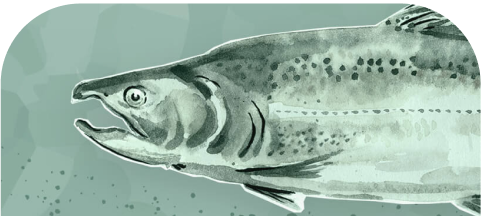
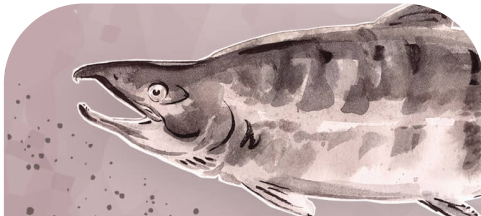
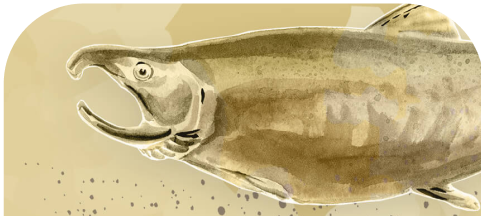
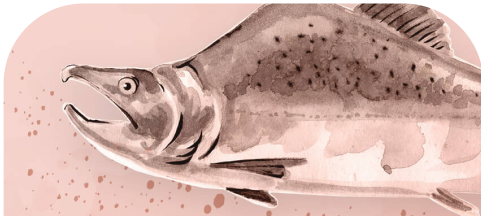
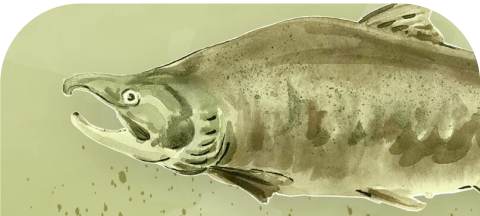
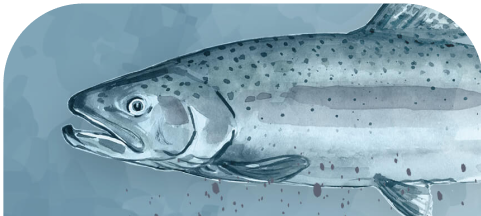
SPECIES NOT PRESENT
SPECIES NOT PRESENT
SPECIES NOT PRESENT
SPECIES NOT PRESENT
SPECIES NOT PRESENT
SPECIES NOT PRESENT
SPECIES NOT PRESENT
SPECIES NOT PRESENT
SPECIES NOT PRESENT
SPECIES NOT PRESENT
SPECIES NOT PRESENT
SPECIES NOT PRESENT
How to Interpret this Graph
Each fish above shows the per cent anomaly of current spawner abundance or total abundance over the most recent generation compared to the long-term average (horizontal line) for each region and species.
Interested in learning more? Check out the Pacific Salmon Explorer for a data-driven look at Pacific salmon Conservation Units and their habitats within each region.
For more details on our assessment approach, view our Methods.
Well above long-term average. No conservation concern.
Above long-term average. Current outlook is good.
At or near long-term average. Precaution is warranted.
Below long-term average. Current outlook is poor.
Well below long-term average. Significant conservation concern.
Critically low. At risk of local extinction.
Unknown state due to a lack of readily accessible data.

REGION PROFILE
Columbia
Conservation Units are irreplaceable groups of salmon that have unique genetic and life-history traits. Maintaining multiple Conservation Units within a region strengthens the resilience of the species as a whole and helps it withstand and adapt to changing conditions. The number of Conservation Units provides a good indication of the salmon biodiversity in the region.
Notable Salmon-Bearing Rivers
The Canadian headwaters of the Columbia River are part of a vast drainage system the size of France (668,000 square kilometres), most of which is found within the United States. Originating in Columbia Lake in the Rocky Mountains, British Columbia, the river flows northwest and then south and west for 2,000 kilometres to join the ocean at Astoria, Oregon.
The upper Columbia River Basin once supported robust Pacific salmon populations, with historic returns of up to four million fish. But an extensive history of development, including 12 major dams, devastated salmon habitat and has virtually eliminated salmon from most of the Canadian portion of the Columbia for more than 80 years. Reintroduction efforts led by Indigenous communities through the Okanagan Nation Alliance and the Canadian and British Columbia governments have led to an impressive recovery for sockeye.
The Okanagan River, a major tributary to the Columbia River, is the only portion of the Columbia watershed currently accessible to anadromous salmon in Canada. The Okanagan River and the Okanagan, Skaha, and Osoyoos Lakes support sockeye, summer spawning Chinook, and steelhead. Based on local and traditional knowledge as well as downstream observations, a spring Chinook population and coho salmon may also be present†.


