
Fraser
Abundances have recently increased for most species but total abundance has lagged and steelhead demand urgent attention
Fraser sockeye saw an unexpectedly high return in 2025 and yet total abundance remains below average, highlighting that fisheries have not yet recovered. The return in 2026, expected to be a dominant year, has not yet materialized as projected, raising questions about what happened to the four-year-old fish and concerns for populations like the critically endangered Early Stuart sockeye†.
Recent above-average returns of Chinook, pink, and coho likely reflect favourable ocean conditions in the Strait of Georgia and beyond. However, Chinook populations in the upper reaches of the Fraser that spend more time in freshwater are making up a smaller proportion of Fraser returns, highlighting that gains in aggregate abundance can mask the loss of biodiversity within.
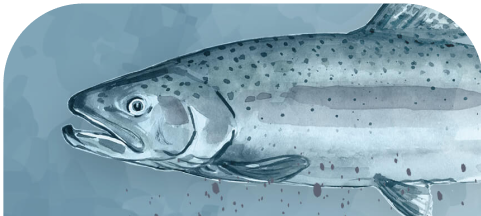
Interior steelhead (Chilcotin and Thompson River populations) face imminent risk of extinction and are listed as Endangered by the Committee on the Status of Endangered Wildlife in Canada.


STATE OF SALMON - FRASER

Our Approach
There are different ways to measure the state of salmon, and each approach tells us something unique about how salmon are doing.
CURRENT STATE is the spawner or total abundance over the most recent generation as a per cent anomaly from the long-term average and provides information on how abundant salmon are now relative to past years.
TRENDS measure the direction of change, either over the short-term (most recent three generations) or long-term (all available years). This is complementary information to the current state, and a species that has a declining trend may be a conservation concern even if the current status is above average.
Click on a species for an interpretation of the current state and trends.

Arrows indicate if the trend in abundance is increasing or decreasing.

A horizontal line indicates if the trend in abundance is stable.

A question mark indicates an unknown current state or trend due to a lack of readily accessible data.

An exclamation mark indicates critically low abundance.



SPECIES NOT PRESENT
SPECIES NOT PRESENT
SPECIES NOT PRESENT
SPECIES NOT PRESENT
SPECIES NOT PRESENT
SPECIES NOT PRESENT
SPECIES NOT PRESENT
SPECIES NOT PRESENT
SPECIES NOT PRESENT
SPECIES NOT PRESENT
SPECIES NOT PRESENT
SPECIES NOT PRESENT
How to Interpret this Graph
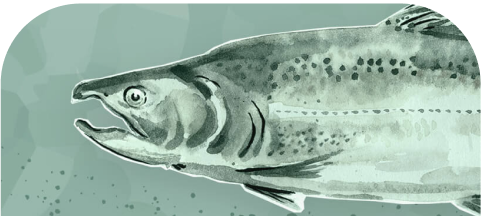
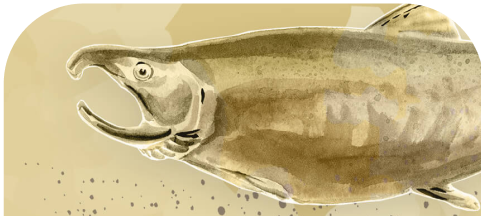
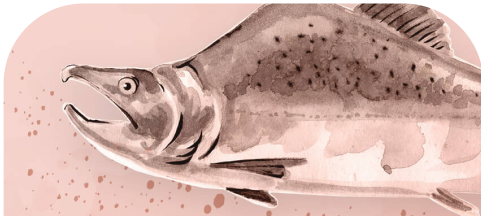
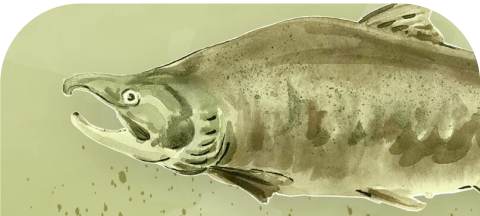
Each fish above shows the per cent anomaly of current spawner abundance or total abundance over the most recent generation compared to the long-term average (horizontal line) for each region and species.
Interested in learning more? Check out the Pacific Salmon Explorer for a data-driven look at Pacific salmon Conservation Units and their habitats within each region.
For more details on our assessment approach, view our Methods.
Well above long-term average. No conservation concern.
Above long-term average. Current outlook is good.
At or near long-term average. Precaution is warranted.
Below long-term average. Current outlook is poor.
Well below long-term average. Significant conservation concern.
Critically low. At risk of local extinction.
Unknown state due to a lack of readily accessible data.

REGION PROFILE
Fraser
Conservation Units are irreplaceable groups of salmon that have unique genetic and life-history traits. Maintaining multiple Conservation Units within a region strengthens the resilience of the species as a whole and helps it withstand and adapt to changing conditions. The number of Conservation Units provides a good indication of the salmon biodiversity in the region.
Notable Salmon-Bearing Rivers
The Fraser River Basin is the largest salmon-bearing watershed in British Columbia, draining an area almost the size of California. From its source in the Rockies, the Fraser River travels 1,375 kilometres to the Strait of Georgia. It consists of 13 sub-watersheds defined by major tributaries, such as the Harrison, Thompson, Adams, Nechako, Chilko, Chilcotin, and Lillooet rivers.
The region supports an incredible diversity of Pacific salmon. It boasts British Columbia's most abundant sockeye populations, with historical abundance in the millions. At the same time, the Fraser River Basin is home to three million people, nearly two-thirds of the total population in British Columbia. The region is significantly impacted by urban and industrial development. In particular, the land around the Fraser estuary is heavily populated, exposing salmon to the cumulative pressures of habitat degradation and pollution, yet the estuary is critically important to hundreds of populations of salmon across all species of Pacific salmon including steelhead.
Historical and recent landslides have created a legacy of impacts for Fraser salmon. In 1914, a massive human-caused landslide in Hells Gate blocked passage for migrating salmon, causing significant declines in salmon populations, which never fully recovered. A century later, a landslide at Big Bar near Lillooet in 2019 created a five-metre waterfall that trapped migrating salmon below the slide. A nature-like fishway was developed, but fish passage remains a challenge in other areas of the watershed, especially for early migrating sockeye in years of high flow. In summer 2024, a landslide on the Chilcotin River formed a temporary dam, blocking migrating salmon and damaging critical habitat. Yet by October, both sockeye and Chinook were observed upstream of the slide - an impressive display of salmon resilience in the face of disruption.


