 Aquaculture
The risks open-net pens pose to wild salmon
Open net-pen farms expose wild salmon to pathogens and pollution.
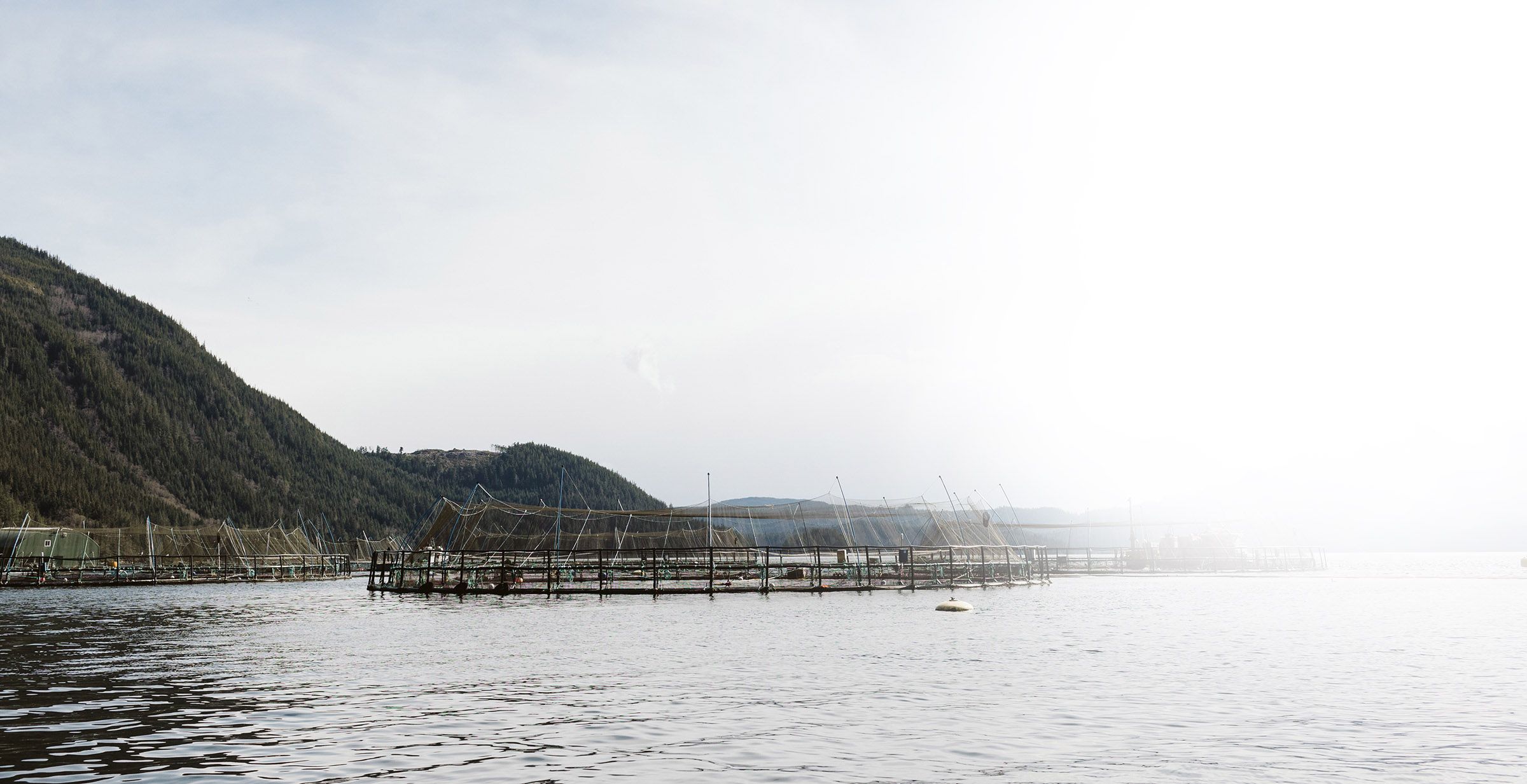
For millennia, First Nations managed and enhanced marine resources through practices such as clam gardens and fish traps that helped sustain abundant seafood harvests†. Industrial salmon aquaculture emerged in the 1970s and expanded rapidly. By the mid 1990s, there were over 100 open-net pen farms operating along the coast, creating new pathways for the exchange of water, waste, chemicals, pathogens, and parasites between farmed fish, the marine environment, and wild salmon.
What happens in
the pen doesn’t
stay in the pen
Open net-pen salmon farms, which primarily raise Atlantic salmon, are an ideal place for parasites, viruses, and bacteria – collectively referred to as pathogens – to multiply and spill over to wild Pacific salmon. Farms can introduce new pathogens with eggs imported from other countries or concentrate and spread pathogens that are found naturally in our oceans†.
The global emergence of Piscine orthoreovirus
A virus called Piscine orthoreovirus (PRV) has spread from Europe across the world with the expansion of salmon farming. PRV can infect wild Pacific salmon† and lead to jaundice, anemia, liver and kidney failure, and heart inflammation†.
This, in turn, can hurt their swimming performance and migration success, make them more vulnerable to predators as well as other stressors and diseases, and contribute to lower overall survival of a population†.
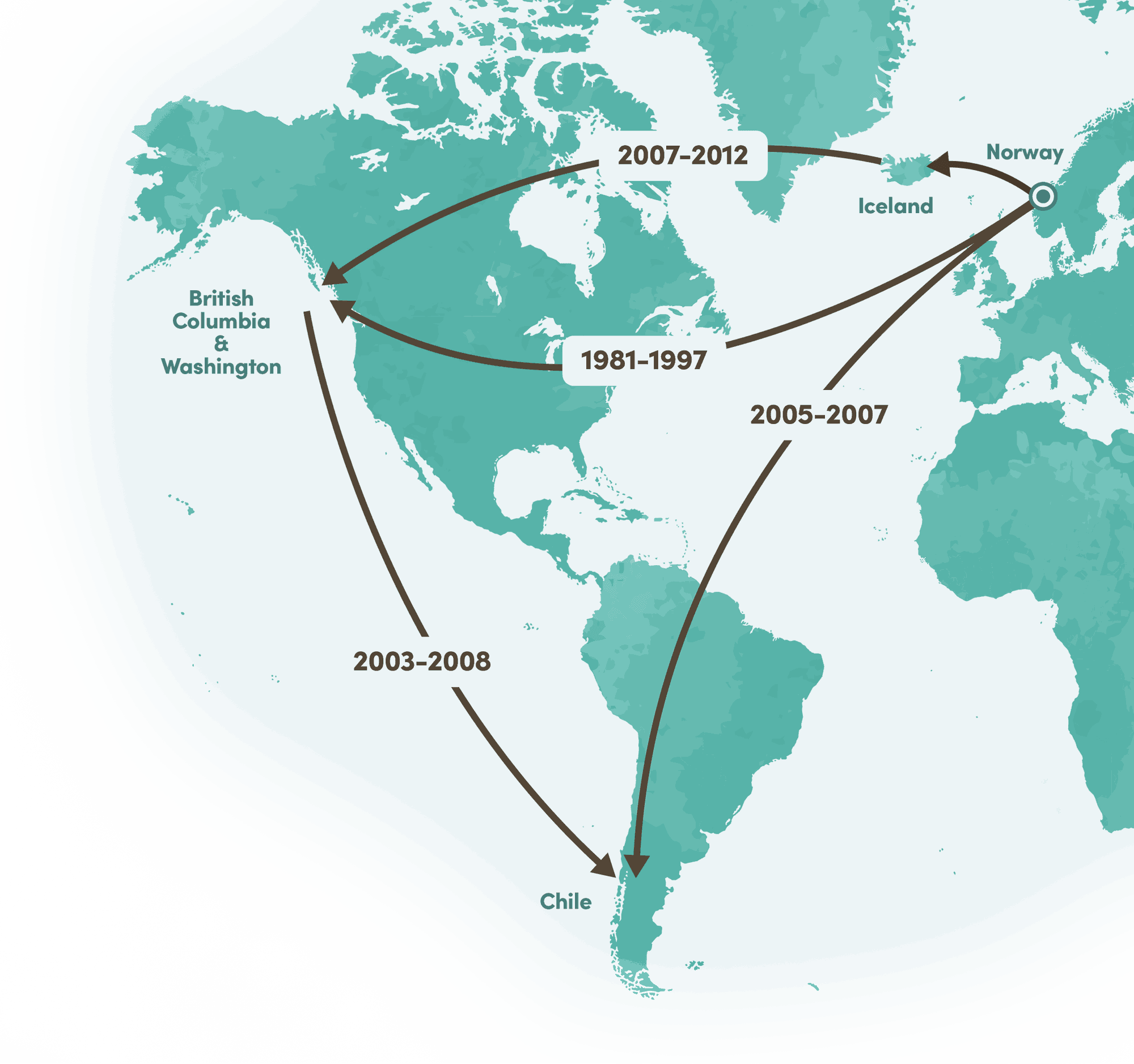
Schematic representation of the global emergence of PRV-1. Arrows depict estimated translocations of two different variants of PRV-1 (solid and dashed lines). Adapted from Mordecai et al. (2021)†.
A familiar bacteria, an unfamiliar risk
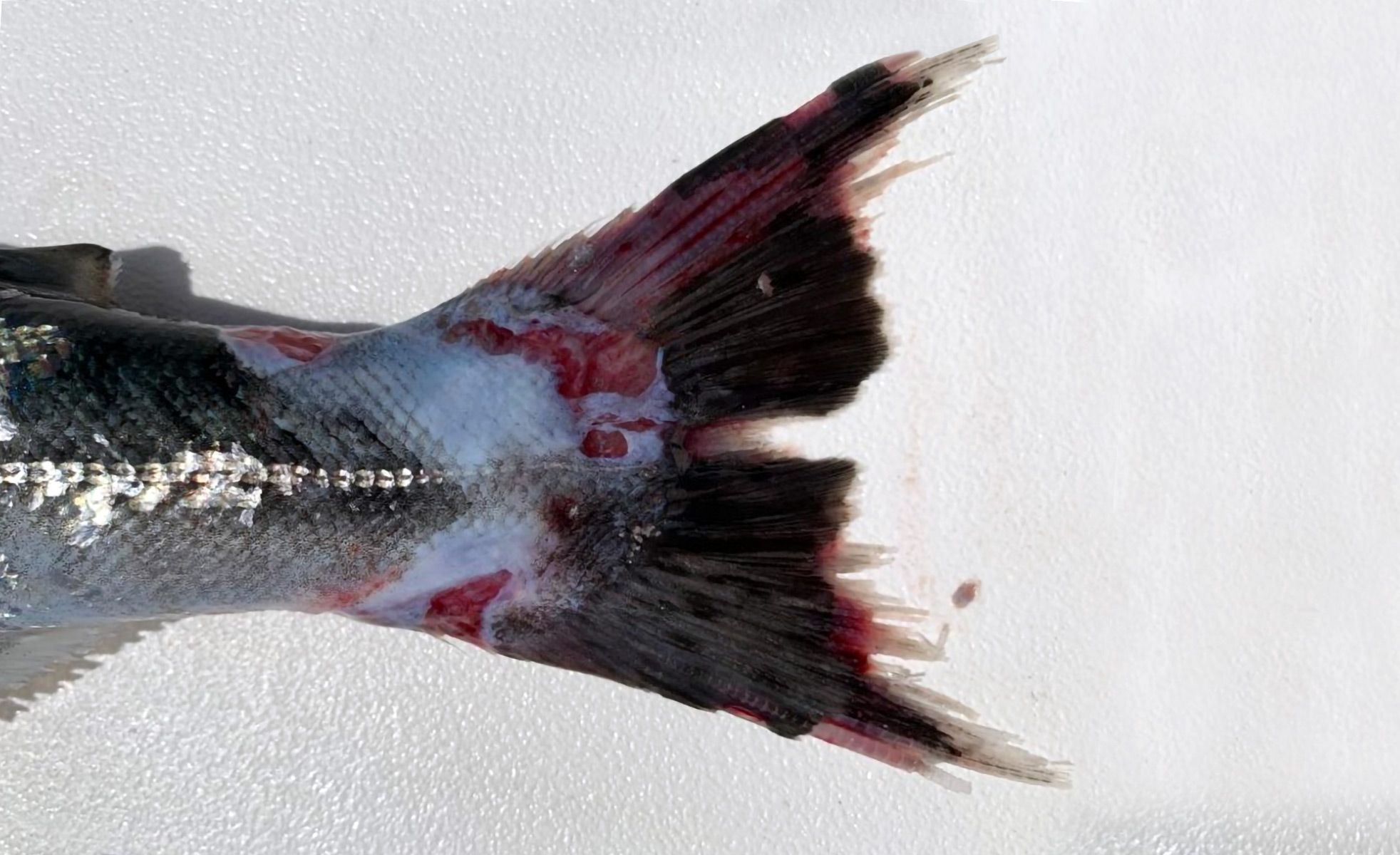
Other pathogens naturally occur within Pacific salmon populations, but the location and conditions on salmon farms can amplify natural infection levels. The bacterium Tenacibaculum can result in ulcers on skin and fins and mouth rot in Chinook salmon†, with reduced body condition and higher mortality in infected fish†. Wild sockeye experience infection pressure 12.7× higher than background levels as they migrate past salmon farms in the Discovery Islands†, raising concerns about how farm-amplification of Tenacibaculum may affect wild salmon survival.
A year-round reservoir of sea lice
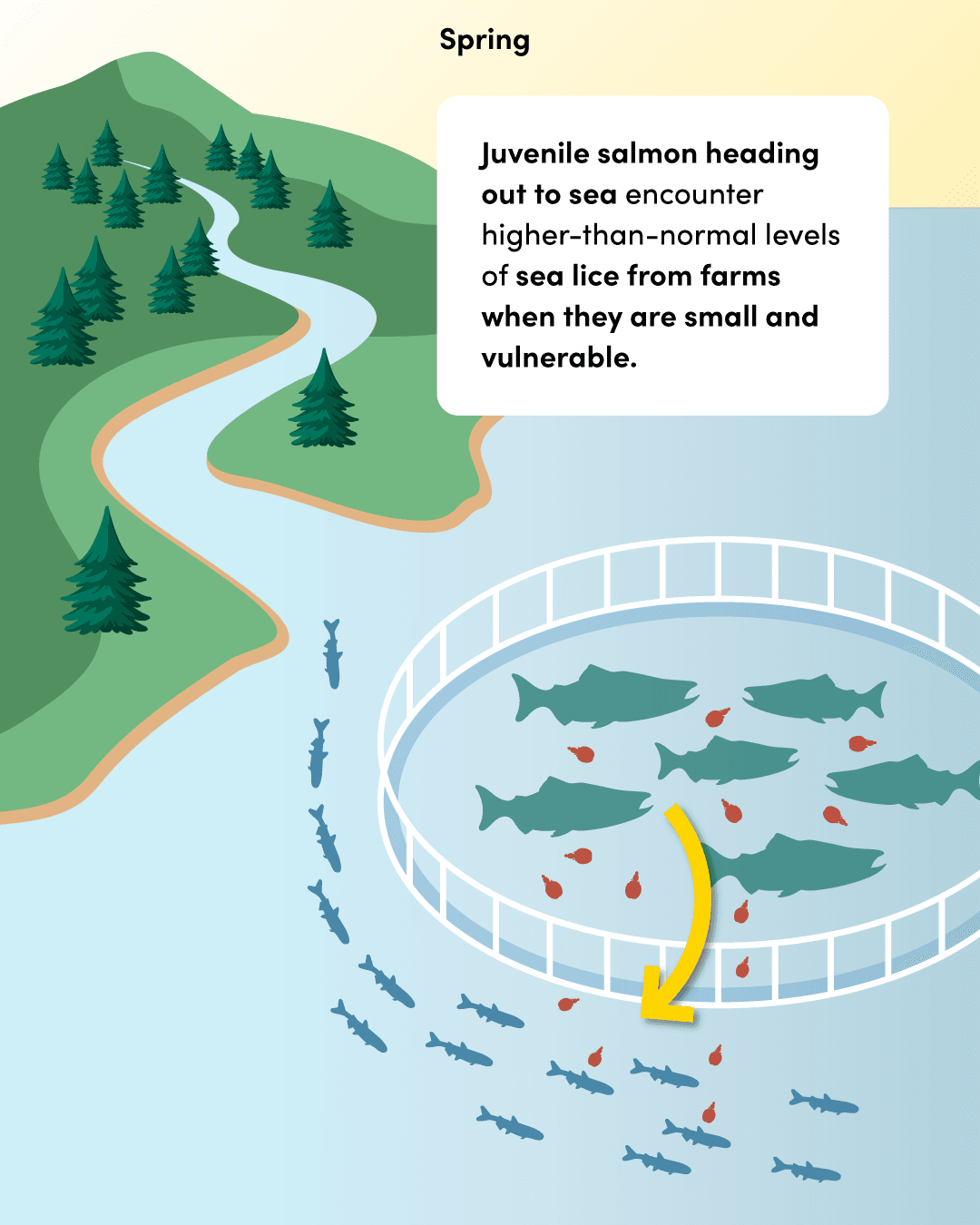
Sea lice are parasites that feed on fish skin and blood and are commonly found on adult wild salmon. However, small, scaleless juvenile salmon are far more vulnerable to the impacts of these parasites†.
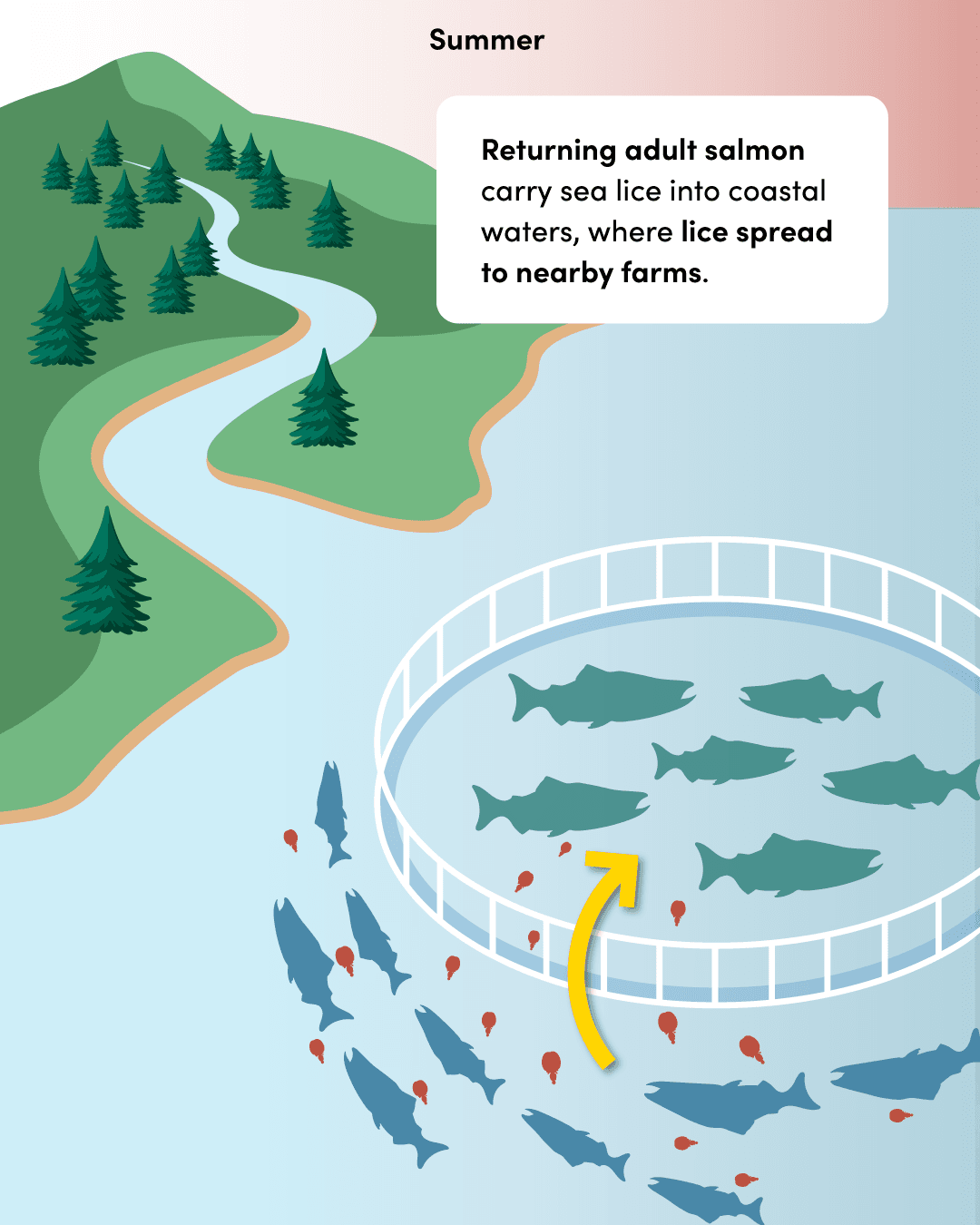
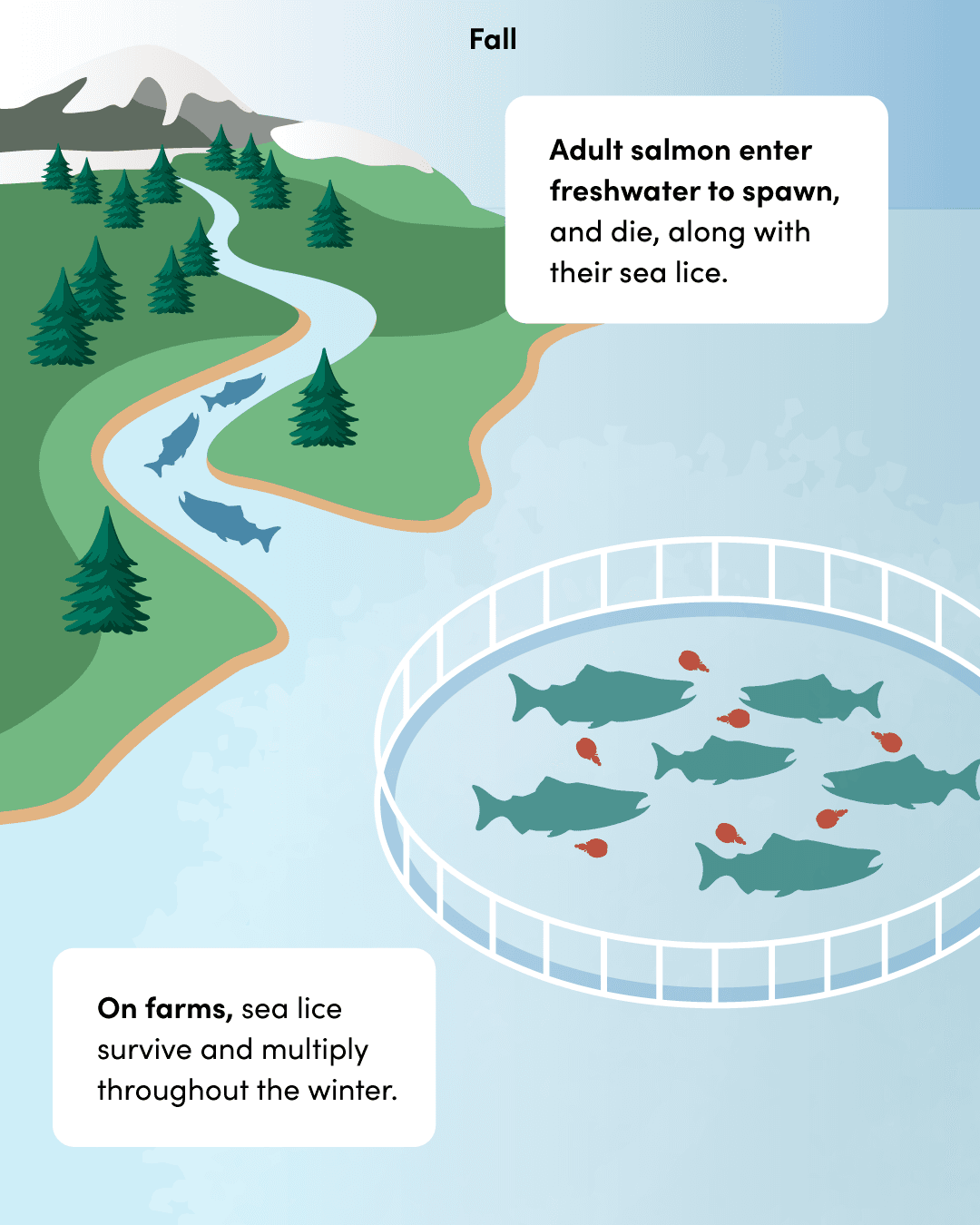
When wild salmon die after spawning, it naturally breaks the cycle of sea lice infection – their parasites die with them. But farmed salmon are present year-round and continue to carry sea lice through the winter, acting as a reservoir that can re-infect the next generation of salmon when they enter the ocean.
In salmon farming regions, juvenile wild salmon leaving their home streams in spring may encounter sea lice from farms at levels 73 times higher than in areas without farms†, leaving them vulnerable to an infection their bodies aren’t prepared for.
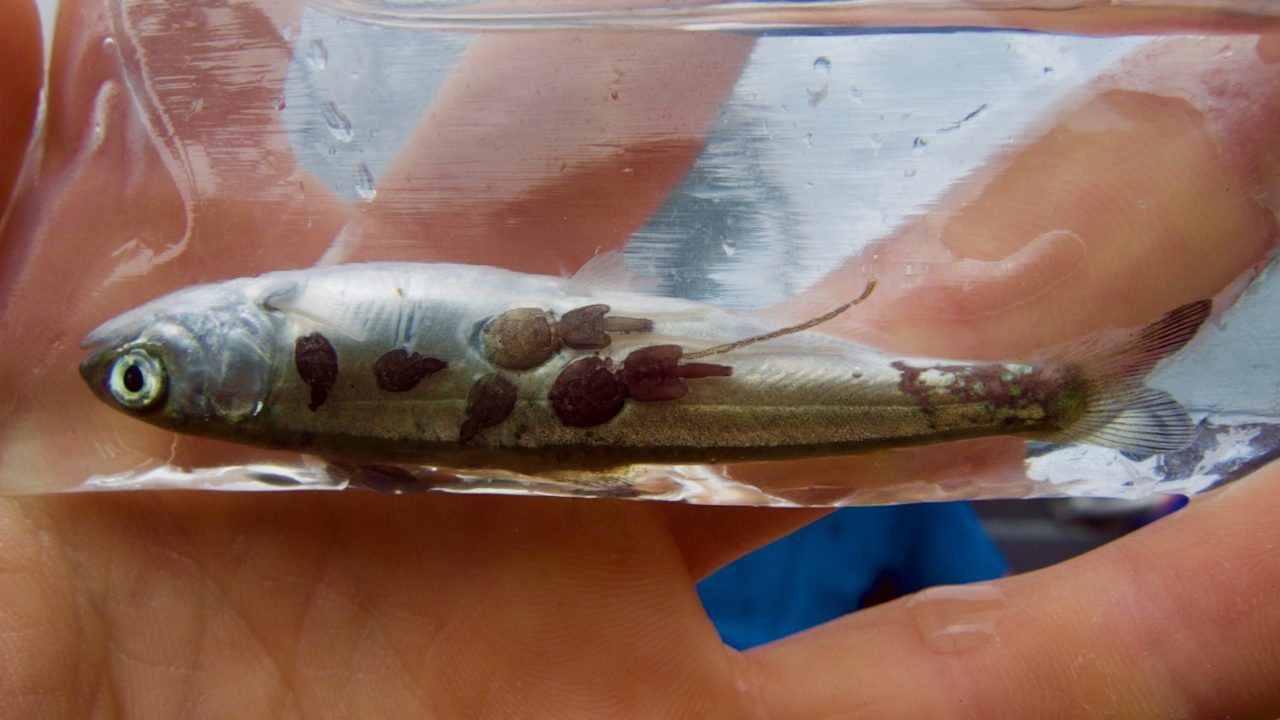
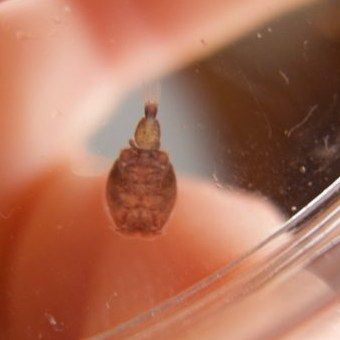
Increase in sea lice infection pressure near salmon farms relative to ambient levels†
The spillover and spillback of sea lice between wild and farmed salmon

Open net-pens transfer costs to the environment
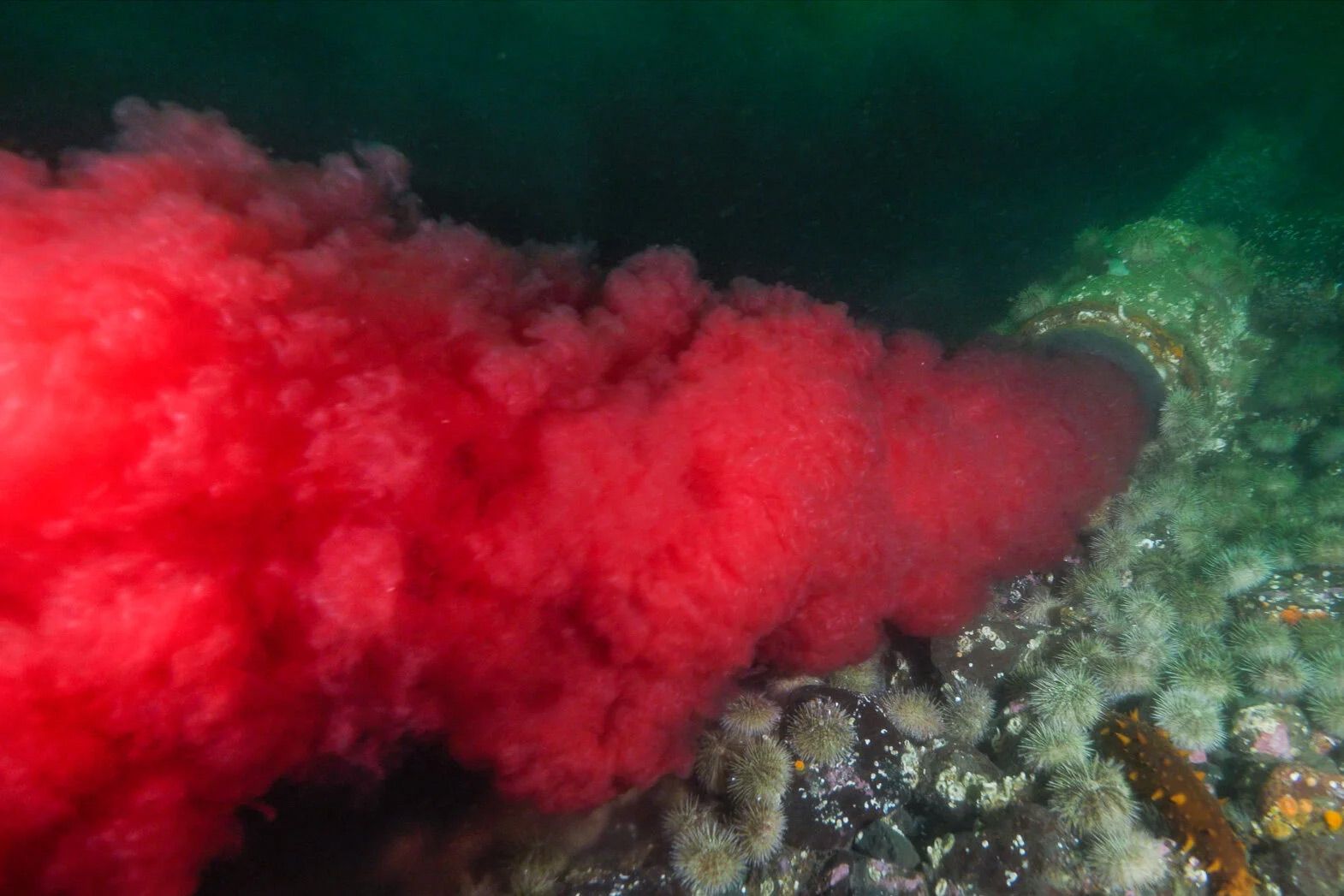 Photo by Tavish Campbell
The clean-up
Salmon farms produce large amounts of organic waste that is deposited on the sea floor below open net-pens where fish are raised, taking advantage of the marine environment’s natural ability to dilute and recycle it. When organic material breaks down, it consumes oxygen, creating “dead zones” in the water or on the sea floor below the net pens where there is not enough oxygen to support marine life. Chemicals, feed, and excess nutrients from the farms also accumulate in the sediment and affect other species†.
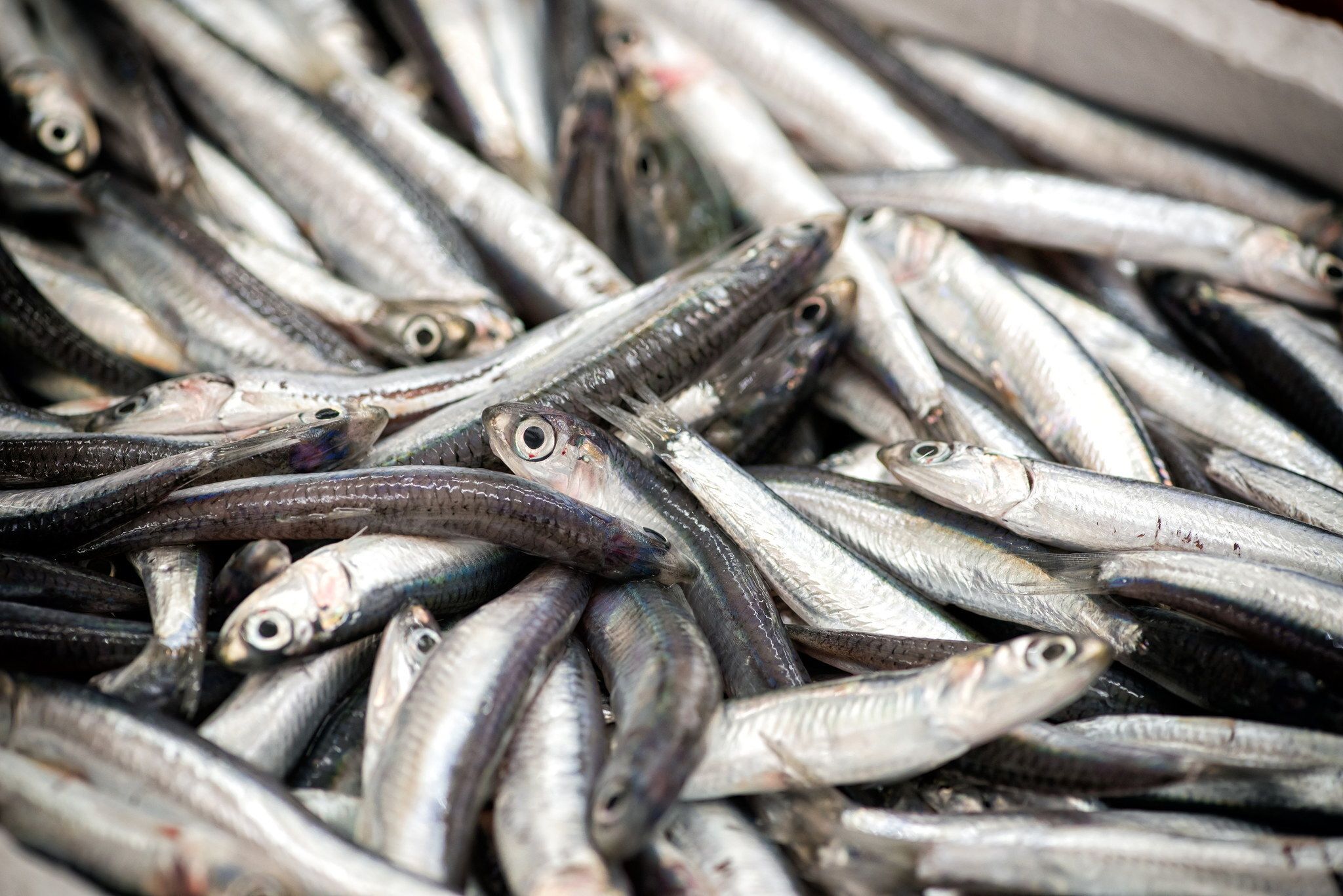 Photo by Photology 1971 / Getty Images
What farmed salmon eat
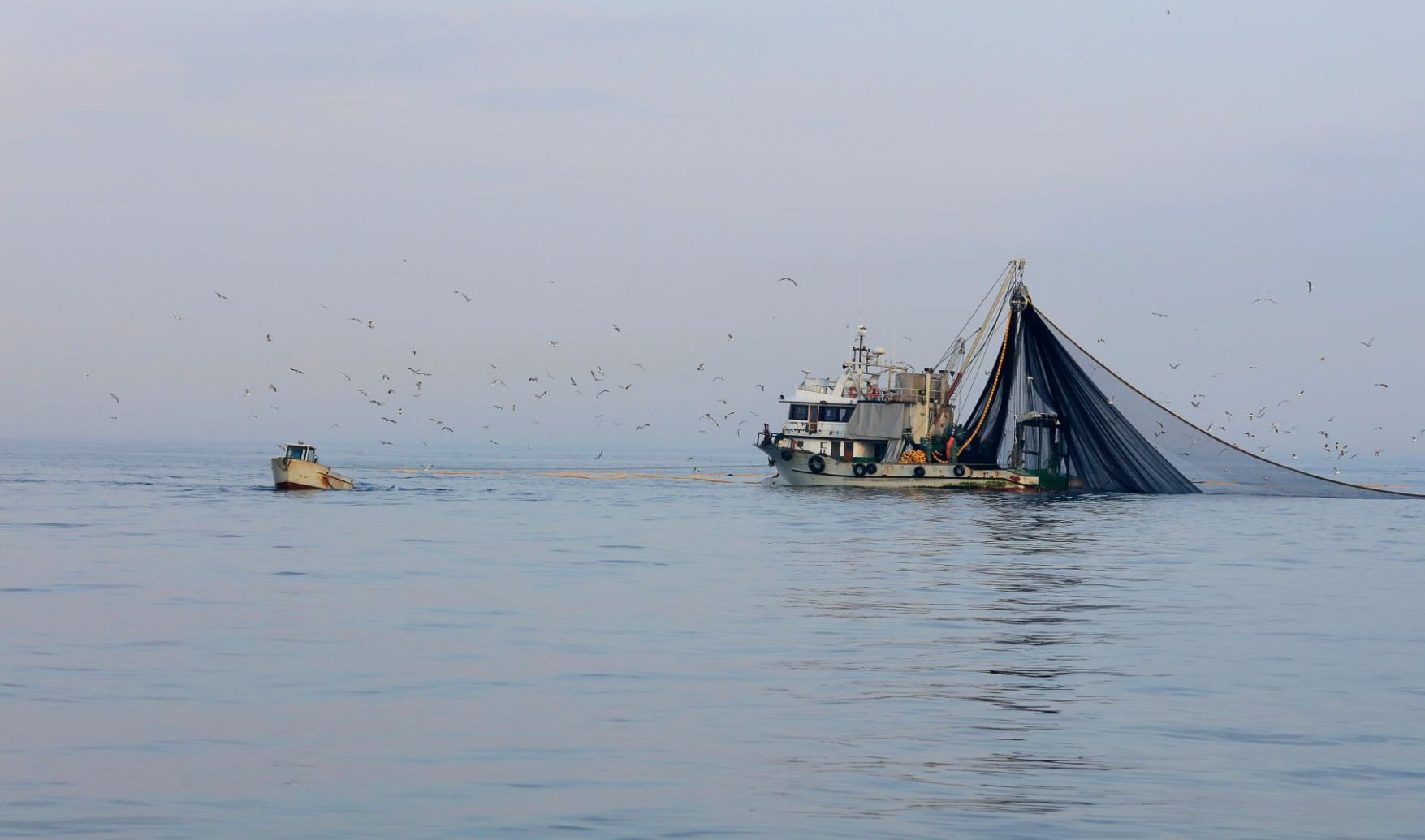
Farming carnivorous fish like salmon requires specialized feed made largely from wild-caught forage fish: anchovies, sardines, and herring. Those same forage fish feed seabirds, marine mammals, and wild salmon. Harvesting too many of these small fish disrupts the food web that wild salmon and other species depend on, impacting ecosystems worldwide. Salmon aquaculture is often held up as a solution to global protein demand given declines in wild-capture fisheries – but the reality is that it may do more harm than good.
Proportion of marine capture fishery production that was made into fish meals and fish oils, primarily for feed in aquaculture, globally in 2024†
Ending open net-pens: a commitment worth keeping
A substantial body of research has established the connection between salmon farming and weaker wild returns, backed by studies of Atlantic salmon across Europe†. Even when infections aren’t severe enough to kill salmon directly, they impact the ability of salmon to migrate, avoid predators, and compete for food – all of which translates to fewer returning spawners for the population†. In recognition of this threat, the Government of Canada has committed to ending open net-pen salmon farming (opens in a new tab) in B.C. by June 29, 2029†. Transitioning to fully closed containment salmon farms that eliminate the transfer of pathogens and waste to the environment is the path forward.
The planned phase-out of open net-pen salmon farms is a win for wild salmon, but the risks will remain until the transition is fully complete.