 Hatcheries
A Tool for Recovery, Not a Silver Bullet
Salmon hatcheries have been used across B.C. and the Yukon to support fisheries, compensate for habitat loss, and help rebuild threatened populations.
Hatcheries raise eggs and juveniles under controlled conditions, dramatically increasing survival during early life stages before releasing fish into the wild. They have contributed to the recovery of threatened populations and remain an important tool in the salmon recovery toolbox. But hatcheries also come with risks – releasing large numbers of hatchery fish can alter natural patterns of competition, predation, disease transmission, and can affect the genetic diversity and fitness of wild populations. Some of these impacts occur locally, within individual rivers and watersheds. Others extend far beyond them. Billions of hatchery salmon are released across the North Pacific each year, contributing to an ocean now supporting historically high numbers of salmon. At this scale, hatchery production can intensify competition for limited food and other resources, with potential consequences for the growth and survival of wild salmon.
Different hatcheries, different goals
Not all hatcheries operate the same way in terms of their practices for sourcing eggs, releasing fish, and the number of fish they release. Their practices are guided by their objectives, and some present more risks to wild salmon than others†.
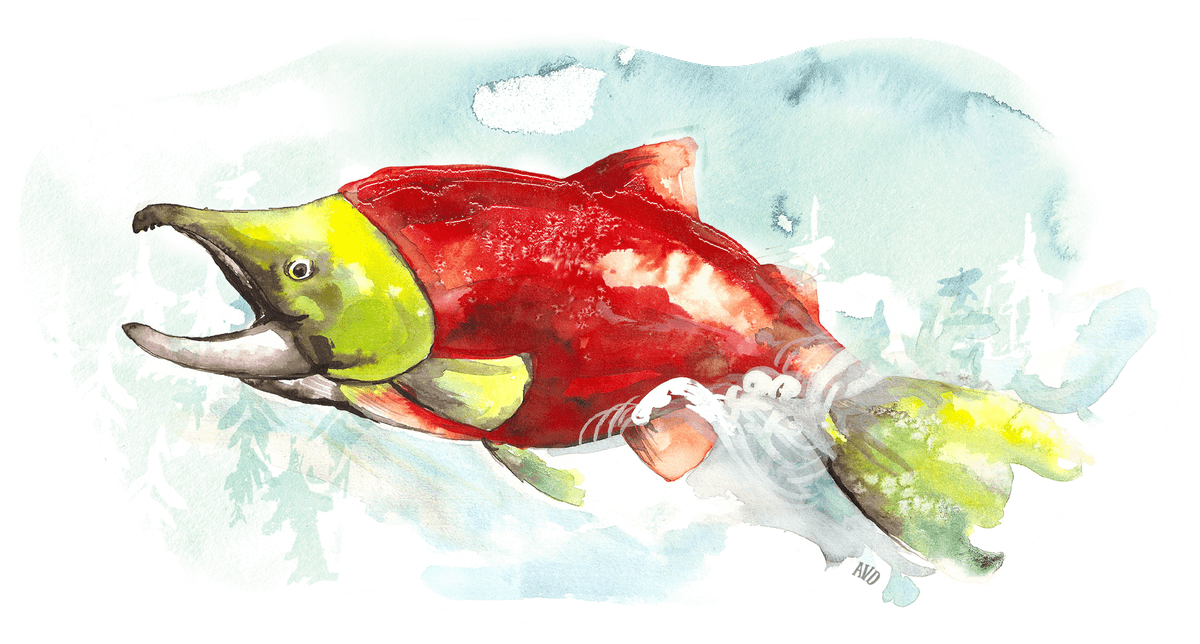
Production hatcheries release large numbers of fry, sometimes from non-local populations, to support fisheries. These fish are the most different from local wild populations they may interact with, and risk introducing unfit genes to wild salmon.
Supplementation hatcheries often have a dual goal of bolstering fisheries and enhancing local naturally spawning populations – as a result, they may periodically collect eggs from wild fish to ensure that the hatchery and wild strains are genetically similar.
Conservation hatcheries rebuild depleted wild populations until they are self-sustaining again, eventually winding down enhancement efforts as populations rebuild, and usually collect eggs from the wild to minimize genetic risks.
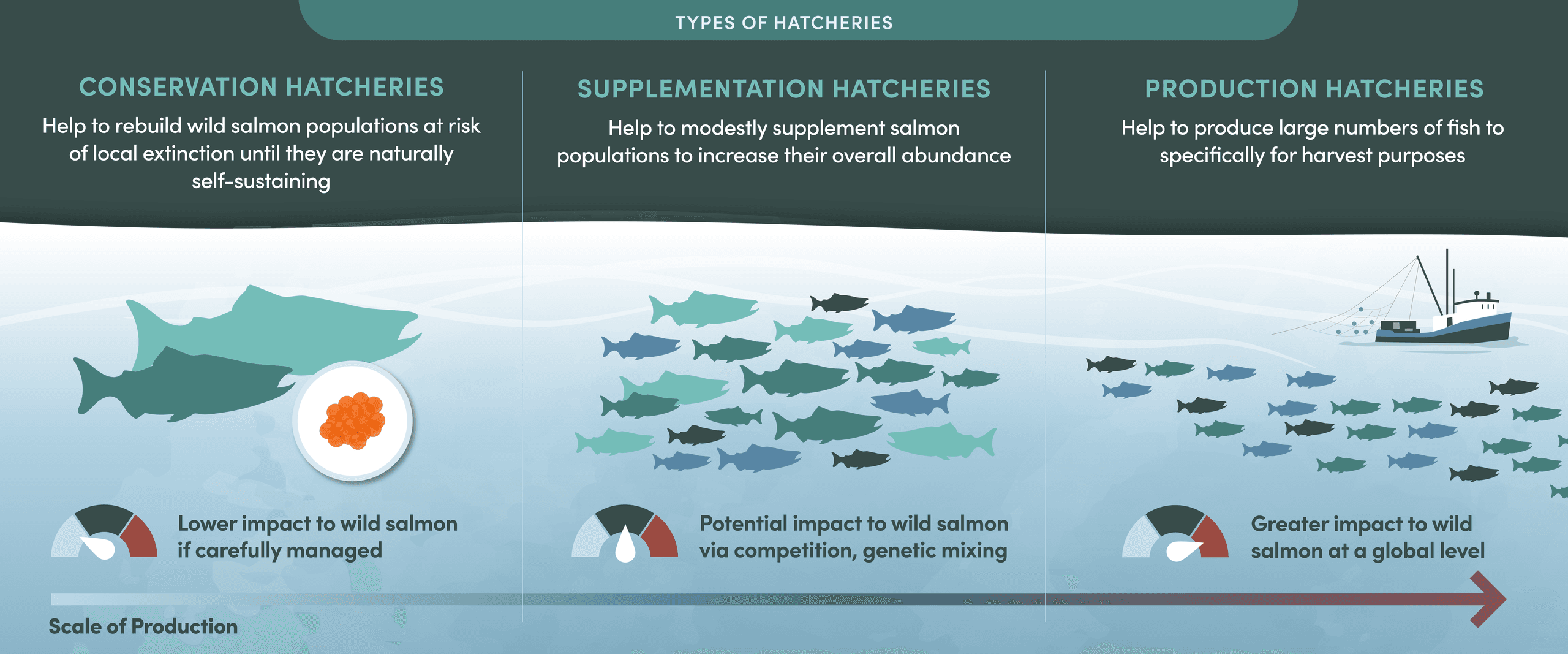
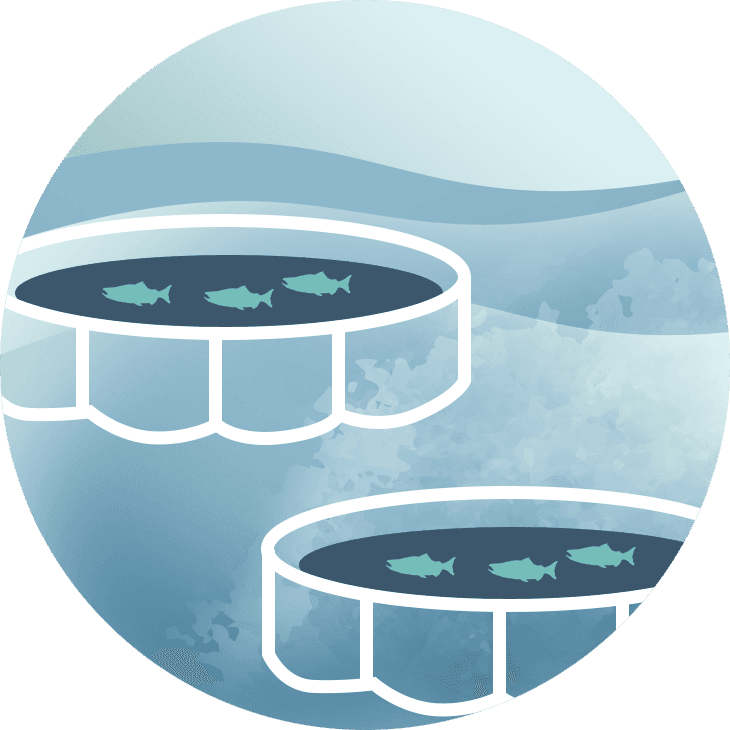
Three main categories of hatchery: conservation, supplementation, and production, differ in the number of fish they release and their impacts on wild salmon.
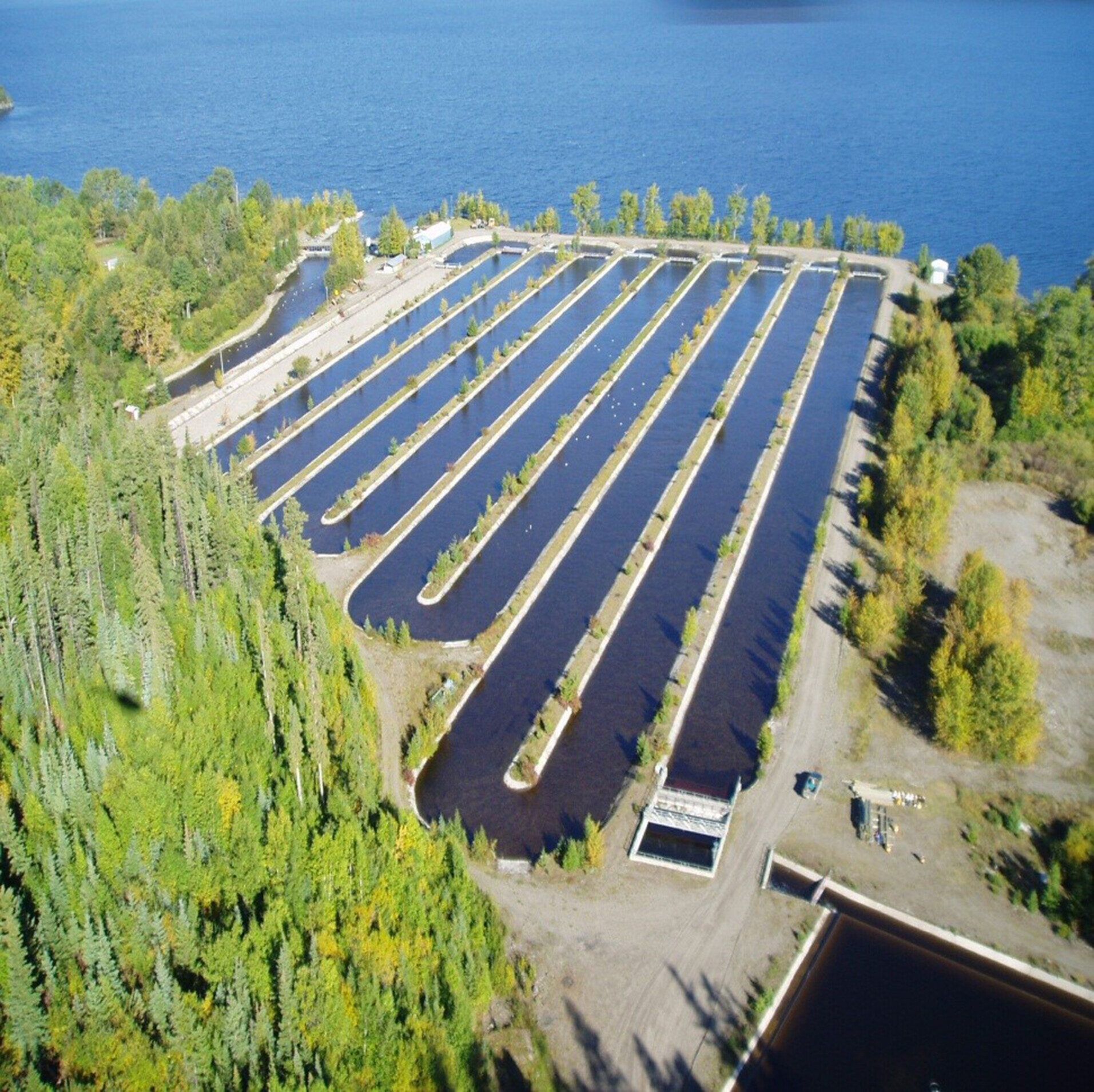 Photo by Douglas Lofthouse, Salmonid Enhancement Program
Spawning channels:Another Tool, Another Trade-off
Artificial spawning channels are another form of salmon enhancement. Rather than raising fish in a hatchery, these channels provide carefully managed flows and spawning gravel to improve the survival of eggs and young salmon in a more natural setting. Because fish spawn naturally and eggs are not collected and reared, spawning channels can avoid some of the risks associated with hatcheries—but they can still have broader ecological and fisheries consequences.
The Skeena River provides a striking example. Spawning channels have helped dramatically increase sockeye salmon returning to Babine Lake, with returns in some recent years exceeding those of Fraser River sockeye. But this success has also created trade-offs. Large numbers of Babine sockeye can increase competition and support fisheries that can intercept smaller, less abundant salmon populations migrating at the same time, raising concerns about their long-term resilience†.
What kind of hatcheries operate in B.C.?
Most hatcheries in B.C. and the Yukon are supplementation hatcheries operated by the Department of Fisheries and Oceans, First Nations, or community stewardship groups. They vary in scale from hundreds of thousands of releases per year to a few fry raised in school classrooms.
The legend’s “>1M” markers refer to an average of more than one million salmon released per year over the past decade. Explore hatchery locations and statistics on the Pacific Salmon Explorer (opens in a new tab).
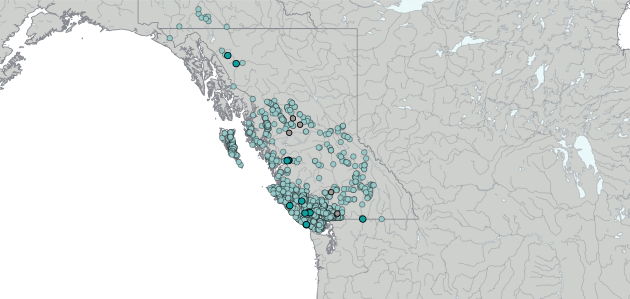
- Release sites
- Spawning channels >1M
- Hatchery releases >1M
Hatchery and wild salmon are genetically different
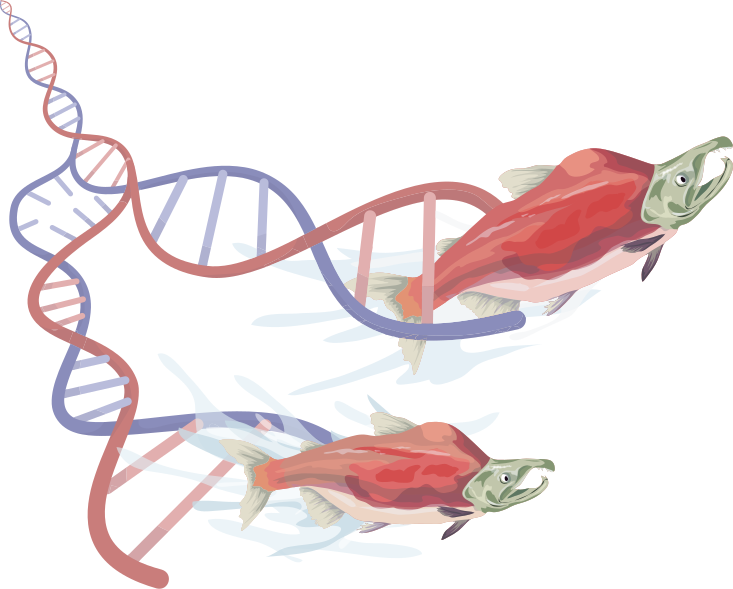
Hatchery fish are raised in controlled environments that improve their growth and survival prior to release. Unlike wild salmon, they are not exposed to the same natural pressures early in life, such as predation, competition, and changing environmental conditions.
As a result, hatchery fish can become less adapted to surviving and reproducing in the wild. The extent of these differences depends partly on hatchery practices, including whether hatcheries regularly incorporate wild fish into their breeding programs and whether the eggs originated from the local environment. Regardless, a large body of research shows that hatchery salmon have lower survival and reproductive success in natural environments, even after only a single generation of being raised in hatcheries†.
Hatchery salmon tend to return to rivers where they were released and may interbreed with local wild populations, mixing their gene pools. While wild populations sustain a diversity of traits in their gene pool to buffer against the unpredictable environment, including timing of migrations and ages at return, hatcheries rarely mimic the same level of diversity†.
When hatchery and wild populations interbreed, the wild gene pool can become skewed toward the uniform traits of the hatchery fish and away from its natural diversity†, a process that cannot be reversed. Less diversity often means less resilience to environmental change – including to climate change. A study from the U.S. Northwest Fisheries Science Center found that hatcheries were a factor in the loss of diverse run-timing variants of California salmon that would have provided more resilience to hot summer temperatures droughts†.
The resurgence of Cowichan Chinook
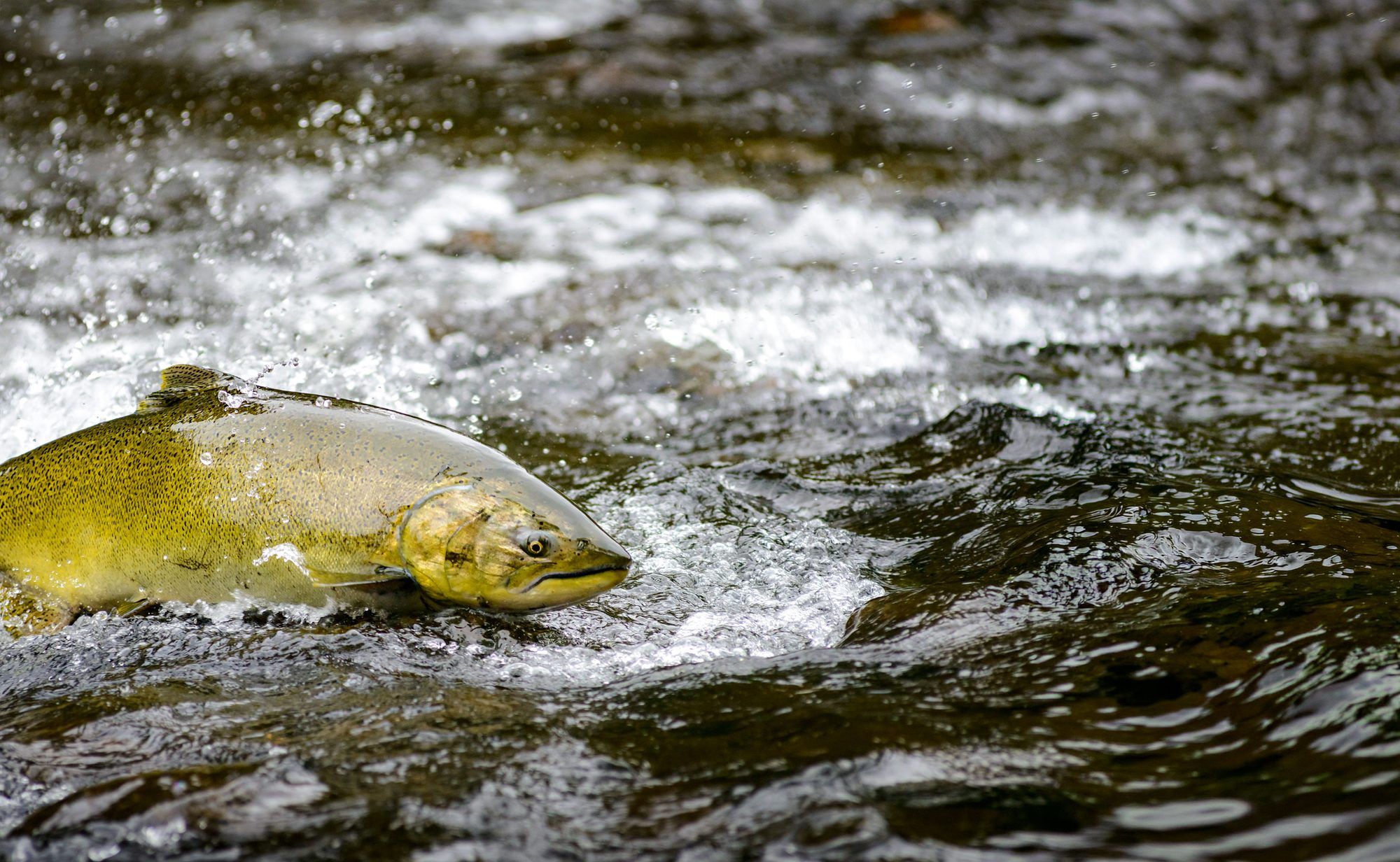
The resurgence of Cowichan River Chinook illustrate both the value and the limits of hatcheries as a recovery tool. A supplementation hatchery established in 1979 through a partnership between Cowichan Tribes and Fisheries and Oceans Canada ramped up production through the 1990s, eventually releasing an average of 1.9 million juvenile Chinook annually by the 2000s—partly in an effort to offset declining survival in the ocean. Despite these efforts, Chinook abundance continued to fall, reaching just 540 natural spawners in 2009†.
Research provided an important clue as to why. Hatchery-origin Chinook were surviving at rates 6 to 24 times lower than their wild counterparts†. Hatchery production was moderated and efforts increasingly shifted to address the conditions wild Chinook need to survive—including improved river flows, habitat restoration and reduced harvest pressure. In recent years, Cowichan Chinook have experienced a remarkable resurgence, with more than 22,000 natural spawners returning in 2024.
The broader recovery approach continues today. Cowichan Tribes and partners are undertaking a major restoration of the Cowichan Estuary, restoring 70 hectares of marshland that provides important habitat for salmon and other species while also improving the watershed’s resilience to climate change and flooding.
The Cowichan story reinforces an important lesson about salmon enhancement: hatcheries can support depleted populations and buy time for recovery, but producing more fish is not a substitute for addressing the reasons wild salmon declined in the first place. The greatest value comes when hatcheries are used strategically alongside actions that restore the conditions salmon need to survive in the wild.
Marked selective fisheries – the future of salmon fishing?
Hatcheries are often used to support commercial, recreational, and Indigenous fisheries by increasing the number of fish available for harvest and reducing pressure on wild populations. However, hatchery production can also unintentionally increase fishing pressure on wild salmon. Large returns of hatchery fish can create opportunities for increased harvest, but wild salmon migrating alongside them may be caught at the same time. In these mixed-stock fisheries, hatchery and wild salmon are harvested together, creating a risk that at-risk wild populations are caught at unsustainable rates. In this way, producing more hatchery salmon can create a difficult trade-off: more fish available for harvest, but potentially greater fishing pressure on the wild populations we are trying to protect.
Marked-selective fisheries offer one way to reduce this trade-off. Before release, hatchery salmon can be marked by clipping their adipose fin, allowing fishers to visually distinguish them from unmarked salmon. Fisheries can then allow marked hatchery fish to be retained while requiring unmarked fish to be released—creating fishing opportunities while reducing harvest of wild salmon. This approach has been used in parts of southern B.C.’s recreational Chinook fishery since 2021†.
But selective fisheries are not without risk. Releasing a wild salmon does not guarantee it will survive: mortality following capture and release can be as high as 45%†, although rates vary widely depending on fishing methods, handling and environmental conditions†. Fisheries and Oceans Canada has announced plans to expand hatchery marking, including a commitment to mark 90% of hatchery Chinook released in southern B.C. by 2027, in part to support more marked-selective fisheries†, in part to support these more selective fisheries.
Sharing a finite ocean
Hatchery fish can increase competition for food and habitat in both freshwater and marine environments. Hatchery juveniles are often larger than their wild counterparts when released, potentially giving them a competitive advantage when food, habitat or other resources are limited†. But the effects of hatchery production extend far beyond individual rivers.
Once salmon enter the ocean, they join fish from across the North Pacific competing for a shared and changing food supply. Access to enough food is critical: salmon need energy to grow, avoid predators, complete long migrations and ultimately return to reproduce.
Hatchery fish do not always directly out-compete wild salmon†, but adding hundreds of millions of fish to the North Pacific can intensify competition when food is limited. In Alaska, where more than 700 million hatchery salmon are released in some years, research has linked high hatchery abundance with reduced survival of wild pink salmon—likely reflecting increased competition for shared food resources†.
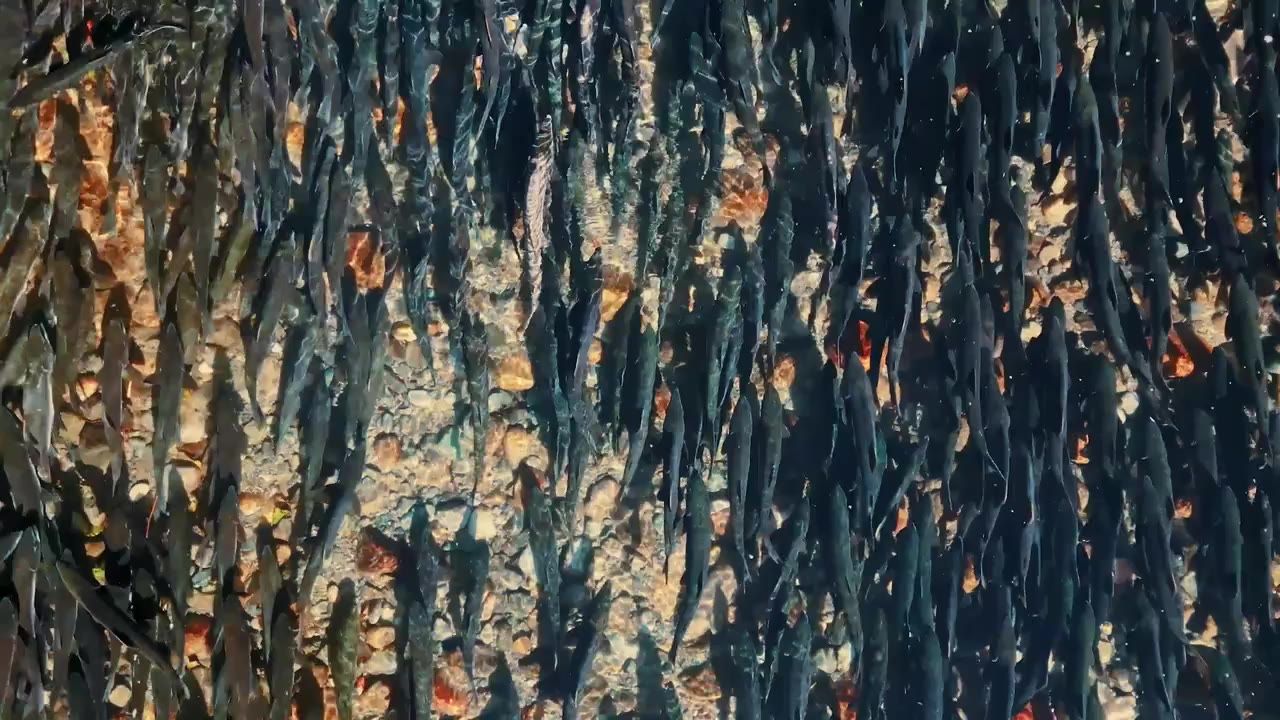
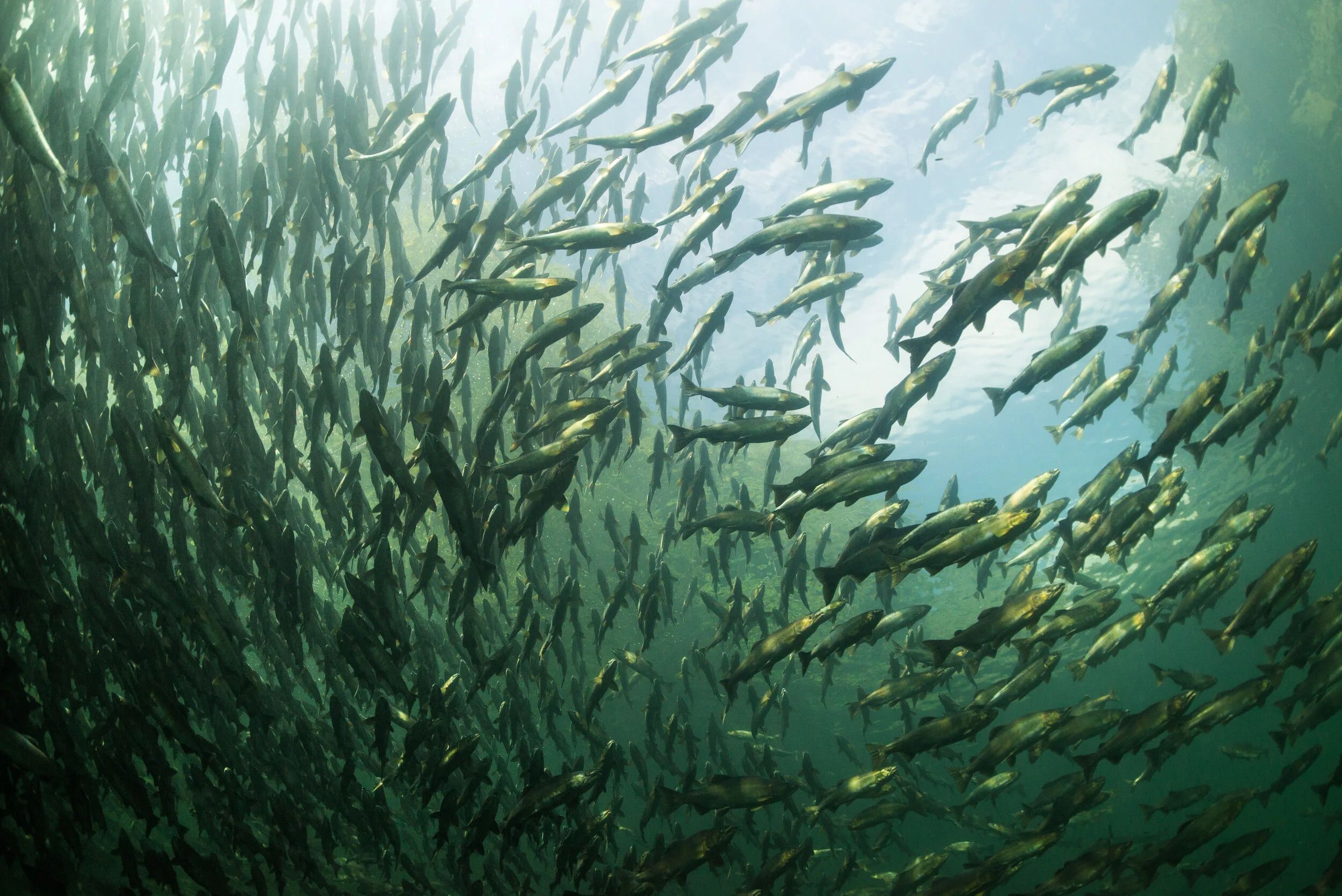 Photo by Tavish Campbell
More salmon than ever before
Since 1975, the number of hatchery salmon released into the North Pacific has more than doubled, reaching over five billion fish in recent years. As hatchery releases – particularly of pink salmon – have increased, salmon populations returning to rivers across North America have shown declining growth and survival, suggesting increasing competition for food in the open ocean†. Evidence of competition at sea has now been documented across all six Pacific salmon species, and may even affect broader marine ecosystems, including seabirds and whales that rely on similar food resources†. Canada contributes only about 5% of hatchery salmon released into the North Pacific – so if competition at sea is going to be addressed, it has to be on the world stage†.
Hatchery salmon released into the North Pacific on average over the past decade†
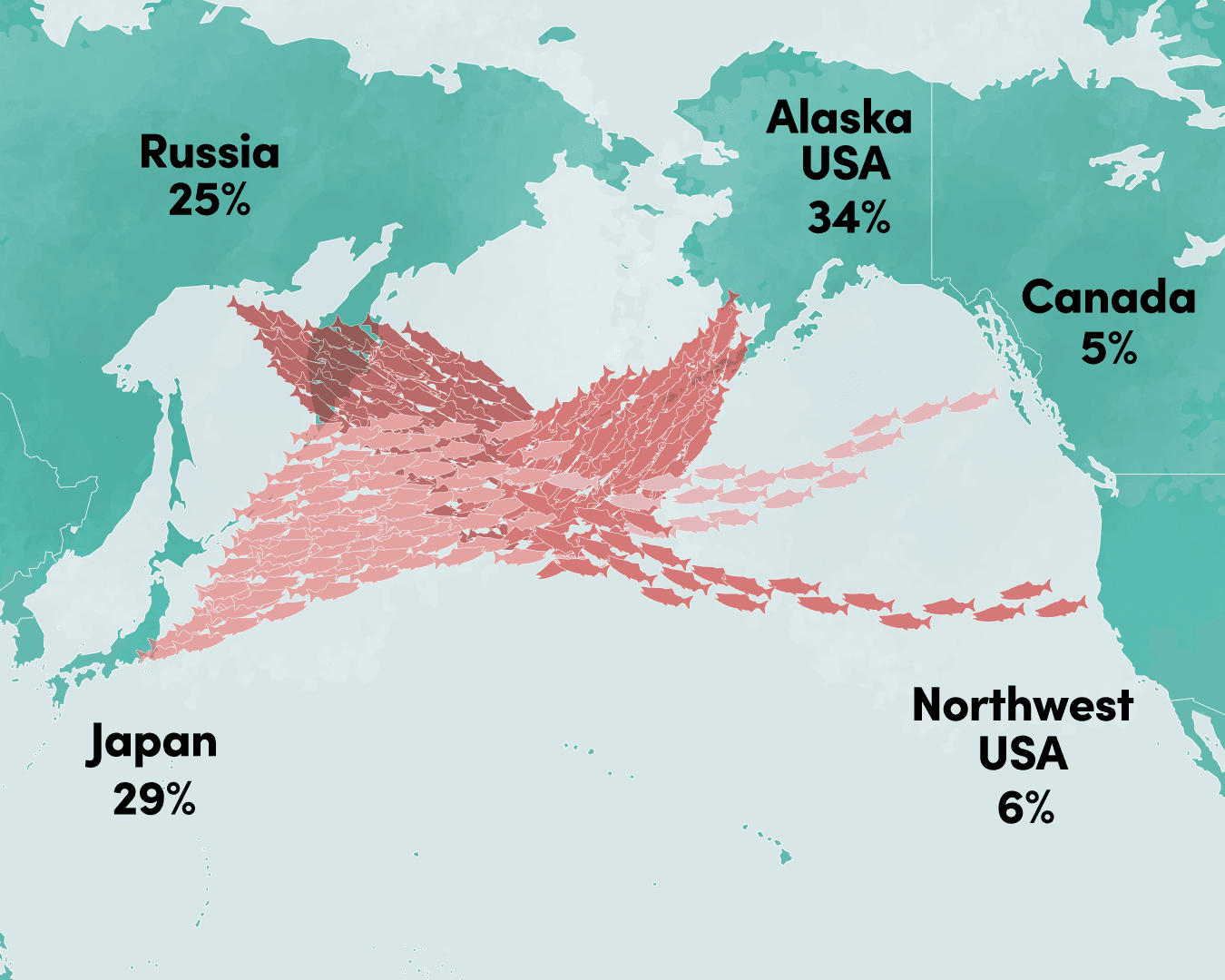
The proportions of total hatchery salmon releases in the North Pacific by country over the last decade. Data source: NPAFC (2025) (opens in a new tab).
A Natural Experiment in Competition
Pink salmon are now the most abundant salmon species in the North Pacific and are increasing both through hatchery production and favourable ocean conditions related to climate change†. Pink salmon have a consistent two-year life cycle with greater abundances in the North Pacific in odd years than in even years. This pattern matches changes in growth, size, and survival of other salmon species, allowing scientists to more clearly document the negative impacts of competition with pink salmon.
Finding the right role for hatcheries
Hatcheries can provide important benefits by supporting fisheries and helping rebuild at-risk salmon populations. They’ve become a lifeline in some places – allowing people to maintain long-held cultural relationships to harvesting salmon. But if not carefully managed, they can also undermine the long-term conservation and recovery of wild salmon. How hatchery and wild fish interact depends on factors like breeding practices, how many are released, and how hatchery fish are managed once they enter the natural environment, though most documented impacts on wild populations have been negative[1][20]. In a rapidly changing world, hatcheries will likely remain part of the future of Pacific salmon management – but they should not come at the expense of healthy wild populations and functioning ecosystems.
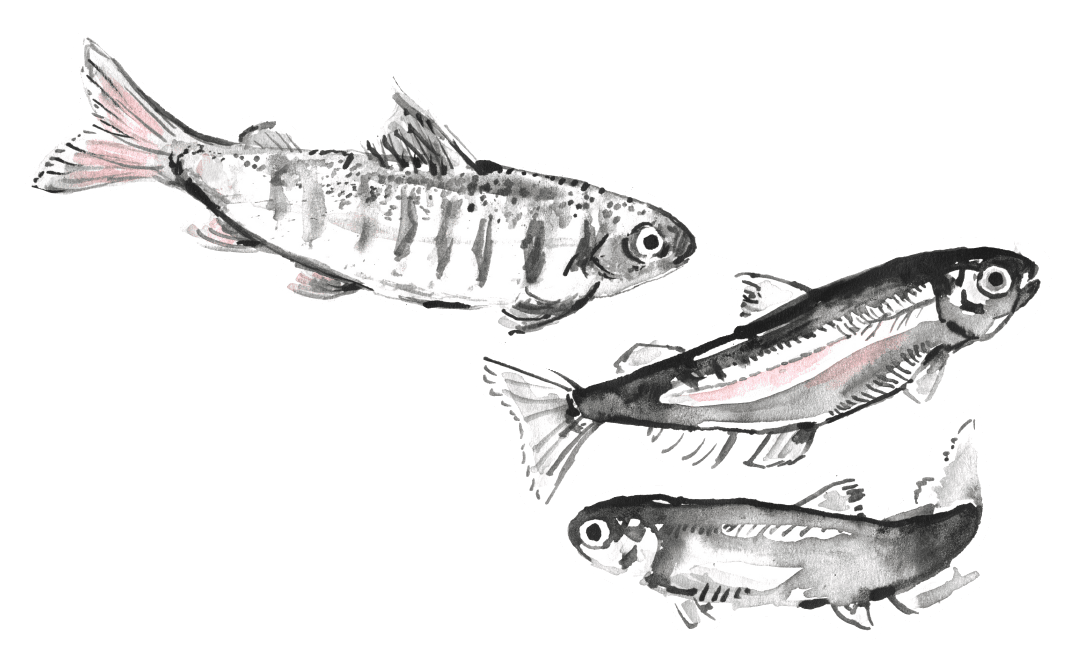
Hatcheries can buy time for salmon, but they cannot replace ecosystems that we fail to protect.