 Fisheries
How We Fish Matters
For wild salmon, sustainability depends on more than numbers – where, when, and which fish we catch matters just as much.
Along the way, they move through diverse environments and encounter fisheries in offshore marine waters, along coastlines, at the mouths of major rivers, and in rivers and streams.
Harvesting Salmon Through Time
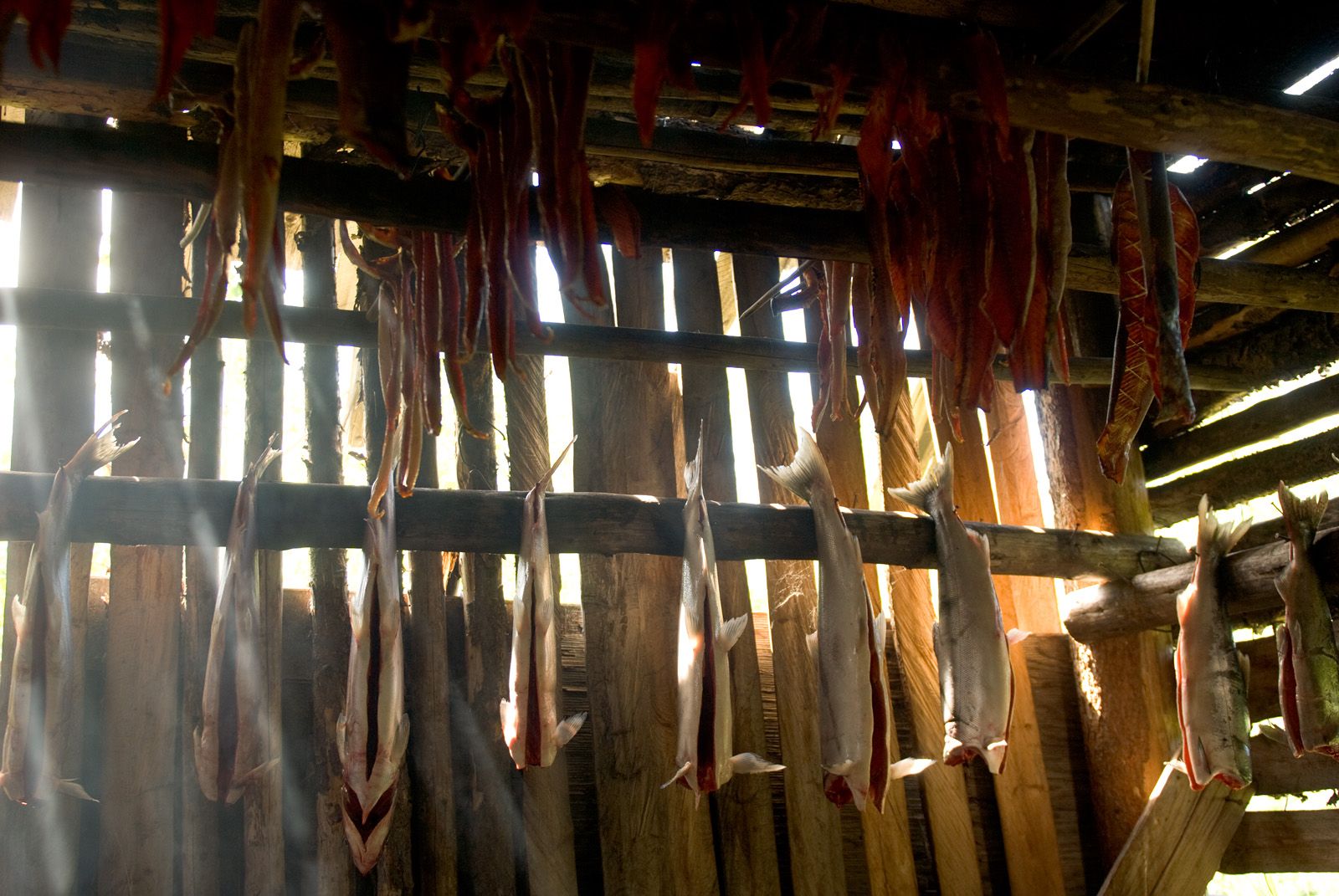
First Nations have sustainably harvested salmon for millennia, with salmon deeply woven into cultural identities, food systems, economies, governance, and spiritual traditions. Following colonization, industrial fishing technologies and larger vessels dramatically increased the scale and reach of salmon harvests, allowing fisheries to operate farther from shore, intercept salmon in different habitats, and fish for longer periods of time. This shift affected the abundance and traits of fish left to spawn, with consequences that are still being uncovered today. Salmon are part of life in western Canada, and for many people, our connection to salmon through food and culture is also the reason we work to conserve them.
Canadian Salmon Fisheries:Then and Now
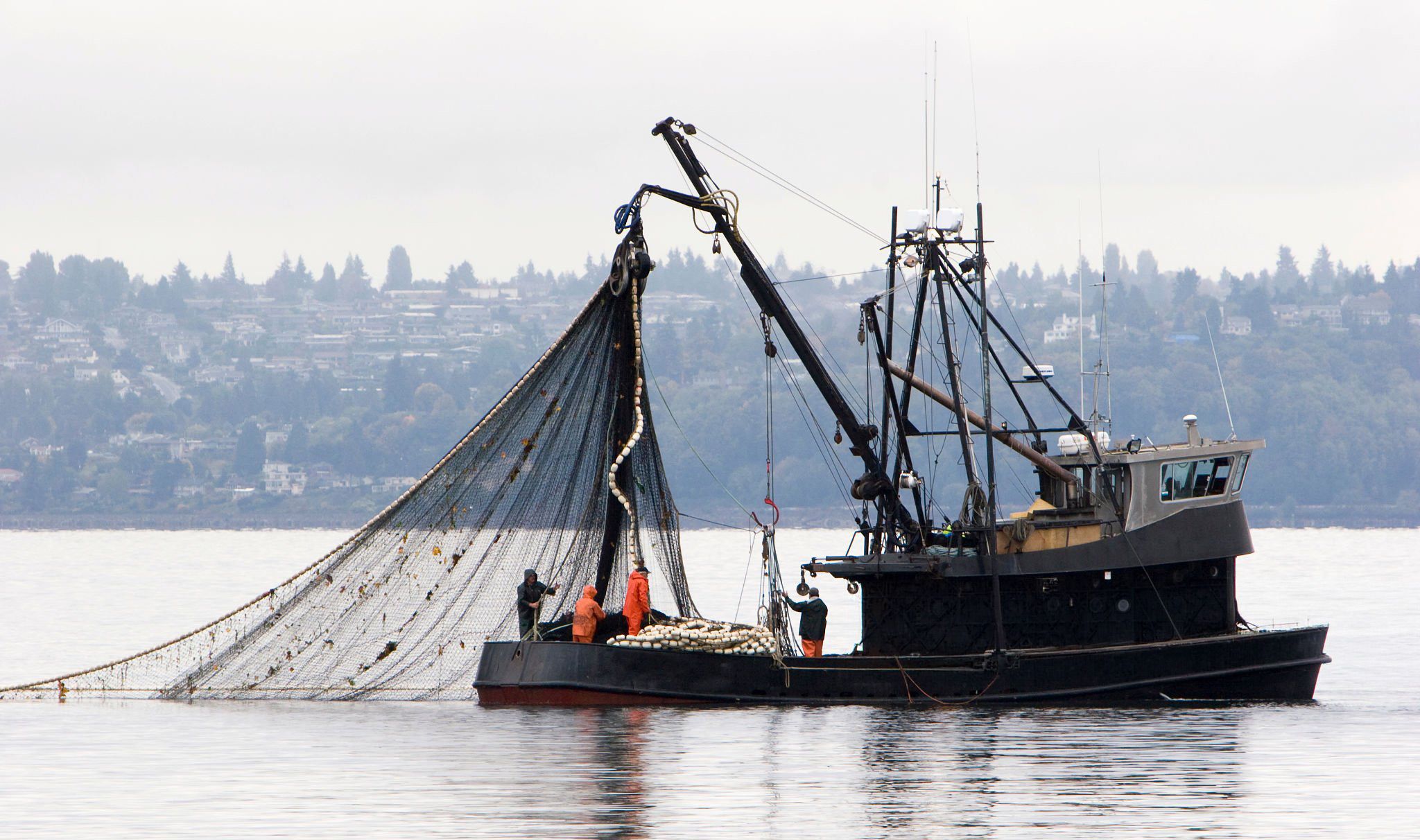
Canadian commercial Pacific salmon catches have changed dramatically over the past century. During much of the 20th century – especially from the 1950s through the 1980s – commercial salmon fisheries in British Columbia were among the largest and most economically important fisheries in Canada, with annual catches often reaching tens of thousands of tonnes†. Advances in fishing technology, larger vessels, and expanding global markets allowed fisheries to harvest salmon at increasingly large scales.
Since the late 1980s and 1990s, however, commercial salmon catches have declined sharply due to a combination of overfishing, habitat loss, climate change, warming oceans and rivers, changing marine food webs, and conservation-driven fishery restrictions aimed at protecting declining salmon populations. Average catches and economic returns since the late 1990s have remained far below historical levels†.
Today, many commercial salmon fisheries are far smaller, more restricted, or periodically closed compared to historical levels, particularly for at-risk populations of Chinook and sockeye. At the same time, management increasingly prioritizes conservation, Indigenous food, social and ceremonial fisheries, and rebuilding depleted salmon populations.
Total weight of salmon (all species) caught in Canadian commercial fisheries since 1925. Graph by Hannah Hunter. Source: NPAFC (2025)
Catching the right fish
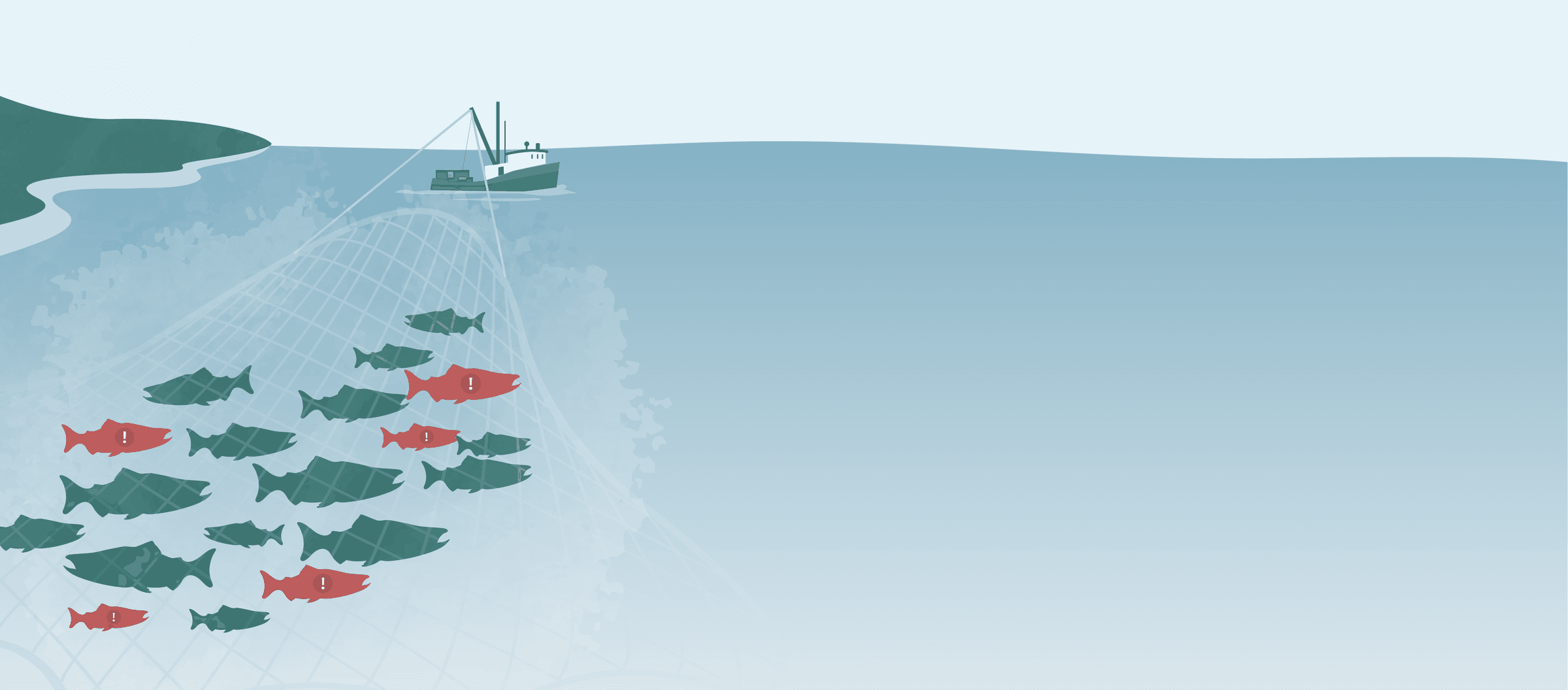
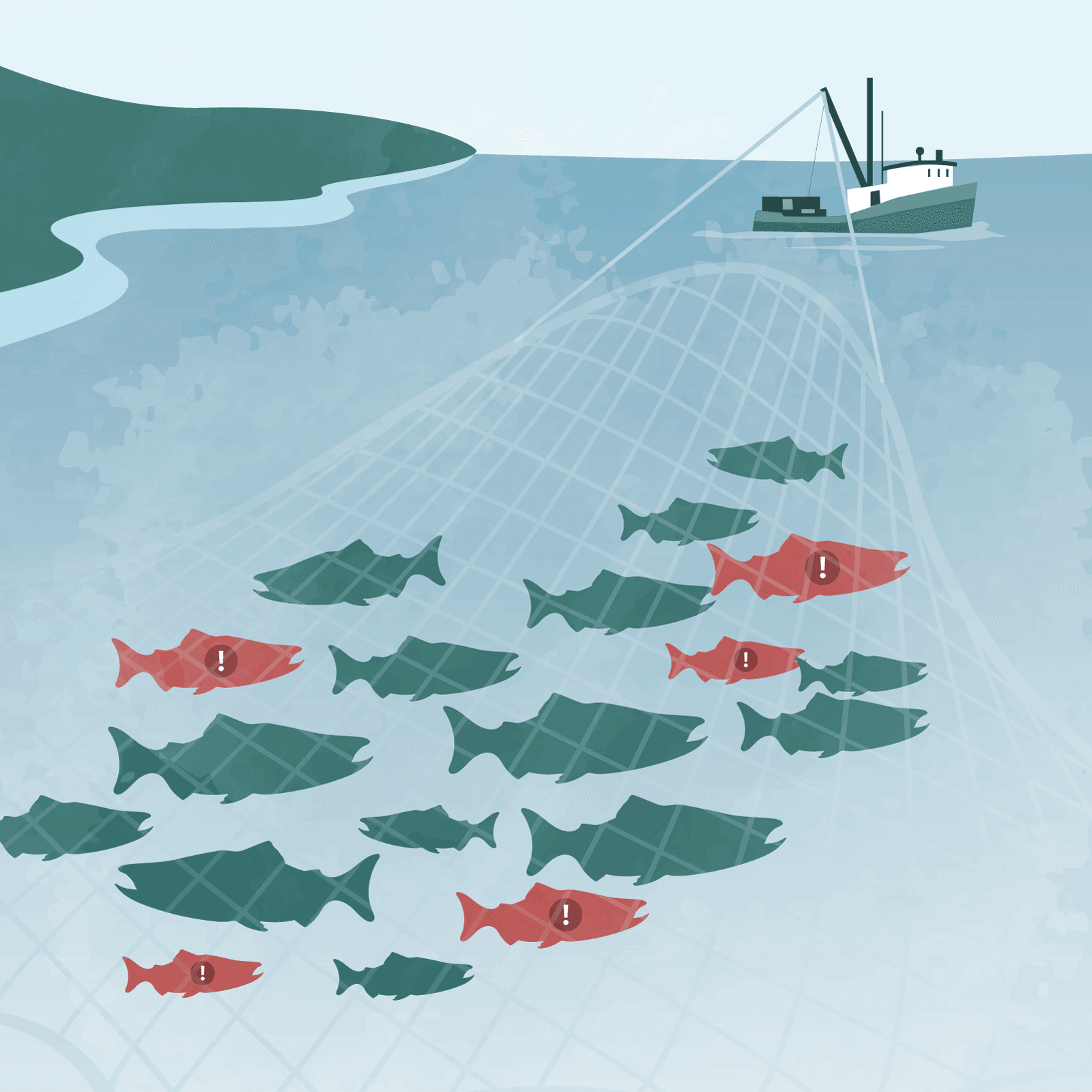
Many fisheries target salmon in the ocean during their return migration, harvesting a mix of fish from many different populations at once. In these “mixed-stock fisheries,” it is difficult, or even impossible, to avoid catching salmon from less abundant or at-risk populations alongside more abundant ones. Traditionally, harvest levels have been set based on what the most abundant and productive populations can sustain, unintentionally leading to overfishing of weaker populations†.
In many cases, managers do not know exactly which populations were caught until after the fish have already been harvested. These risks are especially pronounced in large river systems such as the Skeena and the Fraser, where numerous distinct salmon populations return through the same migration corridors. As a result, mixed-stock fisheries have become one of the central challenges in balancing salmon harvest opportunities with the long-term conservation of Pacific salmon diversity.
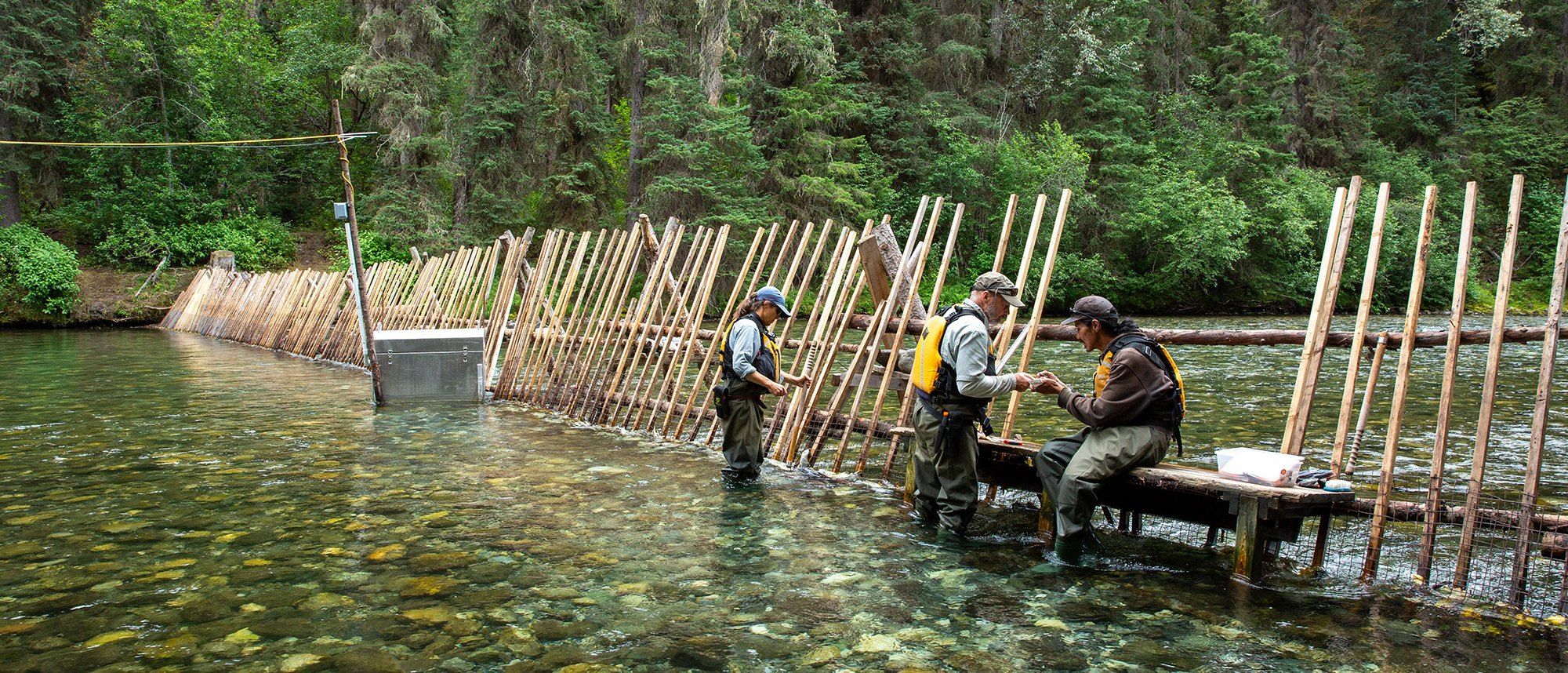 Taku River Tlingit First Nation Nakina Weir, 2019. Photo by Manu Keggenhoff
Fishing closer to home lowers the risk
Terminal fisheries catch salmon closer to spawning grounds, ensuring that a single or a known few populations are being harvested, and the number of returning spawners can be easily tracked. Technology like fish weirs, structures that stretch across rivers to trap migrating salmon, have been used for millennia by Indigenous people and are experiencing a resurgence as their relative sustainability benefits are recognized. At the same time, many commercial fisheries need to catch salmon in the ocean, before their meat starts to darken once they enter freshwater. Operating marine fisheries at the river mouth, and with careful timing, can prevent harvesting non-target populations in many cases.
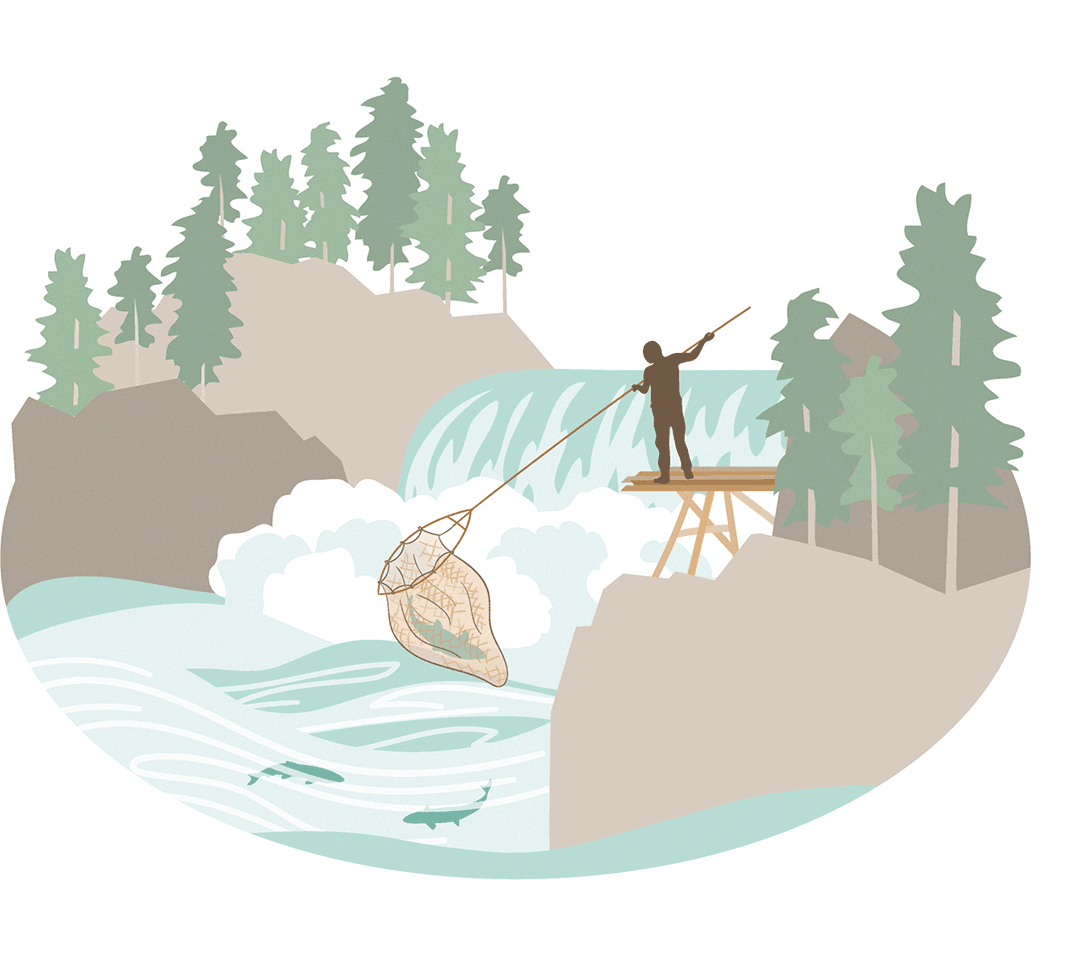
Dip nets are a ubiquitous, effective, and simple way of catching migrating salmon. Most effective at narrow canyons and cascades, where fish are concentrated along the shore, dip netting sites are often passed down through families for generations.
The Accidental Harvest
When salmon are unintentionally caught in fisheries targeting other species, it is known as bycatch. Bycatch has become a growing concern in large industrial fisheries. In Alaska’s Bering Sea pollock fishery – one of the world’s largest fisheries – tens of thousands of Chinook and chum salmon can be caught incidentally in some years, including salmon originating from rivers across western Alaska, Canada, and Asia.
Similarly, increased monitoring of B.C.’s bottom trawl groundfish fisheries in 2023 and 2024 revealed that more than 28,000 salmon – mostly Fraser River Chinook, including som e COSEWIC-listed threatened populations – had been caught as bycatch†. Improved monitoring allowed managers to respond quickly, reducing salmon bycatch in the following year by more than half. However, salmon bycatch remains poorly understood in many fisheries.
Selective fisheries have impacted salmon traits
Historic photos of Canadian Pacific salmon fisheries often show fishers posing with their catch weighing close to 100 pounds, a size that salmon in our waters just don’t reach anymore. Most Pacific salmon species are now smaller at a given age than they were in the past. Selective fishing, changing ocean conditions, and other ecosystem changes have likely all contributed to this long-term shift.
Fisheries can impact more than just the number of salmon – they can also change traits like size and the age at which fish return. Large fish are the most economically valuable and have historically been targeted in fisheries, meaning only the smaller fish make it to their natal streams to spawn. Over time, the gene pool of salmon populations can become skewed toward smaller, younger fish, which produce fewer, and smaller, eggs. This decline in reproductive potential means that a salmon population is less able to replace itself, making it less resilient to challenging conditions. It’s bad news for fisheries too – not only are small fish less valuable and harder to process, but fisheries also need to allow more salmon to spawn, since each spawner can make fewer offspring for the next generation.
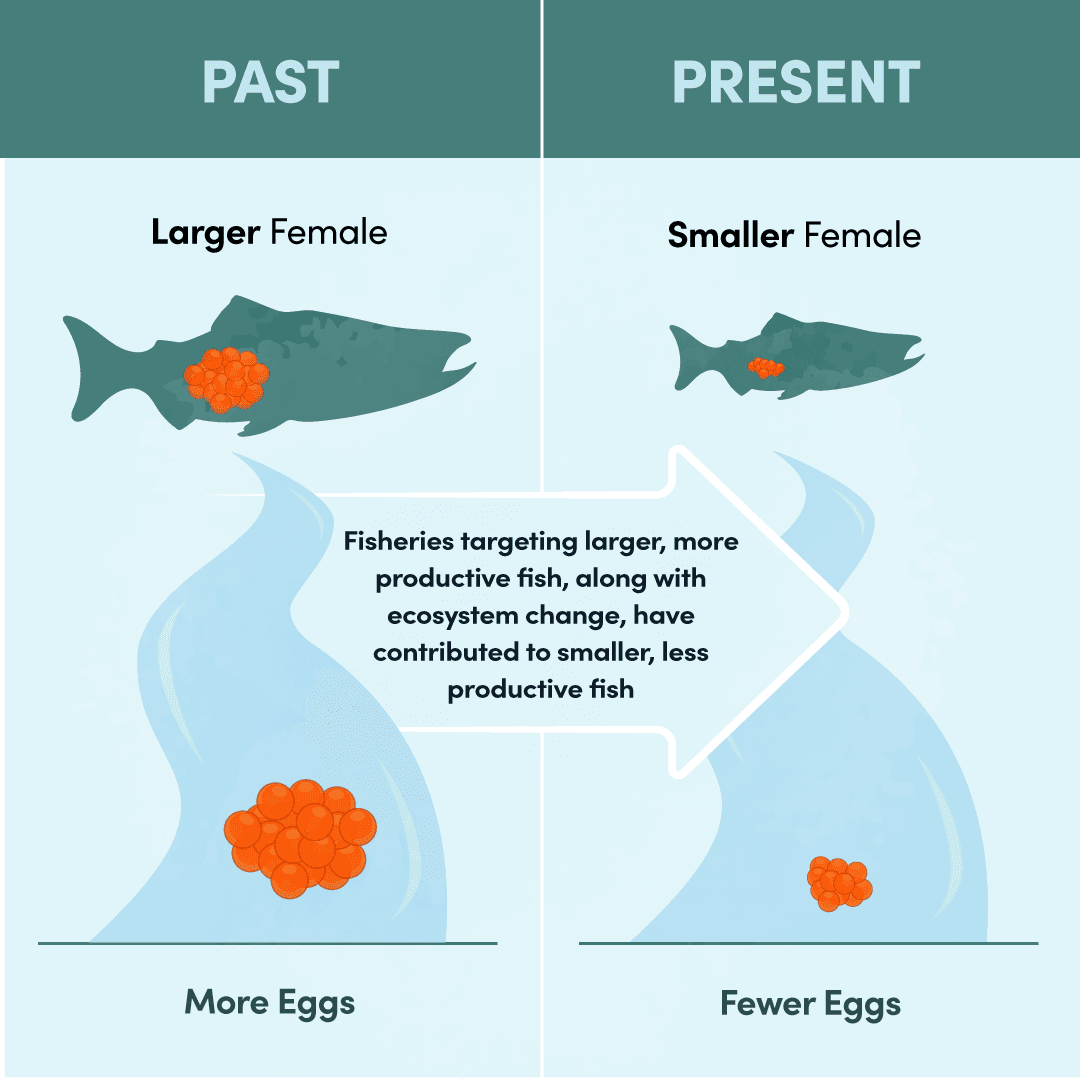
The loss of large females from a population impacts the next generations. Adapted from Ohlberger et al. (2020)†.
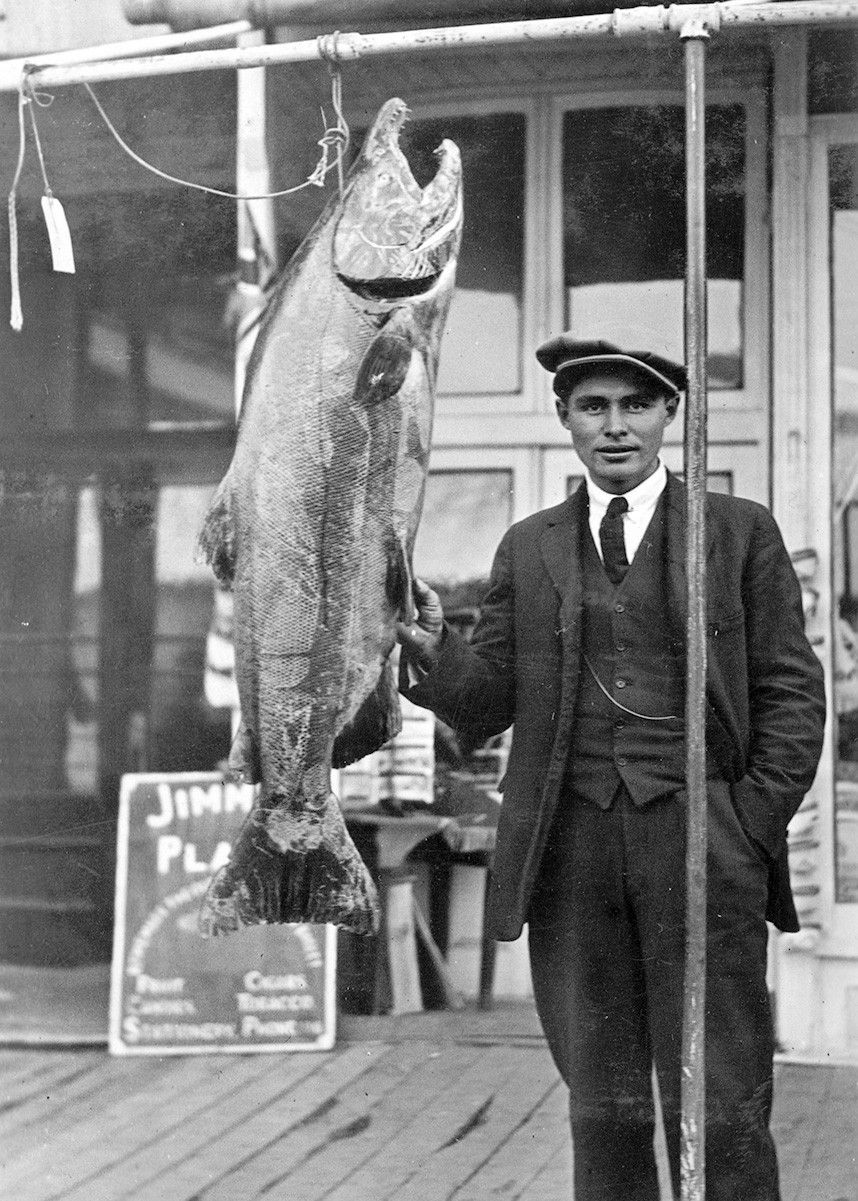 Yukon Archives, Claude and Mary Tidd fonds, 77/19, #7702
An 85 lb Chinook caught in the Yukon River in 1924, a size rarely, if ever, seen in the river today.
Size declines have been more severe in some populations than others. Chinook returning to the Yukon River, for example, have drawn concern over progressively smaller returning salmon over several decades. As a result, the weight of eggs produced per female has declined up to 35% since 1970†. However, the fishery is not the only culprit – it’s unclear how much the contemporary and historic fishing practices, changing ocean conditions, and changes along their long freshwater migration routes have each contributed†.
Fisheries have likely caused widespread size and reproductive potential declines historically, but the impacts depend heavily on the gear and locations that fisheries are allowed to use†, and modern fisheries seem to better protect against these impacts†. Still, the potential for fishing to slowly change salmon traits over time is a pitfall that must be managed carefully – it can unfold quietly for years or generations before it is detected, eroding salmon populations’ resilience to environmental change, fisheries, and other challenges.
Fisheries management must adapt to a no-analogue future
When the forecasts no longer hold
Fisheries management has relied on predicting salmon returns based on patterns from previous years but, with climate change, those historical patterns are no longer reliable indications of the future. As ocean and freshwater environments change rapidly, salmon abundance, migration timing, and distribution are becoming increasingly difficult to forecast. In 2025, for example, long-standing models predicted a Fraser River sockeye return of 2.9 million fish, yet the actual was far beyond what was expected.
Forecasted versus actual Fraser River sockeye return in 2025.
Moving Targets in a Warming Ocean
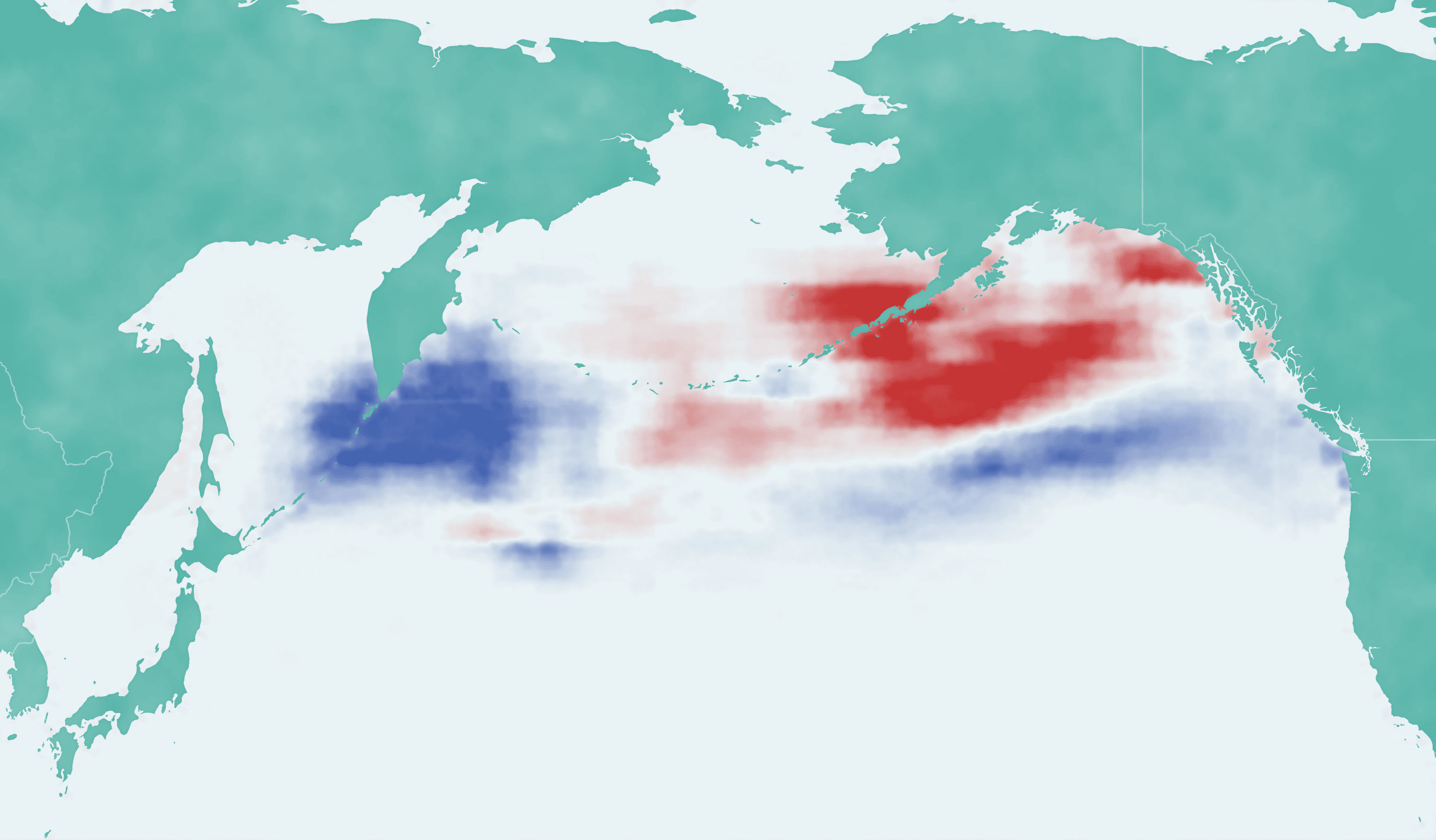
How sockeye salmon distribution changed: blue areas were used more by sockeye during a cooler period (1980s) and red areas in a warm period (2010s). Adapted from Langan et al. (2024)†.
Climate change is also changing where salmon are found in the ocean, potentially increasing their exposure to fisheries. Recent research found that Chinook salmon move into deeper waters during warmer ocean conditions, increasing the chances of being caught as bycatch in groundfish fisheries†.
At the same time, warmer water temperatures can reduce the survival of fish that are caught and released†. Together, these changes are creating new challenges for sustainable fisheries management and increasing uncertainty about how salmon populations will respond in the decades ahead.
Management is still learning
Although fisheries management in Canada is far from perfect, it continues to evolve in response to changing environmental conditions, new science, and shifting priorities. Conservation concerns have already led to the closure or restriction of many Canadian salmon fisheries, reducing overall harvests to a fraction of historical levels. Continuing to take precautionary approaches – including limiting mixed-stock fisheries and improving monitoring – will be critical to rebuilding salmon populations and ensuring future generations can continue to experience and benefit from Pacific salmon.
How we fish today shapes the salmon we have tomorrow.