 Climate Change
The single biggest threat
Warming rivers, extreme flows, and an unpredictable ocean are threatening the future of wild salmon
Salmon have successfully weathered environmental changes over the past 10,000 years, with hundreds of locally adapted populations providing diversity and resilience†. Today, climate change is unfolding rapidly, introducing a level of unpredictability that leaves the future of wild salmon in jeopardy†.
ln 2025, the world was 1.47°C warmer than it was before the industrial revolution†. Further warming could fundamentally alter salmon ecosystems and the communities that depend on them.
The ocean is warmer than ever, and salmon feel the heat
The North Pacific Ocean, where all Pacific salmon spend part of their life, is changing quickly†. Climate change is leading to more frequent and intense heatwaves that are disrupting food webs, shifting where salmon prey can be found and their nutritional quality†. Closer to shore, sea level rise is squeezing important estuary habitats that salmon depend upon as juveniles – particularly where dykes, sea walls, or jetties prevent these habitats from shifting inland. Though many climate-driven impacts may seem beyond our control, local efforts to improve conditions – like restoring natural coastlines (opens in a new tab) – can allow salmon to persist and adapt†.
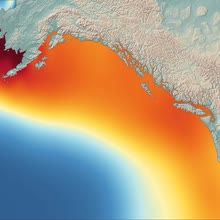
Marine heatwaves
A massive marine heatwave nicknamed The Blob† has reappeared periodically, including a record-breaking event in 2025-2026 that stretched more than 8,000 kilometres from the west coast of North America to the east coast of Asia†. Although the impacts of this recent heat wave are still unfolding, itʼs clear that these changing conditions increase pressures on salmon in the ocean.
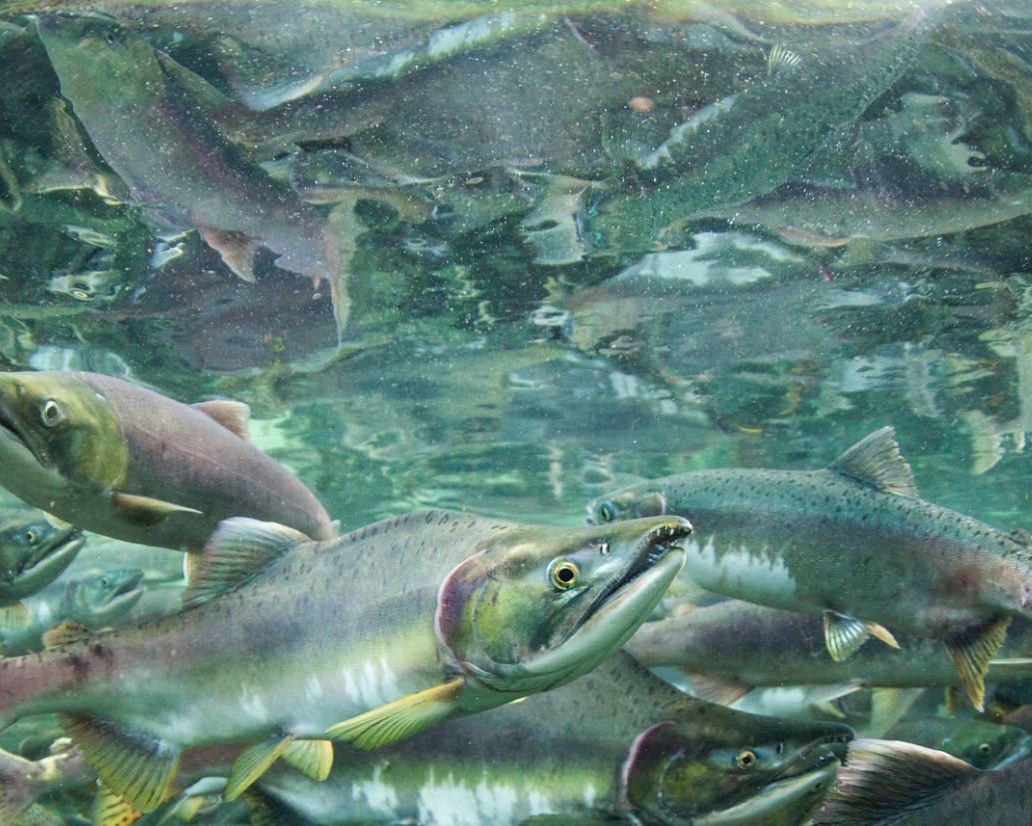 Photo by Paul Soulders/Getty Images
Pink salmon, pictured here, have fared well in recent ocean conditions, but a super El Niño's high temperatures may push species beyond ecological thresholds.
What El Niños mean for salmon
The El Niño-Southern Oscillation (known commonly as El Niño) is a natural climate pattern that occurs every few years when the surface waters of the central and eastern tropical Pacific Ocean warm up significantly (>0.5°C above the long-term average). This reduces upwelling of cold-nutrient rich water along the coast and brings warmer, drier conditions to western North America. For salmon, that means less food, warmer rivers, lower flows, and tougher conditions for migration, spawning, and survival†.
A super El Niño is unfolding in 2026, with sea surface temperatures predicted to reach >2°C above the long-term average†, raising concerns for salmon. The consequences may not be fully understood for years, but past super El Niños (like the one in 1977) caused a significant change in salmon survival across regions†.

The shrinking nutritional value of salmonʼs menu
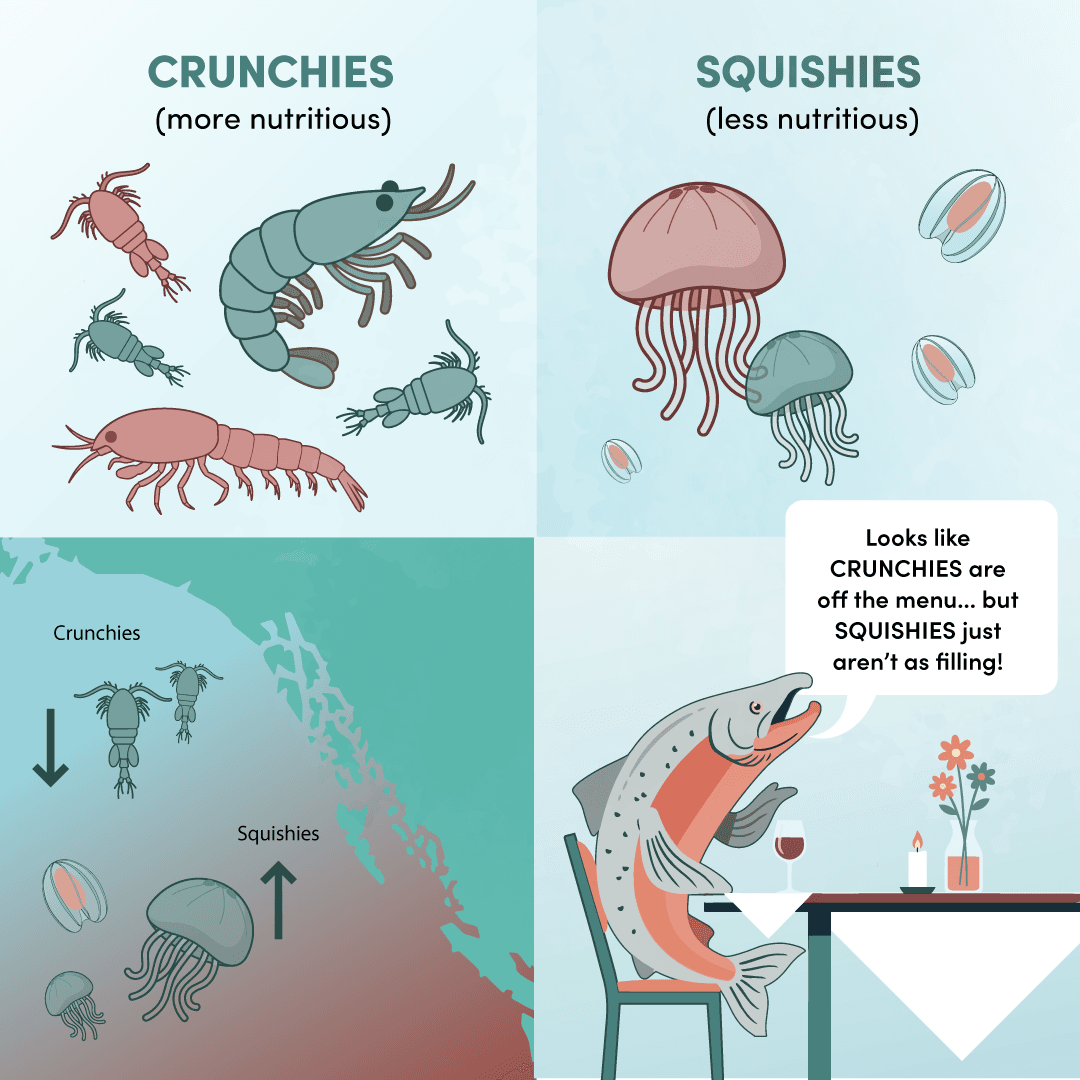
In the ocean, many salmon primarily eat zooplankton – nearly microscopic marine animals. There are many species and types of zooplankton. Salmon often eat whatever is available, but not all prey has the same nutritional value. Northern zooplankton species including krill and other shrimp-like animals (“crunchies”) are high in nutritious fatty acids and oils, while southern types are dominated by more gelatinous species (“squishies”) that have less nutritional value†. During warm periods, zooplankton communities off the B.C. coast have shifted towards warm-water squishies† – leaving less nutritious options for salmon.

Freshwater in flux:Extreme conditions compound
In salmon watersheds, stream temperatures are rising and the timing and magnitude of freshwater flows are shifting, bringing more frequent floods and droughts. These pressures are compounded by urban (opens in a new tab) and industrial developments (opens in a new tab), which strip watersheds of their natural ability to buffer against severe weather. Increasingly extreme conditions hit salmon hardest at the stages that matter most – in their first weeks of life, and on their final journey home to spawn.
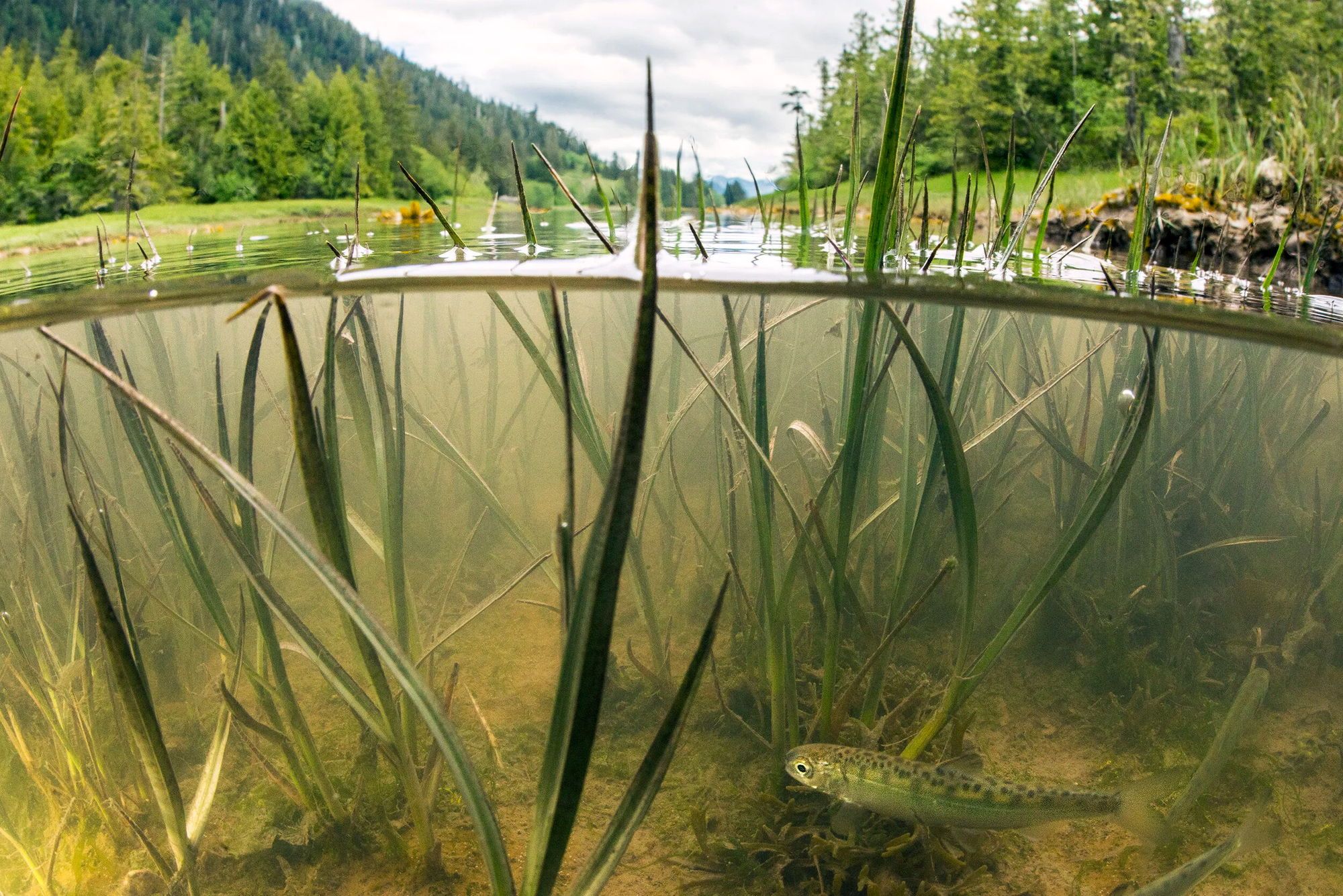 Juvenile coho rely on a diversity of freshwater and estuarine habitats that are increasingly impacted by climate changes. Photo by Tavish Campbell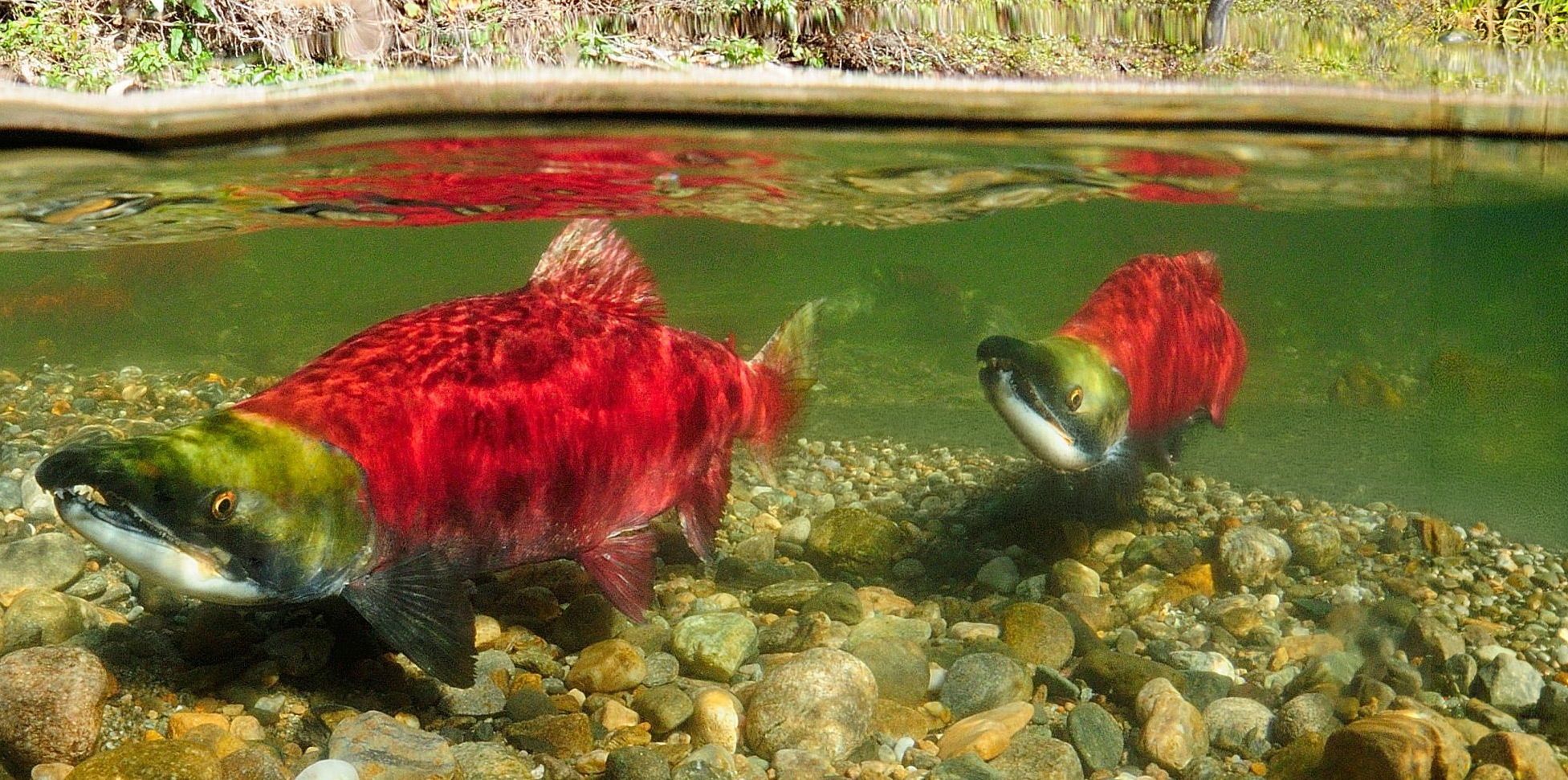
The Struggle to Spawn
In the Fraser River, over 90% of returning sockeye have died before spawning in some years† with increasing evidence that high water temperatures are a major contributing factor to spawning success†. Warmer temperatures increase stress and make fish more susceptible to diseases† and predators†. Other stages are also affected: development of eggs and fry speeds up at warmer temperatures, which can lead to a mismatch between the timing of eggs hatching or smolts entering the ocean and the food they need during those life stages†.
Climate Change in the Fraser:A deluge with lasting damage
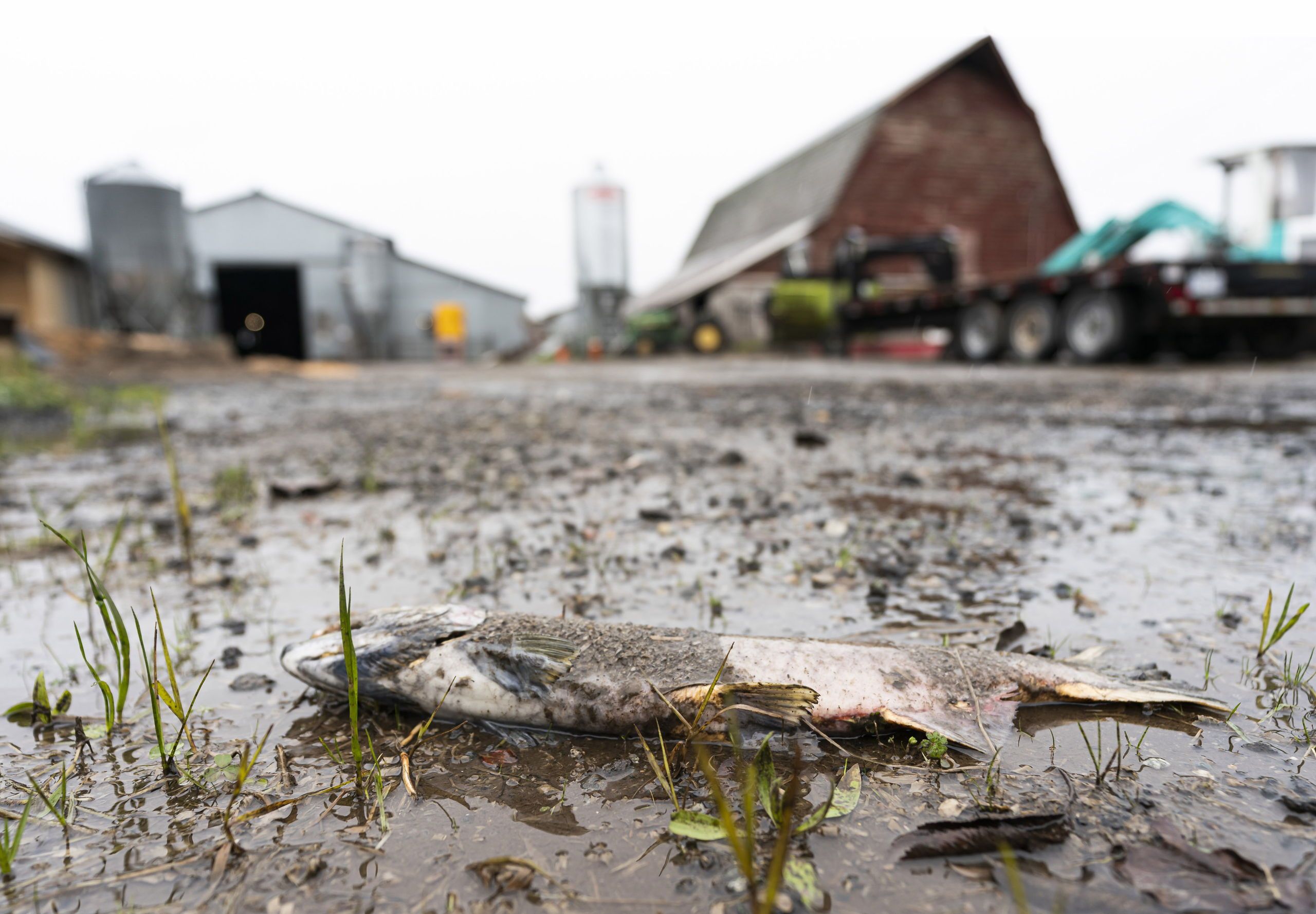
Climate change is affecting rain and snowfall, altering flows, and making both droughts and floods more frequent. In regions like the Fraser, reduced snowpack and warmer winters are shifting flows from peaking during the spring freshet – when snowmelt from the mountains typically swells rivers – to peaking during fall and winter rains†. Extremely high flows like those seen during the 2022 “atmospheric river” event in the Lower Mainland can flush away incubating salmon eggs, impede migrations, and even leave fish stranded when riverbanks fail.
Climate Change in the Columbia:Running on Empty
In May 2026, the Syilx Okanagan Nation declared a state of watershed emergency after observing trout in local streams struggling to swim in shallow water†. Although spring usually brings higher flows as snow melts from surrounding mountains, this year’s snowpack was well below average, making streams and rivers in the area shallower and warmer. Droughts like these can prevent salmon from reaching their spawning grounds, and push water temperatures above what salmon can survive. In recent years, Okanagan First Nations and partners have had to trap sockeye salmon in Washington and transport them by truck to Canadian hatcheries in hopes of bolstering the population in the future†.
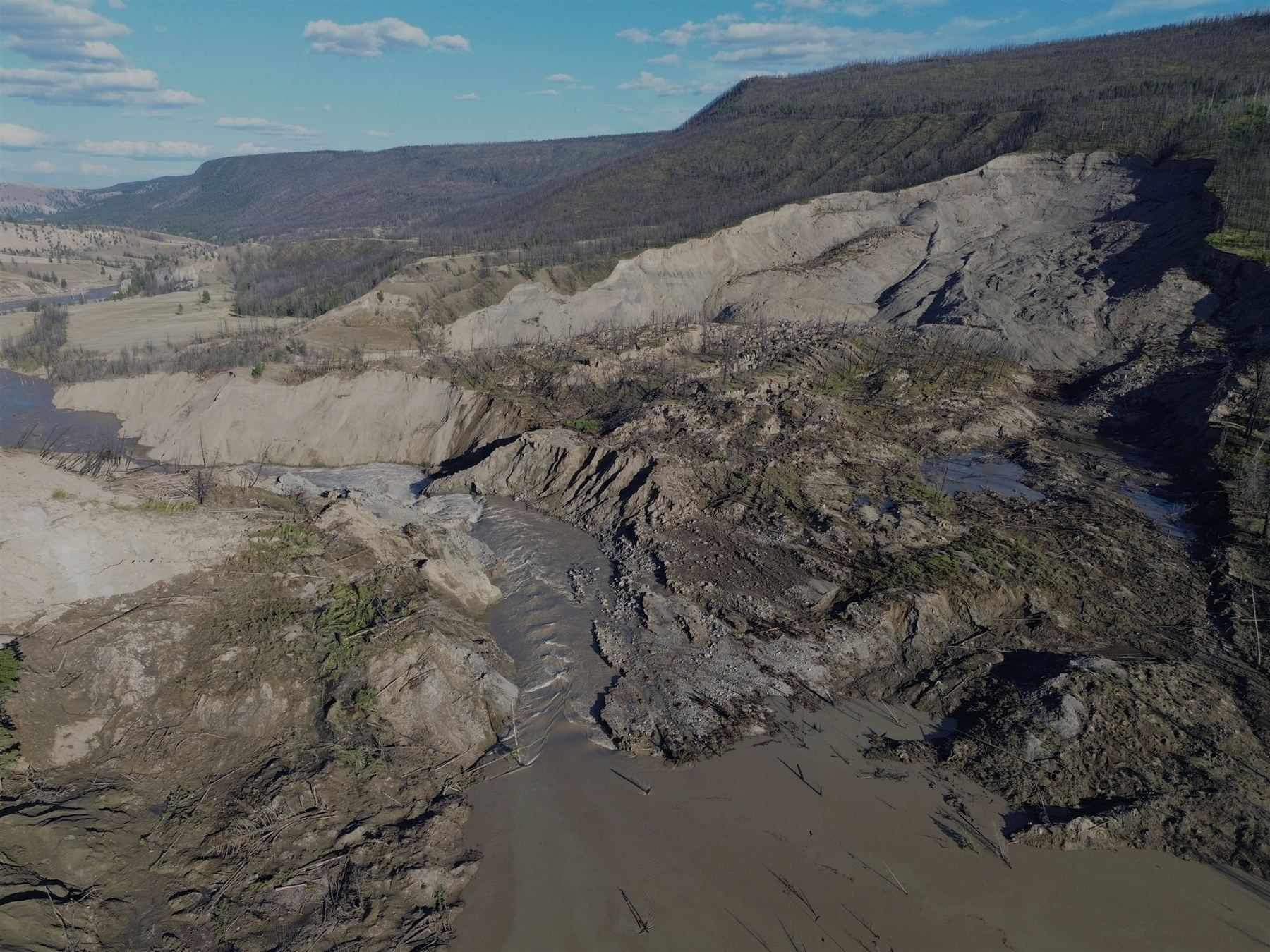
Cumulative Effects: A Slippery Slope for Salmon Watersheds
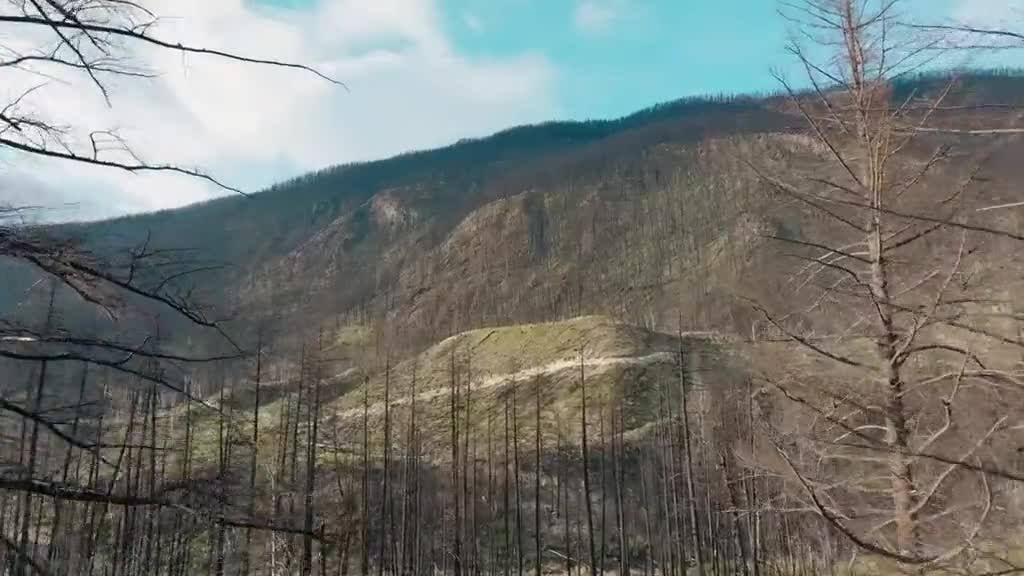
Natural disturbances such as forest fires and landslides have shaped salmon watersheds for millennia, but the increasing pressures of climate change combined with industrial development are leading to more frequent and catastrophic events. Intense rains, deforestation, and wildfires can all contribute to large landslides, such as the Chilcotin River slide in summer 2024. This massive landslide cut off thousands of salmon from their spawning grounds, leading to a 50% loss of that yearʼs sockeye run†.
The Thawing North: Peril and Promise for Salmon
Northern Canada is warming three times faster than the global average† dramatically altering salmon watersheds. Glaciers are retreating, permafrost is thawing, and watersheds are being redrawn. In 2016, the receding Kaskawulsh Glacier triggered “river piracy,” diverting water that fed the Kluane watershed south toward Alaska†. The distinct Kluane chum population has since collapsed† a warning about what disappearing glaciers can set off downstream. Yet the same forces driving these losses may also open a lifeline for salmon. As glaciers recede, entirely new rivers and lakes are created, with the potential for salmon to use these new habitats†. Salmon, however, are not the only ones eyeing these newly exposed landscapes: the retreat of glacial ice is also uncovering previously inaccessible mineral deposits, and with fish and other wildlife not yet established in these areas, few regulations exist to protect from industrial development (opens in a new tab)†. Farther north, warming seas are enabling salmon to push into Arctic waters that were once inhospitable, expanding their range into regions where they have never historically occurred†.
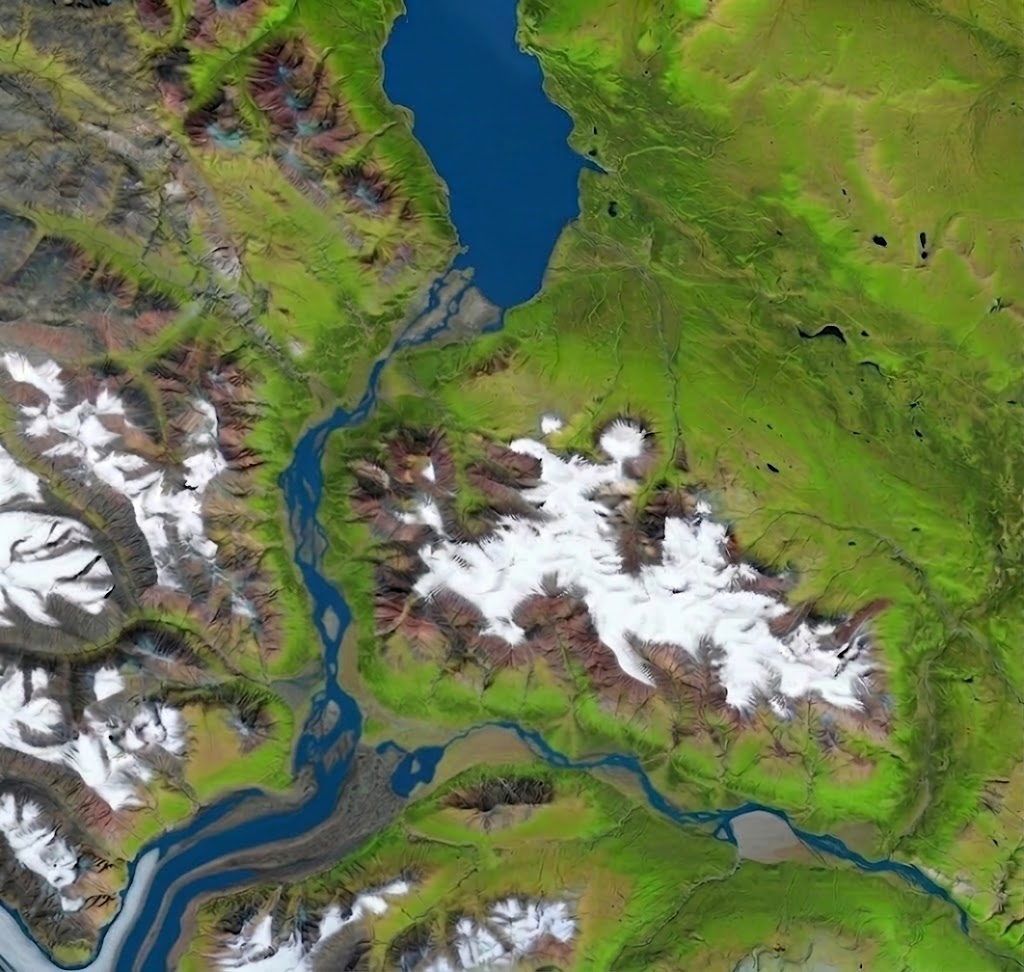
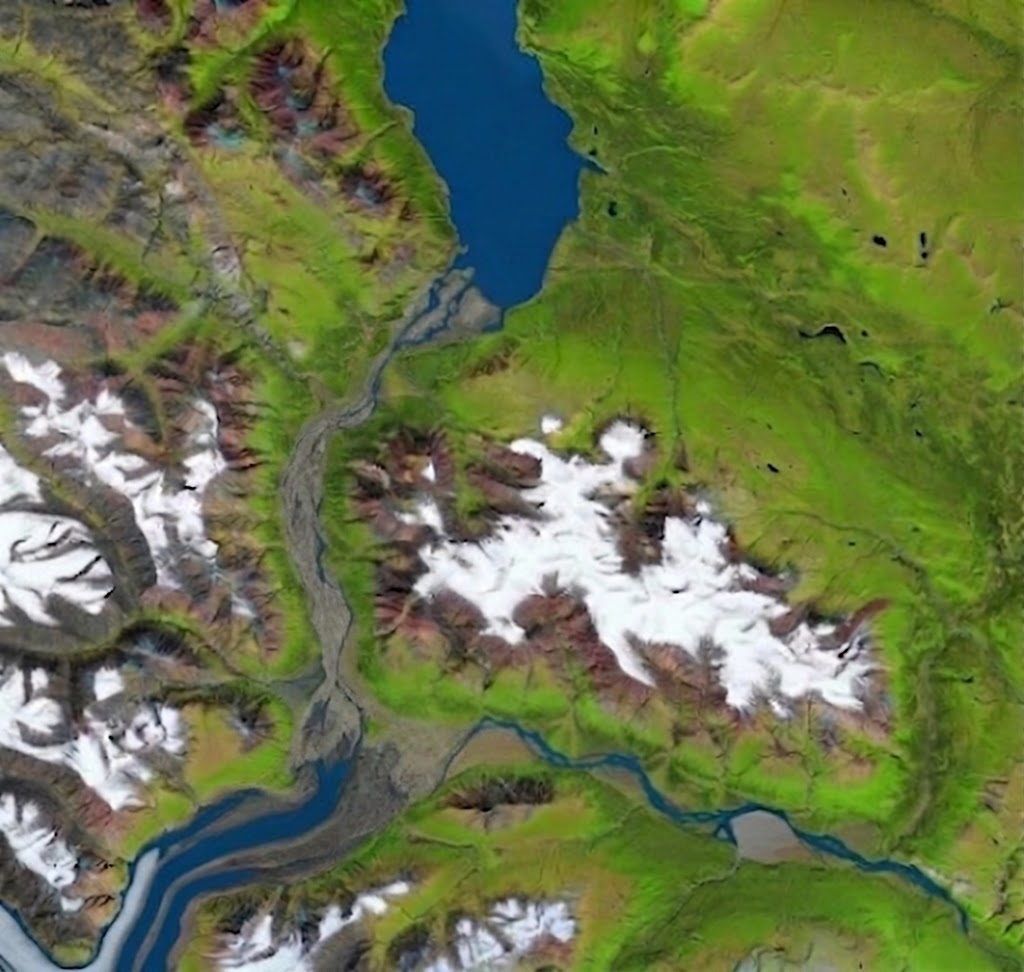 June 18, 2016June 23, 2015Slims RiverKaskawulsh RiverKaskawulsh GlacierKluane LakeKluane watershedImagery by NASA Earth Observatory (Landsat 8 OLI)
Whatʼs still in our hands
While the impacts of climate change extend beyond any one community, meaningful action to reduce its effects on salmon remains within reach. Every life stage matters – reducing pressures at one stage can build the resilience salmon need to withstand the threats climate change brings. Local initiatives like restoring coastlines and floodplain habitat can be the difference between populations too stressed to recover and ones strong enough to adapt.
Emergency measures like those in the Okanagan have already carried fish through years they might not have survived, and salmon returning through the Chilcotin landslide within weeks of passage being cleared shows they are ready to respond when we act. As climate change reshapes which habitats are suitable for salmon, ensuring they can reach those habitats becomes paramount – making proactive habitat protection one of the most important investments we can make for the future of wild salmon.
Salmon have survived for millennia. Recovery and resilience are within reach.