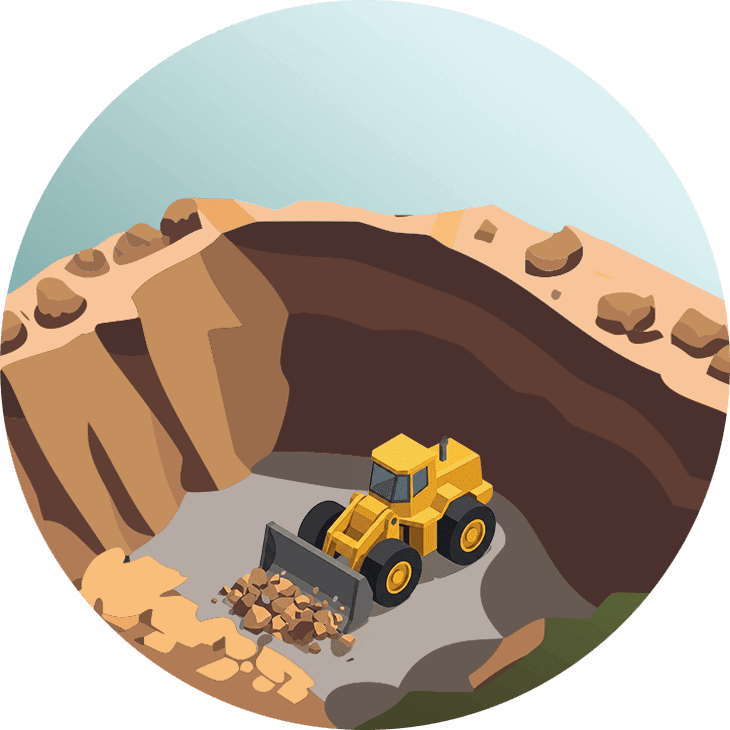
 Industrial Development
Salmon and industry share the same watersheds
Forestry, agriculture, and mining have reshaped salmon watersheds, but we can build a future for both people and salmon.
While their impacts vary, industrial resource development can affect salmon both directly and indirectly by altering the landscapes and waterways on which they depend. Salmon rely on healthy watersheds – areas of land where rain, snowmelt, and groundwater drain into a common river – to provide clean, cool, and consistently flowing water. Industrial development within a watershed can degrade water quality and alter hydrology, the natural movement of water through the environment.
These changes can reduce summer flows, increase flood peaks, raise water temperatures, increase erosion and sedimentation, and alter the timing of seasonal runoff. Pacific salmon have evolved alongside the natural hydrology of their watersheds over thousands of years. When these natural flow patterns are disrupted, salmon can face significant challenges at every stage of their life cycle, from spawning and egg incubation to juvenile rearing and migration.
Forestry's widespread presence in salmon watersheds
Salmon and forests are deeply interconnected. The bodies of spawning salmon carry marine nutrients into coastal forests, while forested watersheds provide the cool, clean, and consistently flowing rivers and streams that salmon need to survive.
Beginning in the late 19th century, industrial logging expanded rapidly across British Columbia. Today, forestry is one of the most widespread human influences on salmon habitat, both where it occurs and downstream. Roads, stream crossings, and timber harvesting can alter how water moves through a watershed, affecting water quality, stream temperatures, sediment levels, and the timing and magnitude of river flows.
A clear-cut impact on salmon habitats
Data source: Pacific Salmon Explorer (opens in a new tab).
Why salmon need forests
Forests act like natural sponges, absorbing rainfall and snowmelt and slowly releasing water into streams throughout the year. When forests are removed, watersheds lose this ability to regulate water. Peak flows become higher, low flows become lower, and rivers experience more extreme fluctuations in water levels†. These changes are challenging for salmon, which have evolved over thousands of years to synchronize their migration, spawning, and development with the natural flow patterns of their watersheds. They also depend on reliable stream flows to migrate between spawning grounds and the ocean. Forestry can also increase stream temperatures when riparian forests—the trees and vegetation that border rivers and streams—are removed or inadequately protected. These forests provide shade, stabilize streambanks, filter runoff, and supply the wood that creates pools and complex habitat for salmon. The impacts of forestry do not end once harvesting is complete. Research shows that changes to watershed hydrology can persist for decades, with some of the most significant effects emerging long after logging has occurred†.
Preserving the Buffer Against a Harsher Climate
Old-growth forests play an irreplaceable role in supporting biodiversity, storing carbon, and maintaining the healthy watersheds that salmon depend on. Yet old-growth logging continues in British Columbia, and many of the province’s most productive valley-bottom forests – the forests most closely connected to salmon-bearing streams – have already been harvested or remain vulnerable to future logging.
Recent old-growth deferrals and Indigenous-led stewardship and conservation initiatives have brought renewed attention to protecting the forests that remain. However, important questions remain about how much old growth is needed to sustain healthy watersheds and whether current forestry practices can adapt quickly enough to meet the challenges ahead.
As climate change intensifies droughts, floods, and rising water temperatures, protecting and restoring old-growth forests may become increasingly important for maintaining resilient watersheds and giving Pacific salmon the best chance to adapt to a changing climate.
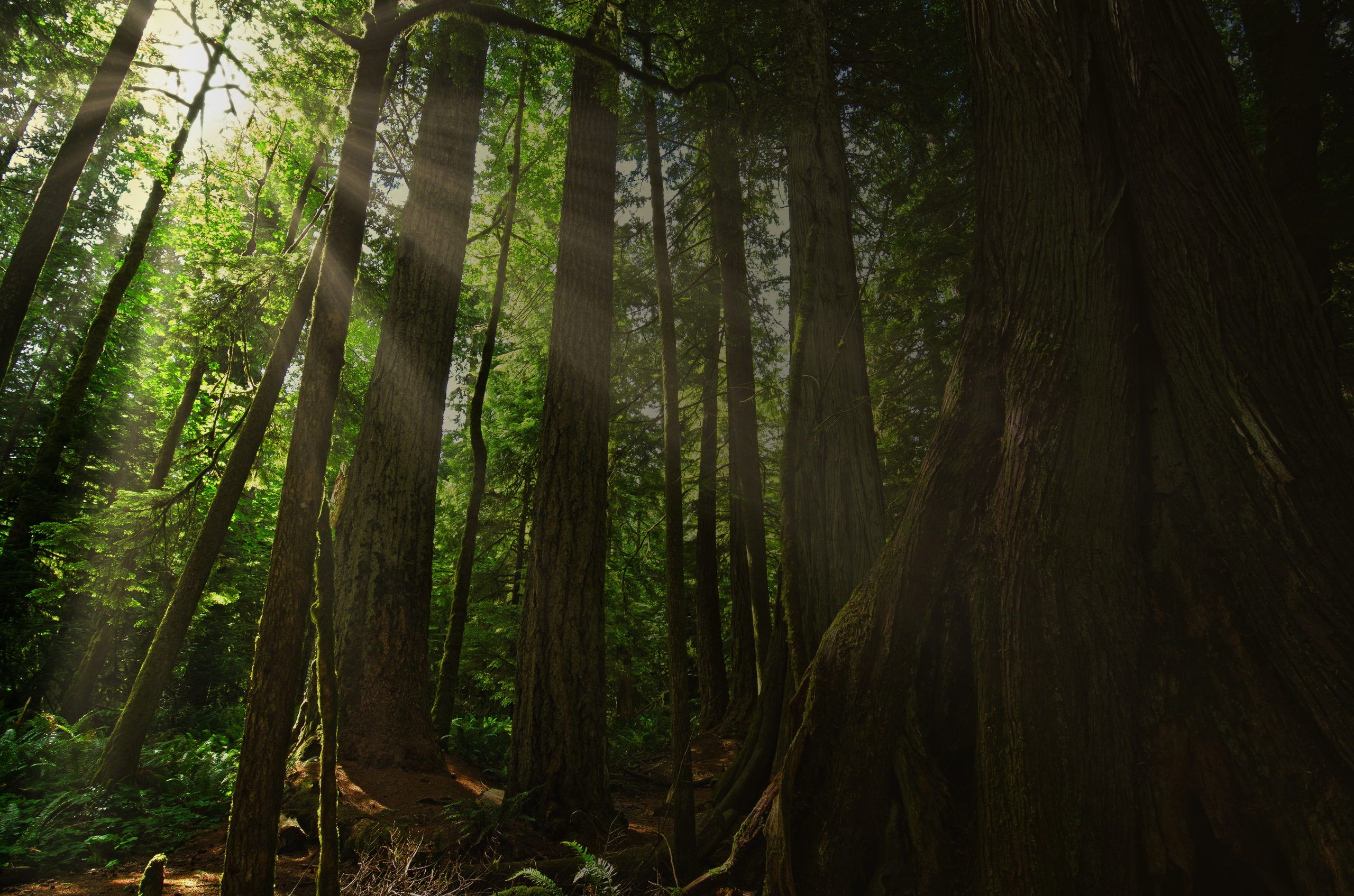 Photo by Matthaus Rojek / Getty Images
How logging helps seals hunt salmon
When trees are harvested in coastal British Columbia, the logs are often bundled into floating log booms and stored in estuaries, large rivers, and sheltered coastal waters before transport to mills. Although log booms are an efficient part of the forestry supply chain, they alter the estuary habitats that many species of Pacific salmon depend on as juveniles†.
Log booms create artificial haul-out sites for harbour seals, natural predators of salmon. Seals are highly effective at locating migration bottlenecks where salmon congregate before entering rivers or passing through narrow channels. By providing resting platforms close to these migration routes, log booms can increase opportunities for seals to intercept salmon, increasing predation beyond what would occur under natural conditions.
Many log booms have been present in coastal estuaries for decades, but their effects may become more pronounced as harbour seal populations remain high and climate change causes salmon to spend more time waiting in estuaries for suitable river conditions. These changes can increase predation pressure during one of the most vulnerable stages of the salmon life cycle.
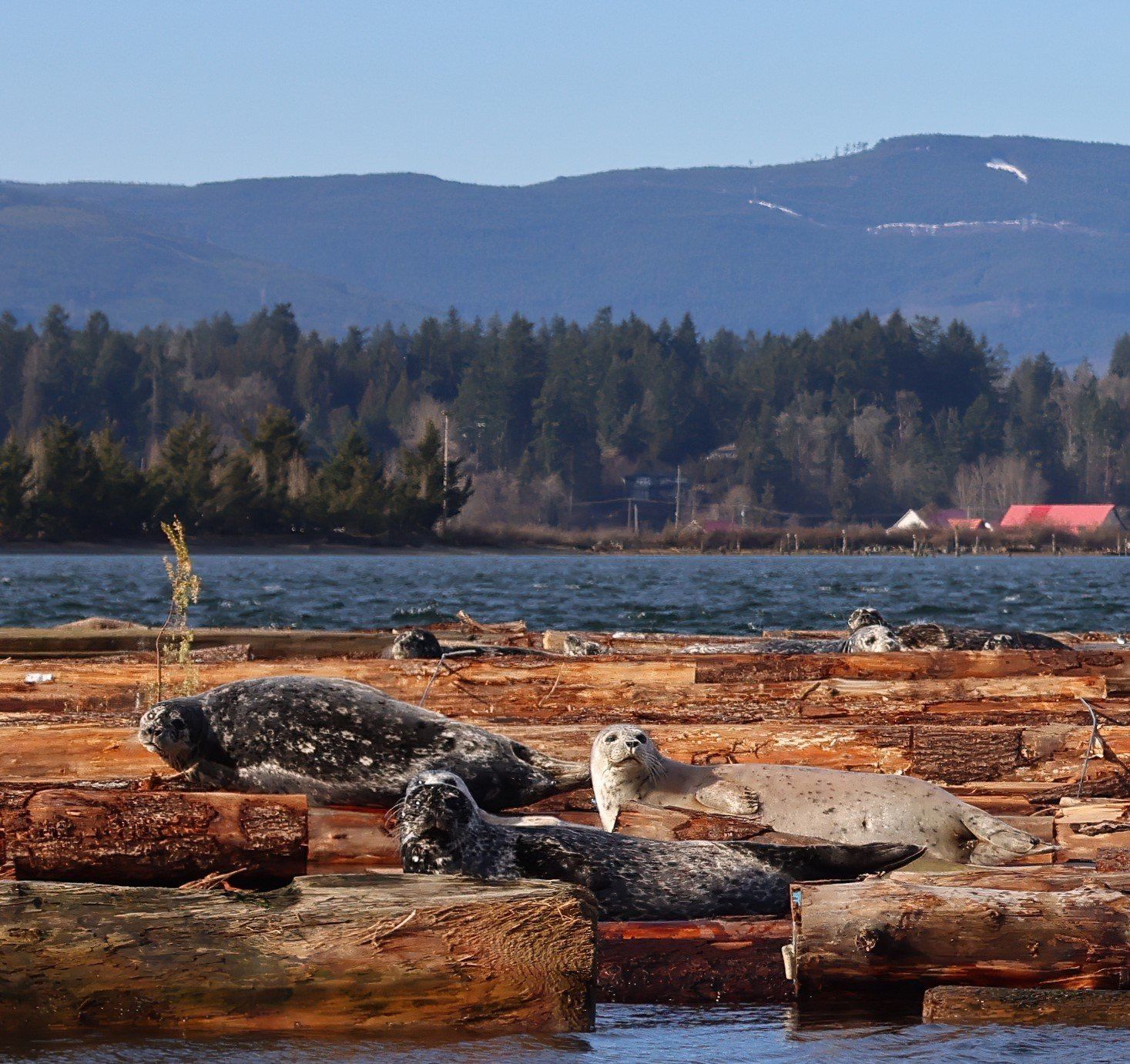 Log Booms in Gambier Island. Photo by Mitch Miller / Michael Miller Media
In the Cowichan-Koksilah Estuary, studies supported by PSF linked lower Chinook salmon survival with log booms†.
Different Pressures, Different Places
Every resource industry leaves a different footprint on salmon watersheds. The challenge is not whether development occurs, but how we design, manage, and restore landscapes so both people and salmon can thrive.
Agriculture
For thousands of years, people have settled along rivers and floodplains, where fertile soils and abundant water create ideal conditions for agriculture. These same floodplains are also among the most productive habitats for Pacific salmon. Naturally connected side channels, wetlands, and seasonally flooded fields provide slow-moving, food-rich environments where juvenile salmon can feed, grow, and find refuge before migrating to the ocean.
The Fraser Valley – including what is now Abbotsford, Langley, and Chilliwack – was once an expansive floodplain that flooded seasonally and remained closely connected to the Fraser River. Throughout the 19th and 20th centuries, dikes, floodgates, and pump stations were constructed to protect farms and growing communities from floods. While these investments supported agriculture and economic development, they also disconnected salmon from much of their rearing habitat. Today, Fraser Valley salmon populations have lost an estimated 85% of their floodplain habitat†. Much of the habitat that remains is affected by warmer water temperatures, altered flows, chemical contamination, and other pressures associated with agriculture and urban development.
Today, researchers and communities are exploring how floodplains can once again support both people and salmon. As aging flood-control infrastructure is replaced, fish-friendly pump stations, floodgates, and restored natural wetlands can reduce flood risk while reconnecting salmon to critical habitat.
Dams
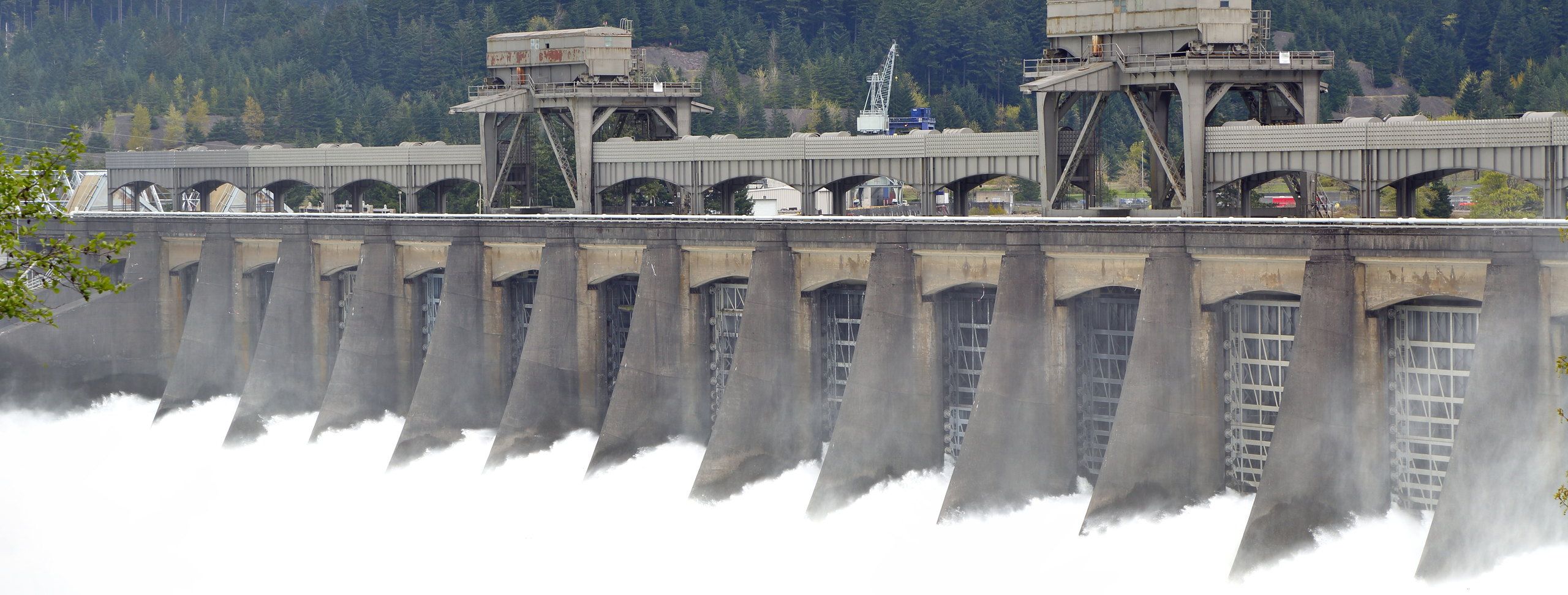
More than 80 major dams have been built across British Columbia and the Yukon to generate hydroelectric power, reduce flood risk, and store water for communities and agriculture. Dams have reduced access to important spawning and rearing habitat for salmon by blocking or impeding migration, contributing to the loss and decline of some populations. They can also alter river flows, temperatures, sediment and habitat conditions, affecting salmon survival both upstream and downstream of dams. Few places illustrate these impacts more clearly than the Columbia River. For more than 80 years, large dams in Canada and the United States have prevented salmon from reaching much of their spawning habitat, eliminating salmon from vast areas of the upper Columbia Basin.
However, recent salmon returns in the Canadian-portion of the Columbia Basin demonstrate what is possible when barriers are reduced and habitat is restored. In the Okanagan River sockeye salmon have rebounded through decades of collaboration focused on improving fish passage, habitat restoration, and hatchery supplementation by Indigenous Nations, governments, and other partners on both sides of the Canada–U.S. border†. The Columbia shows both the lasting consequences of blocking salmon migrations and the potential for recovery when people work together to reconnect rivers.
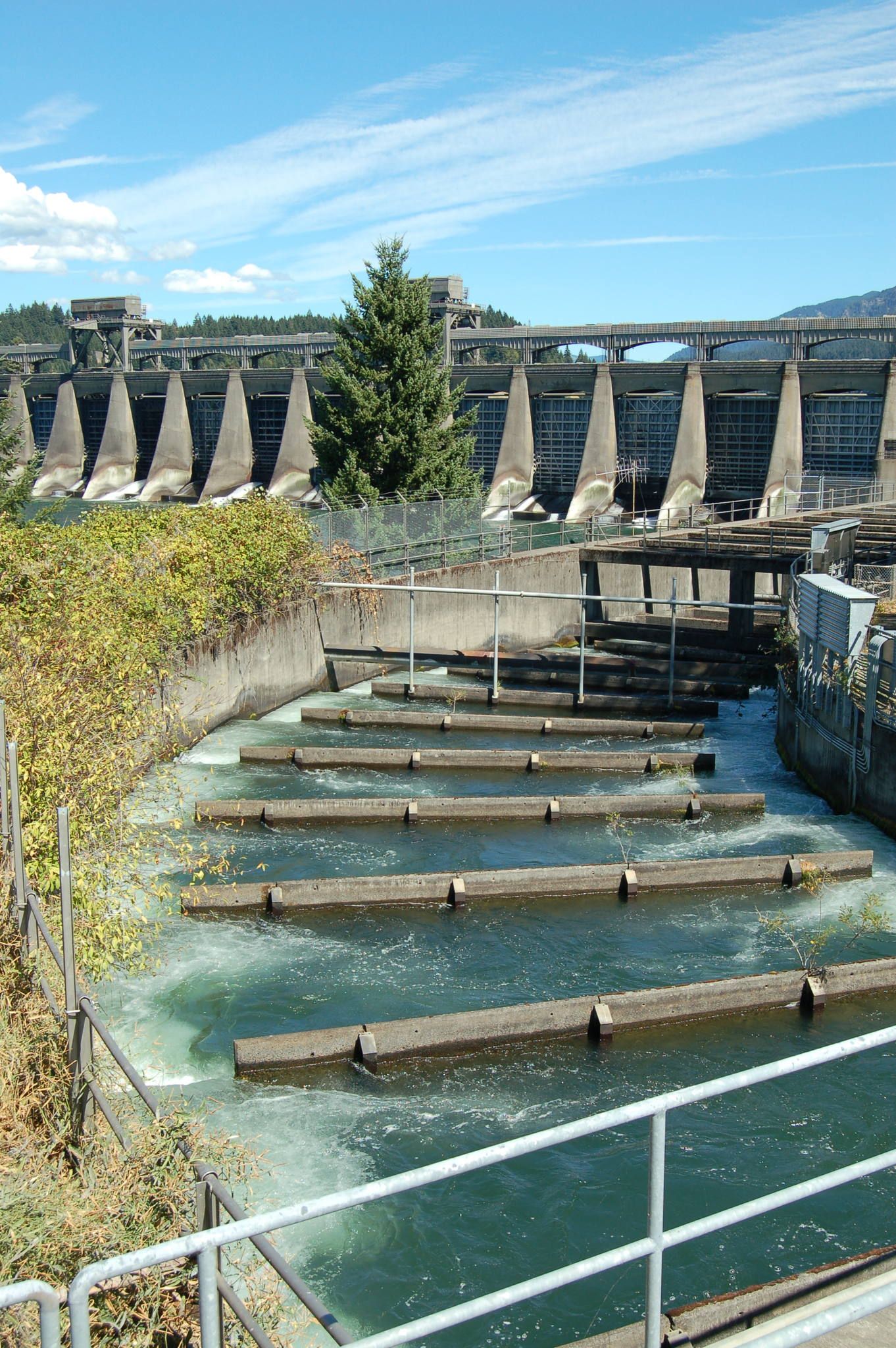 Photo by JerryPDX / Getty Images
Mining
Mining can have significant impacts on salmon-bearing watersheds. Many mining operations require large volumes of water, alter natural drainage patterns, and generate waste products and tailings that must be carefully managed for decades after a mine closes†. These materials are commonly stored behind containment dams or in tailings facilities, where failures can release contaminated water and sediment into rivers and lakes with serious consequences for salmon habitat and water quality.
In the Northern Transboundary region of British Columbia, rich deposits of gold, copper, silver, and other minerals have driven extensive mining development in the headwaters of some of the world’s most productive wild salmon rivers, including the Stikine, Taku, and Unuk. In some tributaries of the Stikine River, mining tenures that allow for future development overlap with as much as 88% of the watershed area connected to salmon habitat†.
Concerns about the long-term risks of tailings storage intensified following a tailings dam breach in 2014 at the Mount Polley mine, which released millions of cubic metres of mine waste into salmon bearing rivers and lakes†. A decade later, the 2024 failure of the Eagle Gold Mine heap leach facility in Yukon demonstrated that major mining failures remain a risk†.
As demand for critical minerals grows, difficult choices will increasingly arise over where and how mining occurs. Some of the watersheds under consideration today may become vital climate refuges for Pacific salmon in the future†, making careful planning, rigorous oversight, and strong partnerships with Indigenous Nations essential to balancing resource development with the long-term protection of wild salmon.
Adding It All Up
In nearly every Pacific salmon watershed, multiple industries operate simultaneously, each altering the water quality, streamflows, habitat connectivity, and ecological processes that salmon depend on. The scale, intensity, and duration of these impacts vary widely. Some developments, such as poorly designed or managed dams or mining failures, can have immediate and catastrophic consequences for individual salmon populations or entire river systems. Others, including forestry, agriculture, and urban development (opens in a new tab), often cause more gradual but widespread changes that accumulate over decades.
Taken together, the combined effects of industrial activities and the infrastructure that supports them – including roads, culverts, dikes, dams, pipelines, and water withdrawals – have reshaped freshwater ecosystems across much of British Columbia and the Yukon. These cumulative effects are among the greatest challenges facing Pacific salmon today. Understanding how these stressors interact, and planning development at the watershed scale rather than one project at a time, will be essential to building resilient ecosystems that can support both people and salmon in a changing climate.
Within our Control
Unlike many of the challenges salmon face, the impacts of industrial development can often be reduced through thoughtful planning, better management, and restoration. Pacific salmon evolved alongside natural disturbances such as floods, droughts, landslides, and wildfires, making them remarkably resilient when watersheds remain clean, cool, connected, and functioning as healthy ecosystems.
Protecting and restoring these conditions through better land-use planning, habitat protection, fish-friendly infrastructure, and watershed-scale management can allow salmon and human communities to thrive together. The future of Pacific salmon will depend not only on reducing individual impacts, but on understanding how multiple pressures interact across entire watersheds – and making decisions that safeguard the ecological processes salmon have depended on for thousands of years.

Planning with salmon in mind can help keep watersheds working for everyone.