
The Path Forward
The institutional systems responsible for managing and protecting wild Pacific salmon in British Columbia are no longer fit for purpose.
Roughly half of Pacific salmon populations in B.C. and the Yukon are in long-term decline.
Reversing this trajectory will require more than incremental improvements. It will require a fundamentally different approach to salmon recovery – one that enables people, science, technology, and communities to work together more effectively and at the scale needed to make a difference.
Fortunately, we’re not starting from scratch. B.C. has a wealth of knowledge, dedicated people, innovative science, and strong community leadership. What’s missing is a coordinated recovery system built around a common strategy, clearly defined roles, shared responsibility, and collective accountability across Crown governments, First Nations, and community stewards.
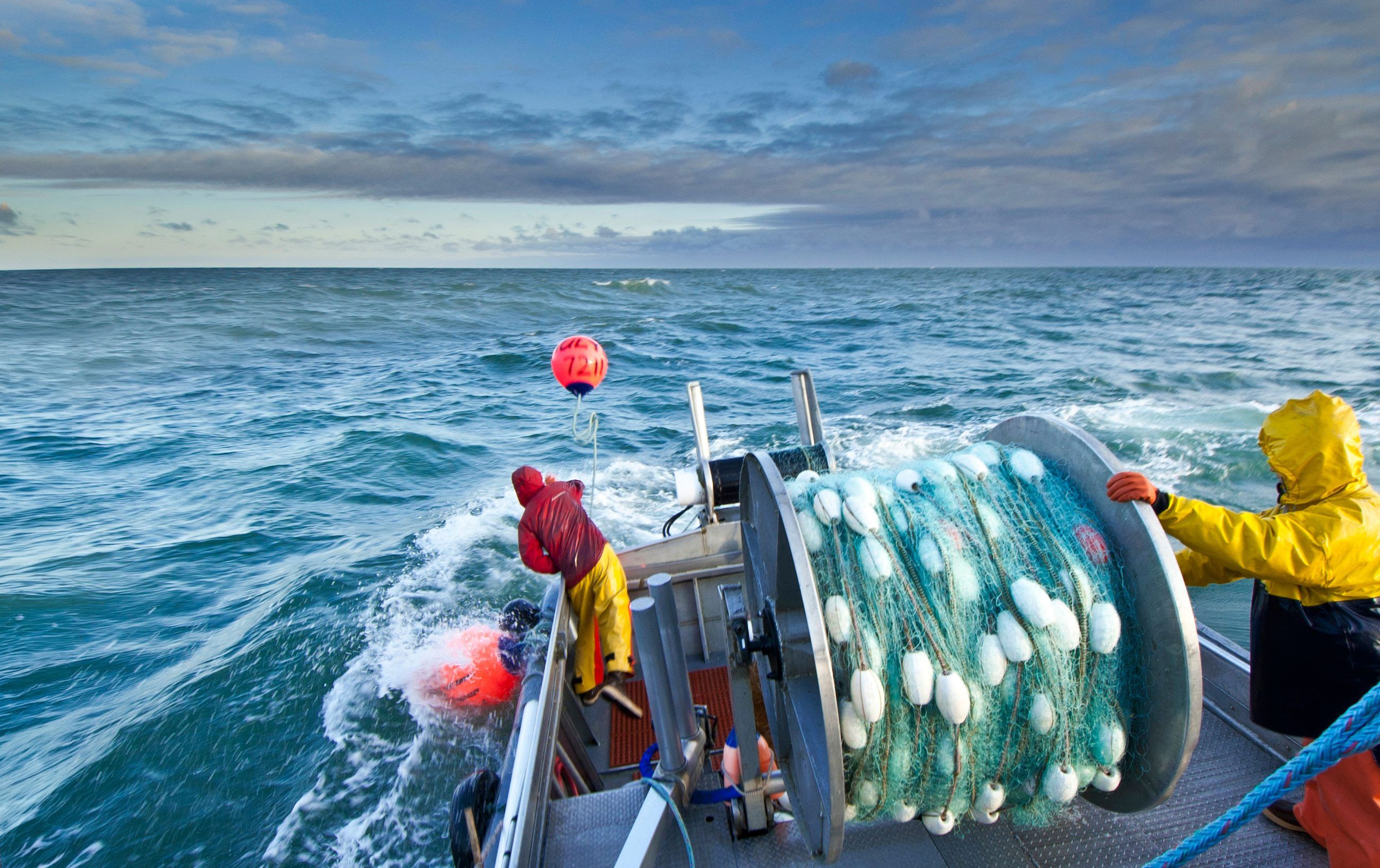 Gillnet fishery, AlaskaPhoto by Alamy
Upending the status quo
Salmon face a dramatically different reality today than when many of our institutions, policies, and management approaches were established. In the 1980s and ’90s, fisheries management largely focused on maximizing harvest. Today, conservation, rebuilding depleted populations, and protecting the biological diversity that underpins resilience have become defining priorities.
Climate change has also fundamentally altered the context for salmon recovery. Warming rivers and oceans, changing stream flows, and more frequent wildfires, floods, droughts, and marine heatwaves are reshaping salmon habitat in ways largely unforeseen when today’s management systems were established.
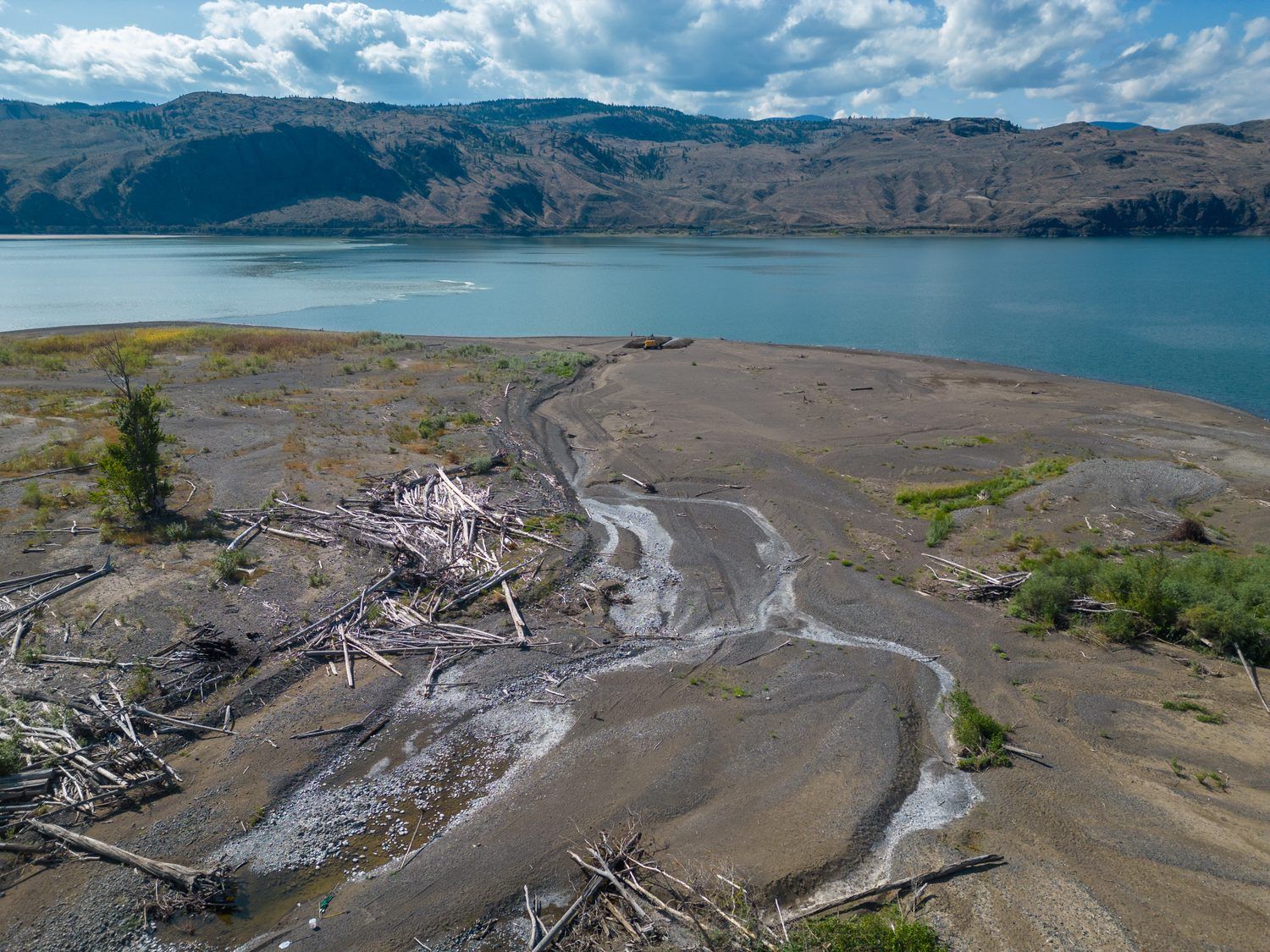 Tranquille River drought, 2023Photo by Peter Olsen
Governments have long recognized the challenges. DFO’s Wild Salmon Policy, introduced in 2005, envisioned salmon populations being regularly monitored, assessed, and publicly reported, with management action triggered by declines. More than 20 years later, much of that vision remains unrealized. Similarly, B.C.’s Wild Salmon Advisory Council produced a comprehensive roadmap for a made-in-B.C. Wild Salmon Strategy in 2018, but much of it has yet to be fully implemented.
A clear pattern has emerged: we largely understand the challenges facing salmon and many of the solutions. What has been missing is implementation, coordination, and accountability at the scale required to reverse declines.
We’ve entered a new era for Pacific salmon. Our institutions, governance systems, and policies need to evolve with it.
More than 80 per cent of British Columbians are concerned about the decline of wild salmon. Governments have invested heavily in conservation and recovery, and First Nations, researchers, stewardship groups, agencies, and non-profits are advancing hundreds of initiatives across salmon-bearing watersheds. The commitment is substantial â but so too is the challenge.
Letting salmon do what salmon do
Despite unprecedented challenges, salmon remain remarkably resilient. For millennia, they have adapted to changing climates, shifting habitats, and countless obstacles. Humans have introduced challenges salmon did not evolve to face: rapid climate change, habitat loss and fragmentation, urban and industrial development, pathogen risks associated with open-net pen aquaculture, and growing pressure on freshwater and marine ecosystems. We have disrupted the conditions that allow salmon to thrive. Restoring those conditions requires more than restoring habitat or adjusting regulations. It requires reimagining our institutions, governance, and ways of working together.
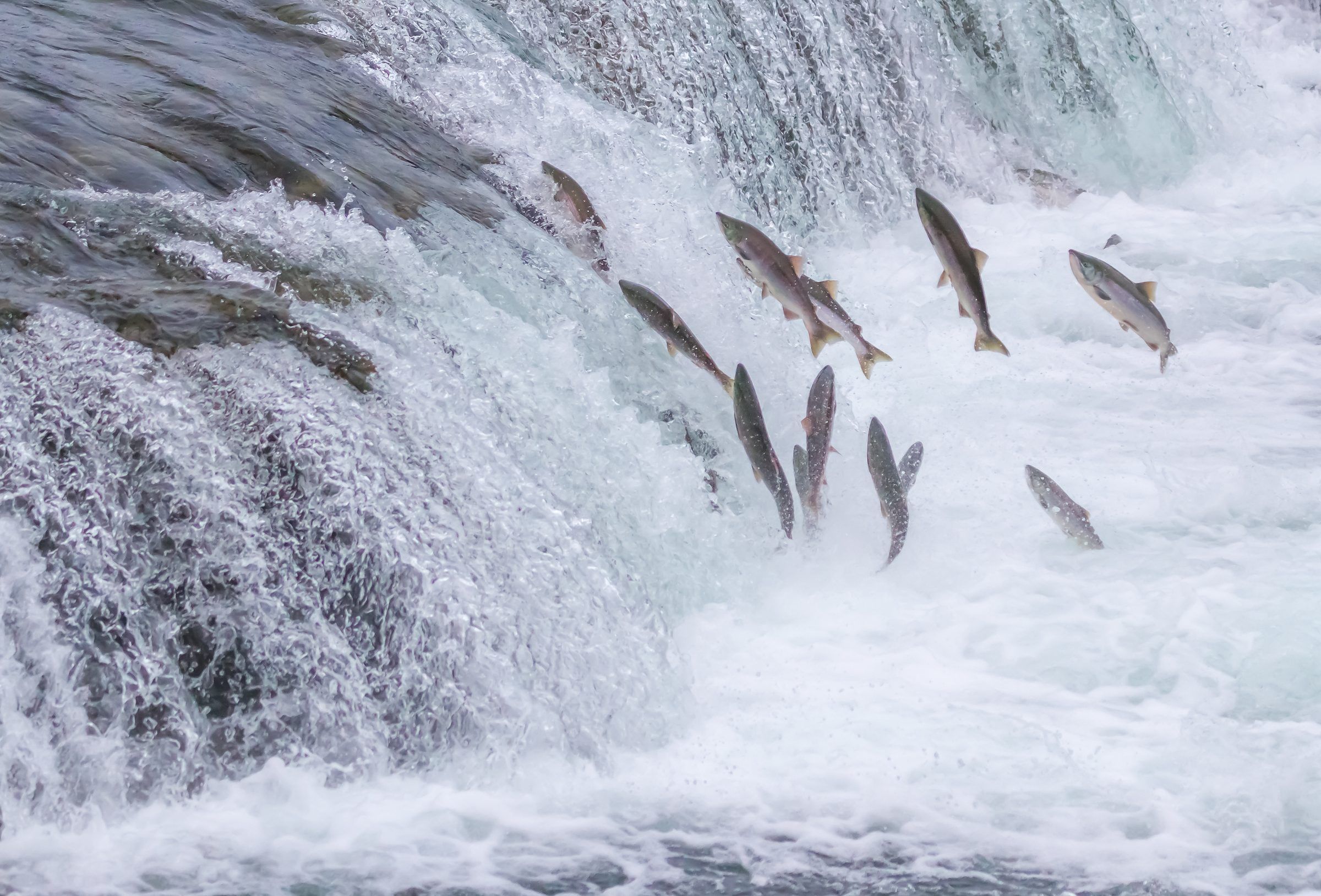
Salmon jumping at Brooks FallsPhoto by sekarb / Getty ImagesThe challenge is not simply how we manage salmon. It is how we manage ourselves.
What needs to change
The commitment to salmon already exists.
More than 80 per cent of British Columbians are concerned about wild salmon decline, governments have invested heavily in conservation and recovery, and First Nations, researchers, stewardship groups, agencies, and non-profits are leading hundreds of initiatives across salmon-bearing watersheds. Yet salmon continue to decline.
The problem is not a lack of commitment, expertise, or effort. Too often, that effort occurs in isolation rather than as part of a coordinated recovery system. Without shared priorities and a common framework, we cannot always be confident that individual efforts are addressing the greatest needs or achieving the greatest impact. We need to shift from fragmented, project-based efforts toward a watershed-based recovery system grounded in locally developed recovery plans, coordinated across regions and jurisdictions, informed by science and Indigenous knowledge, and sustainably resourced for the long term.
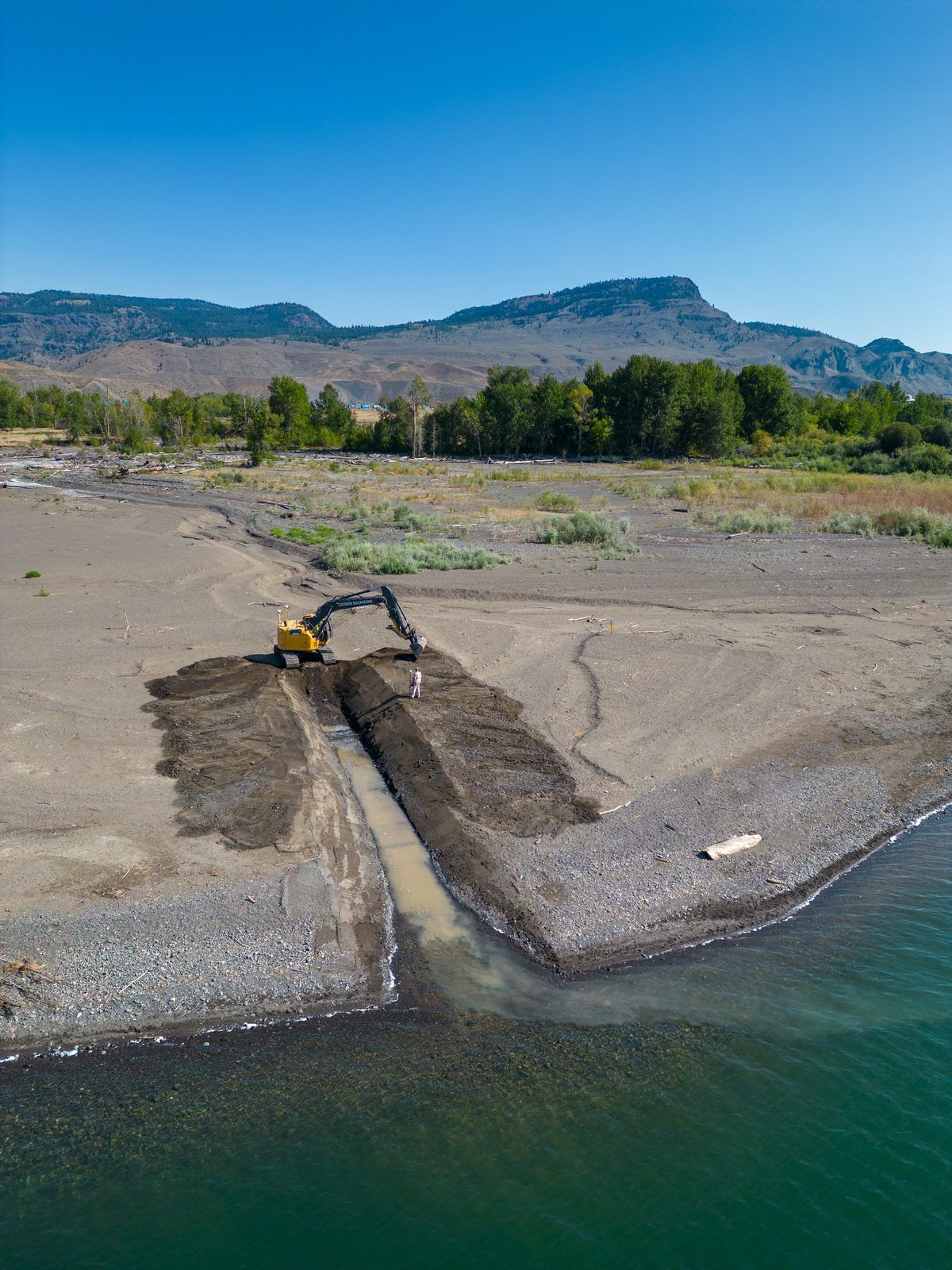 Tranquille River drought, 2023Photo by Peter Olsen
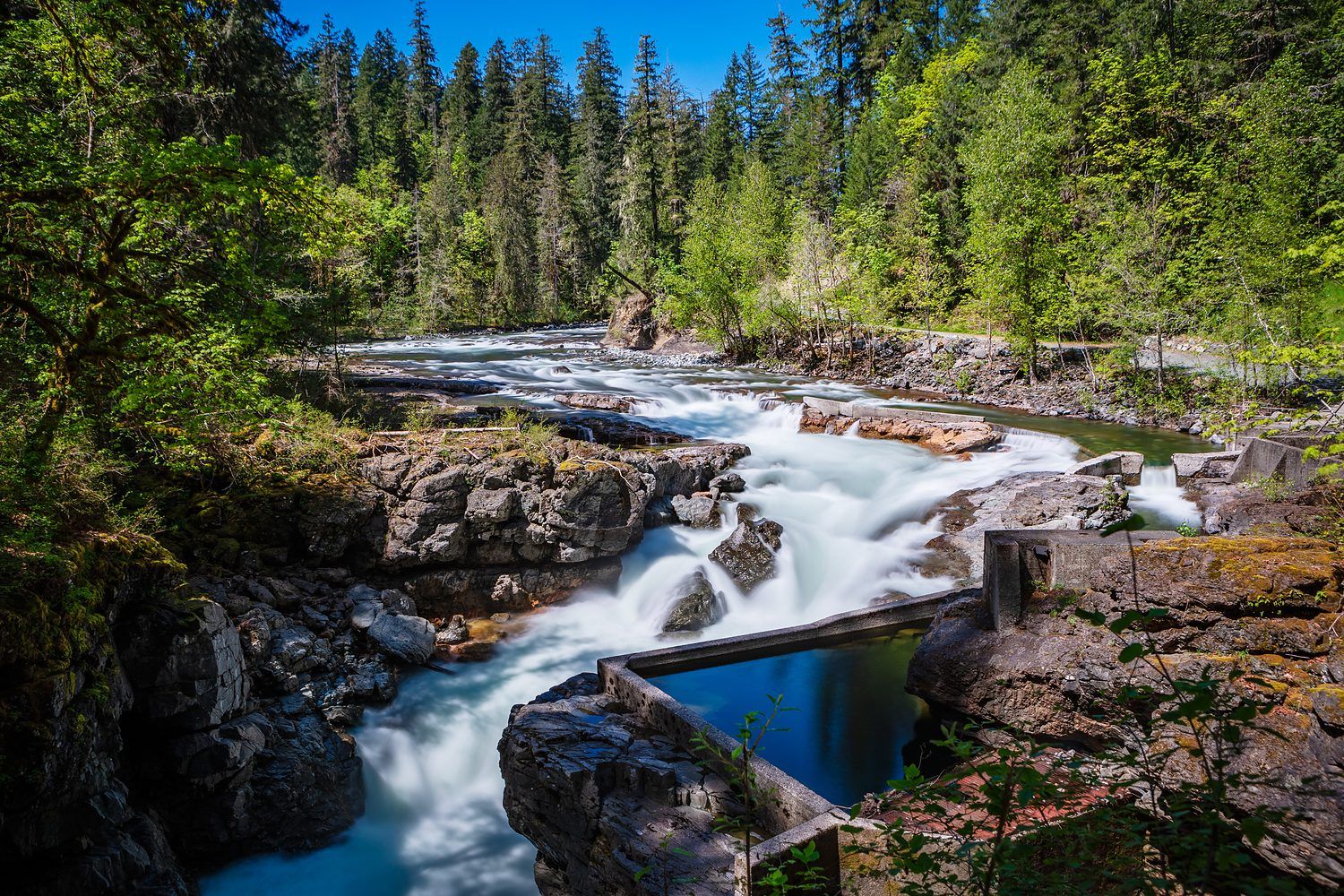 Skutz Falls, Cowichan RiverPhoto by Dave Mantel / Getty Images
Blueprints for Recovery
We know this approach can work.
On Vancouver Island, the Cowichan River demonstrates what is possible when a watershed comes together around a shared vision. After Chinook returns fell to just 500 spawners in 2009, Cowichan Tribes, Crown governments, industry, and stewardship organizations aligned around a common goal: managing water for fish. That collaboration supported the creation of the Cowichan Watershed Board and innovations in water management, drought response, and real-time monitoring. By 2025, Chinook escapement reached the highest level recorded since monitoring began in 1988, with more than 51,000 returning Chinook, including nearly 29,000 naturally spawning adults.
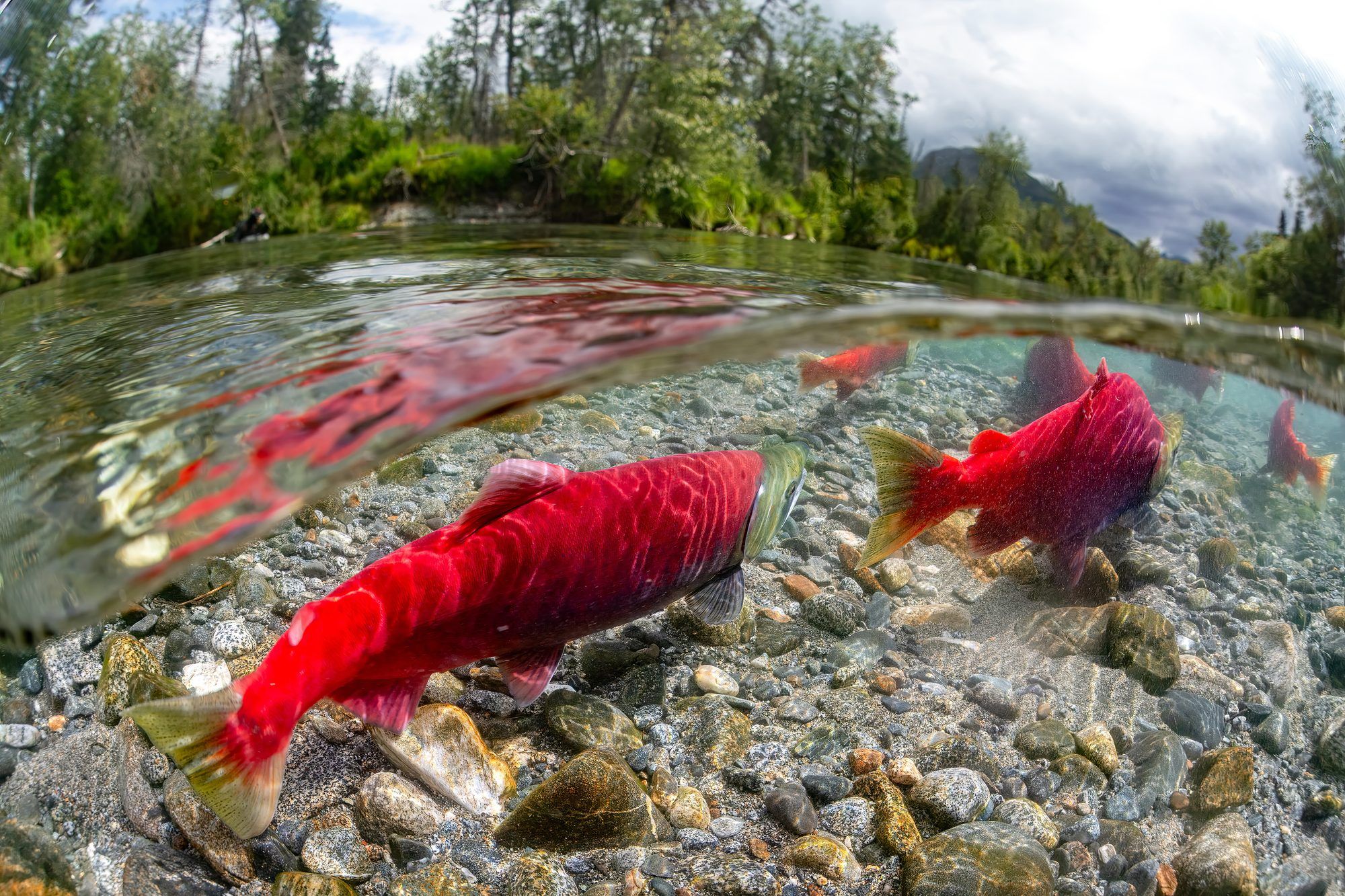 Sockeye salmonPhoto by Jason Ching
The Columbia watershed offers another example. Just three decades ago, Columbia sockeye were on the brink of extirpation. By 2022, returns had reached record levels. The Okanagan Nation Alliance played a central role through reintroductions, improved fish passage, habitat restoration, and collaborative management across Canadian and U.S. jurisdictions.
These recoveries were not the result of a single project or organization. They were built through long-term collaboration, watershed-scale governance, sustained investment, adaptive management, and shared commitment. There is no single blueprint for recovery. Every watershed is different. But successful approaches share a foundation: local leadership, coordinated planning, shared responsibility, and long-term commitment. The challenge now is to make watershed-based recovery the norm rather than the exception.
Pathways to activate
Transforming salmon recovery requires a system that consistently turns knowledge into action. Four interconnected components form its foundation:
Recovery begins with a shared plan. We need a coordinated framework operating across watershed, regional, and provincial scales that establishes clear objectives, priorities, roles, timelines, funding commitments, and accountability. Planning should be driven from the watershed up while ensuring alignment across regions and governments.
We cannot manage what we do not measure. Sustained monitoring is needed to track salmon abundance, diversity, distribution, and productivity alongside changing environmental conditions. This information allows us to detect change, measure progress, and adapt management.
Monitoring tells us how salmon and their habitats are doing; science and Indigenous knowledge help explain why. Together, they can identify threats, guide recovery actions, and show where investments will have the greatest impact. New technologies â including artificial intelligence, genomics, and remote sensing â can accelerate that understanding.
Knowledge only matters if it informs action. Recovery efforts must focus on interventions most likely to improve outcomes for salmon â from habitat restoration and improved water management to adapting fisheries, removing migration barriers, and responding to climate extremes.
The challenge now is to make watershed-based recovery the norm rather than the exception.
or keep scrolling
The choice ahead
The State of Salmon is urgent.
If we stay the course with institutions, governance, and management systems designed for yesterday’s challenges, we risk reinforcing the trajectory salmon are already on. Or we can choose a different path. We can organize the knowledge, commitment, effort, and investment that already exist into a coordinated recovery system capable of meeting the needs of salmon today. We have seen what is possible when First Nations, communities, governments, scientists, and stewardship organizations work together around a shared vision. The challenge is to make those successes the rule rather than the exception.
At the Pacific Salmon Foundation, we believe this transformation is both possible and necessary. That is why we have invested in a Recovery and Resilience team to build capacity and coordinate watershed-scale recovery planning. Longer term, we are working with the First Nations Fisheries Council to develop a proposal for a new watershed-based salmon recovery system in British Columbia, building on the knowledge and support of local salmon experts. The future of wild salmon will not be determined by the challenges they face alone. It will be determined by how we choose to respond. Salmon have shown an extraordinary capacity to recover when given the opportunity.
If we create the conditions for salmon resilience, there is every reason to believe they can flourish again.
Download the Report→


